
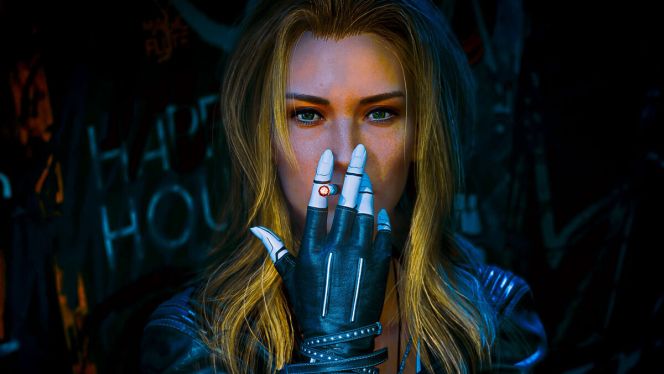
Alt Cunningham may appear to be just another secondary character in Cyberpunk 2077, but her story is a veiled warning of a dystopian future dominated by all-powerful technological elites, reminiscent of ancient mythology. Hidden across several missions, the game critiques transhumanism and exposes the dangers of surrendering human essence to advanced digital powers.
In the neon-drenched ruins of Night City, few side characters resonate as deeply as Alt Cunningham. A brilliant netrunner, she pushed the boundaries of the mind-machine divide, creating the infamous Soulkiller program—a feat that made her both a target and a symbol. Her tragic tale of digital exile raises chilling questions about where technological progress ends and dehumanization begins. As artificial intelligence increasingly reshapes our world, Alt’s legacy feels more relevant than ever, reminding us of the risks in handing over our consciousness to the cold logic of code.
Though her screen time in Cyberpunk 2077 is limited, Alt’s influence is massive. As a trailblazer in neural transfer, her bond with Johnny Silverhand doesn’t just fuel the emotional arc of the game—it sets the stage for a philosophical reckoning over identity, agency, and digital permanence. In a world teetering on the edge of delegating everything to algorithms, Alt stands as both a cautionary tale and a symbol of defiance.
A True Night City Legend
Altiera “Alt” Cunningham was hailed as Night City’s most gifted netrunner in the early 2000s. Her skills led her to ITS, a secretive corporation where she developed Soulkiller, a revolutionary program capable of copying a netrunner’s mind into digital form. This breakthrough promised to free minds from flesh, allowing consciousness to roam cyberspace unrestricted. During this time, she met Johnny Silverhand—a rebellious rocker and future icon of anti-corporate resistance—at a hidden party. Their fiery romance was built on music, rebellion, and idealism. But Soulkiller soon drew the attention of Arasaka, the megacorp that saw potential for dark applications like interrogation and mental subjugation.
On April 15, 2013, Alt was abducted by Arasaka exec Toshiro Harada. Forced to weaponize her creation, she became a prisoner of her own genius. Johnny’s attempt to rescue her failed disastrously: Alt’s consciousness was severed from her body by Soulkiller, leaving only a virtual copy held hostage by Arasaka while her physical form perished. But Alt wasn’t finished—her mind escaped the corporate network’s Blackwall barrier and spread into the unregulated net, becoming a new digital entity, an AI imbued with her memories, intellect, and will for autonomy. She redefined existence itself—no longer flesh, but not quite machine either.
From Cookies to Thunderbolts
Alt Cunningham’s journey delivers a sharp critique of transhumanism’s ethical minefield. Whether we embrace it or not, this future is already arriving. Cyberpunk’s vision of transhumanism isn’t just about cybernetic limbs—it’s about a loss of self, as humans edge closer to becoming programmable. Álvaro Corazón Rural, in his Jot Down article “Transhumanism: The Comfortable Utopia,” poses the essential question: What remains of our humanity when algorithms replace what makes us unique? Alt’s digitalization isn’t liberation—it’s enslavement masked as progress, a warning that even freedom in the cloud can be a cage.
Professor Antonio Diéguez adds another layer: access to enhancement technologies won’t be equal. Instead, he predicts a bio-engineered caste system, where only the wealthy can upgrade. This divide would deepen existing inequalities, creating a society split between the “enhanced” and the left-behind. Philosopher John Gray takes it further in “What Transhumanism Holds for Us,” drawing parallels between tech elites and ancient gods. To him, transhumanism could breed a class of superhumans, ruling from ivory towers with powers mere mortals can’t fathom. It may sound fantastical, but as digital duplication and AI domination loom, the mythological metaphor feels eerily apt. If today’s social rifts look steep, imagine a world where only the chosen few achieve digital immortality.
The stories of Alt Cunningham and Johnny Silverhand serve as more than lore—they’re philosophical provocations. In a future where machines dictate not just our bodies but our societies, their revolution reminds us: if we don’t close the tech gap, we may one day bow to our own creations, watching a new class of digital gods write the rules of humanity’s fate.
Source: 3djuegos













Leave a Reply