

TECH NEWS – Artificial intelligence (AI) is still in its infancy, but it is already clear that it will be the key technology of the coming years and the harbinger of a new industrial revolution. Is AI the greatest opportunity or the greatest challenge of our lives? Will it really take our jobs or save us? In the latest episode of the Bosch Hungary Podcast, experts discussed whether Hungarian society is prepared for the AI era.
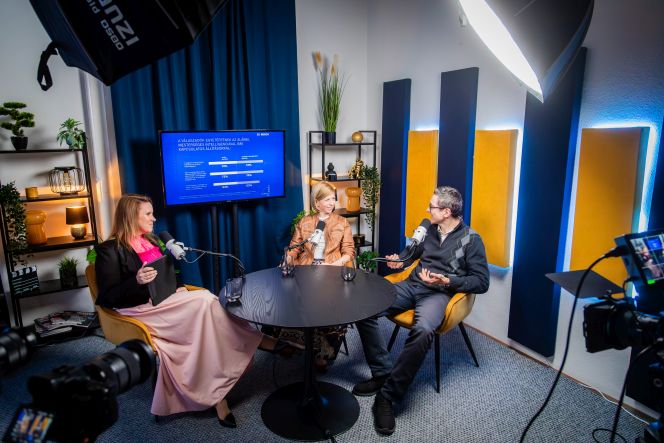
The explosive growth of artificial intelligence is already reshaping our everyday lives and professional environments. In the newest Bosch Hungary Podcast episode, Róbert Pintér PhD, sociologist and political scientist at Corvinus University and head of research at Digiméter; Mónika Hack, media relations manager of the Hungarian Bosch Group; and Edit Tóth, digital media manager at Bosch, explored how the Hungarian public approaches AI, and what roles companies and education must play in the process.
We have problems with definitions
AI is a general-purpose technology, similar to the steam engine or electricity: it’s not created for a single task but has wide-reaching applications across many areas of life. According to the Bosch Tech Compass international survey, one in four Hungarians is already struggling to keep pace with its rapid advancement. The root of mistrust goes deeper, however. “We have problems defining the use of AI. We are not even aware that many applications are AI-based, or we simply do not consider them to be,” explained Pintér. Among such examples are route planners, public transit recommendations based on traffic data, social media algorithms, translation software, and weather apps.
We fear the unknown, yet we have no experience of it
Although 53% of Hungarians believe AI will be the defining technology of the next decade, its use in everyday life remains minimal. Only one in twenty people regularly use ChatGPT, for instance. Still, half of the respondents fear that AI may one day threaten their jobs. Pintér draws a parallel with the early 2000s: “When the internet arrived, people needed a bridge – and in Hungary, iWiW was that bridge.” Today, such an introductory platform is missing, and many are not open enough to gain hands-on experience with AI tools. Without personal exposure, acceptance and trust are difficult to build.
Digital openness will be a competitive advantage
Respondents of the Bosch Tech Compass agree that companies and the education system are instrumental in driving AI acceptance. “Bosch has had an artificial intelligence codex since 2020,” said Mónika Hack. “In line with global innovation trends, AI is embedded in every product or supports its development. Continuous learning is a core corporate value—not just for employees, but for suppliers and future generations as well.”
However, it’s also up to individuals to remain competitive. Pintér emphasized that over the next 5–15 years, most professions will be reshaped and digital openness will become more important than years of experience or institutional knowledge. “Ultimately, it’s not AI that takes someone’s job, but another human who knows how to use it more effectively.”
Critical thinking is also needed
“The use of AI is a major challenge for education,” said Pintér. “Assessment methods must be completely rethought. To create faster, more efficient, and higher-quality solutions—and to do so ethically and legally—schools must teach the correct application of AI.”
The podcast discussion also emphasized that AI’s integration into work and daily life will require verified sources. Cybersecurity awareness and critical thinking will be essential to identify fake news and manipulated content. “People need support here too,” added Hack. “At Bosch, we contribute with independent content, blogs, and podcasts. Our employees attend targeted workshops and training programs, and we prioritize knowledge sharing across the company.”
Source: Bosch press release















Leave a Reply