
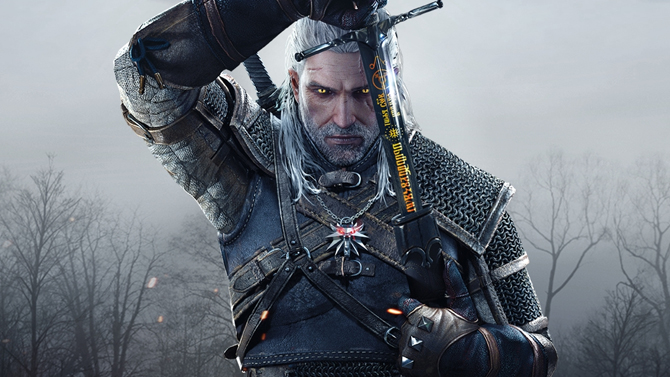
After the first two The Witcher games, CD Projekt RED (CDPR) finally released a game in the right state, but it’s not that simple a story.
The Witcher was a disaster upon release. The Witcher 2 started off in slightly better shape. However, The Witcher 3: Wild Hunt was a masterpiece compared to the previous games. The success of The Witcher 3 put CDPR on Sony’s speed dial, but it also had other consequences. There was also a slight magical mindset similar to BioWare’s. This idea is that a problematic game comes together in the final stages of development. Although the concept was dismantled several times, it survived because so many games come together at the last minute. Even a classic like Thief: The Dark Project wasn’t enjoyable until it was almost finished. The fact that The Witcher 3 was also put together in the final stretch didn’t help the studio’s mindset.
“It gave us confidence that we could deliver a truly ambitious, engrossing, large-scale RPG. And that we could punch above our weight and compete with the best. I remember being really, really afraid of the standard Dragon Age: Inquisition was going to set. The Witcher 3 gave us confidence—maybe even too much confidence, to be honest, because I think that was the beginning of a bit of magical thinking for the company, which only stopped after Cyberpunk 2077.”
“I remember seeing a version of The Witcher 3 that was put together in February 2015. I remember walking up to Adam Badowski and asking how we were doing because it really didn’t look very good. Like I was saying, don’t worry, because we’re going to make that last big push with the patch. It’s going to be a day-zero patch. I remember talking to some key technical people, and honestly, they were tired—exhausted, but okay. We’re going to do it. And they did. Of course, there were still a lot of patches afterwards, but the whole thing was like a force of nature. There was a lot of chaos and a lot of last-minute efforts, I think without proper planning,” says Michał Nowakowski, joint CEO and board member of CDPR.
He also spoke about how CDPR felt at the beginning of 2015 and then mentioned Cyberpunk 2077. Its budget was four times larger than that of The Witcher 3, so the mindset also changed: “Everybody felt for a few moments that whenever something went wrong, a magic fairy would come down and sprinkle some dust and everything would be okay. Of course, I’m exaggerating, but there’s some truth to that. So that’s a negative change. The positive change was the confidence, which I think helped us build ambition, which is still a big part of the company’s value. A lot of things were developed almost in isolation, which may sound strange, so sometimes we didn’t see the actual impact of how things interacted until they were put together. It probably was never ideal, but it worked when the scale of the games was smaller. Like with The Witcher 1 and 2. But I think with The Witcher 3, we could hear the ship creaking a little. As for Cyberpunk 2077, I don’t want it to sound like it was all chaos, you know, a burning wagon in the fire, because that wouldn’t be true either. We had great producers and a lot of sensible planning. That’s a big change that happened after Cyberpunk,” Nowakowski added.
Hopefully, The Witcher IV and Cyberpunk 2077 will launch in the right state.
Source: PCGamer












Leave a Reply