
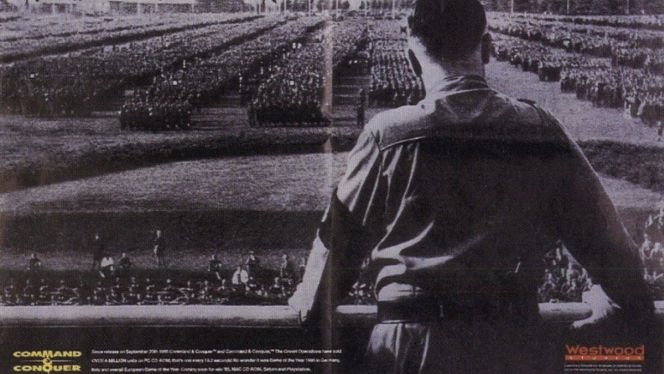
Command & Conquer may be hailed as one of the all-time greats in strategy, but its reputation for boundary-pushing ads is just as legendary. Westwood’s classic didn’t just embrace controversy – it engineered it, using dictator rankings and shockingly real war photos to market virtual warfare as a contest of body counts.
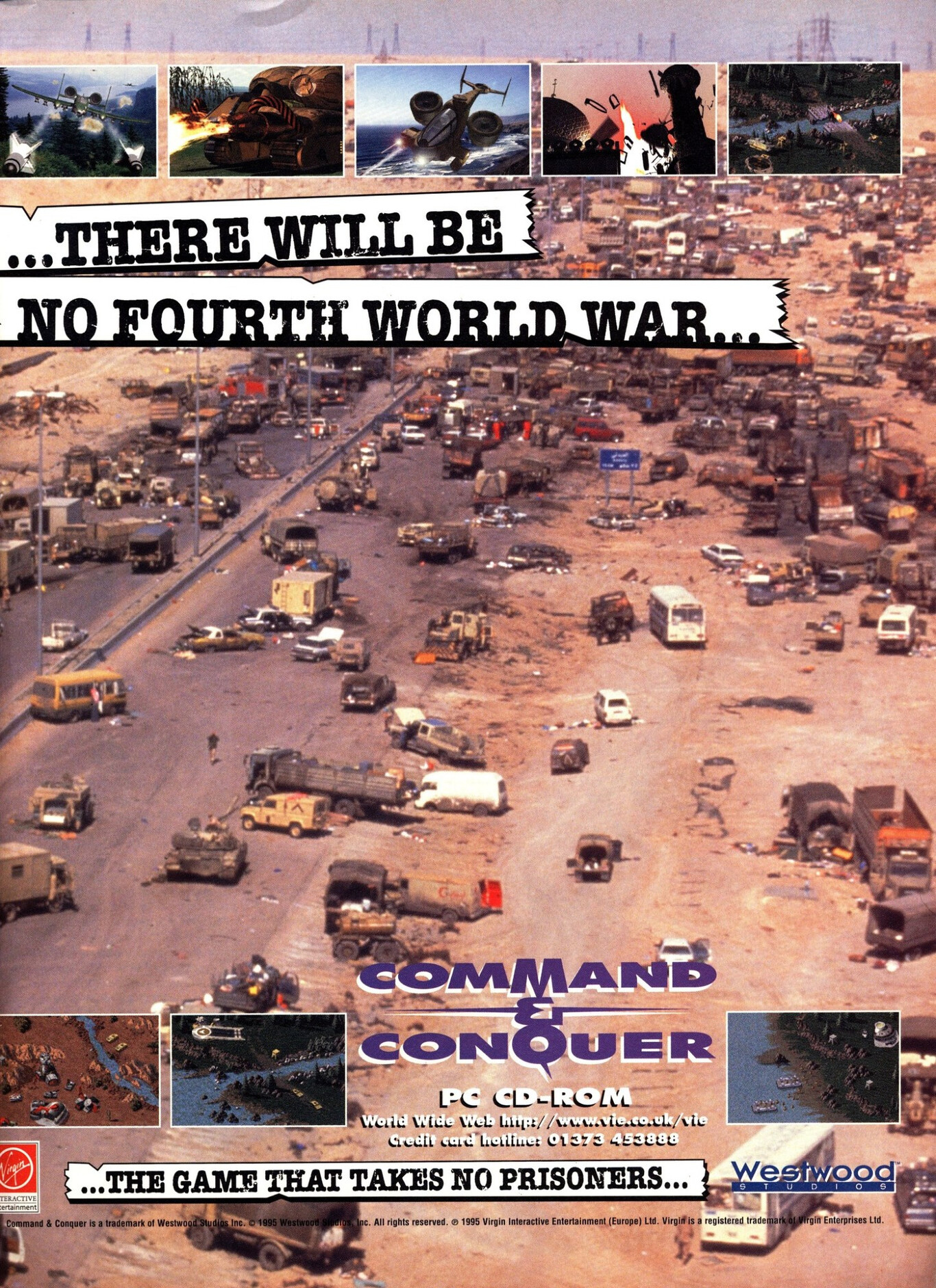
Modern game ads might all blur together, but the ’90s were a different beast entirely. Back then, a little playful ribbing of competitors was standard fare, but what Command & Conquer did was a league of its own. The infamous full-page spread in gaming mags featured a genuine photograph of wartime carnage – a level of realism that was as bold as it was disturbing.
This wasn’t a stylized in-game scene: it was a real image of the notorious Highway of Death (Highway 80) from the Gulf War, where in February 1991, thousands of retreating Iraqi soldiers and civilians were slaughtered by coalition airstrikes. The result was a miles-long graveyard of vehicles, a scene more befitting a post-apocalyptic movie than a marketing campaign. Death toll estimates run between 200 and 1,000. Four years after the event, someone at Virgin Interactive decided this was the perfect shock tactic to sell Westwood’s new game.
What could they have been thinking?
To drive the message home, the marketing team slapped on the chilling tagline: “There will be no World War IV. The game that takes no prisoners.” Ironic, considering that nearly 2,000 prisoners were taken in the actual attack. The real pitch was unmistakable: “If you crave authentic war, you’ll love the virtual carnage – complete with Frank Klepacki’s industrial beats.”
I was obsessed with Command & Conquer as a kid. After Dune II: Battle for Arrakis, this was the game I couldn’t wait to get my hands on. At the time, I even liked it more than Warcraft II, though Blizzard’s sequel later won me over. For me, Westwood could do no wrong – until this. At ten, I don’t remember seeing the ad in local magazines, but its impact was unmistakable. Virgin never issued an official apology, but after the uproar, especially in the UK, the ad quietly vanished from print. No wonder: using real-world atrocities to sell a video game is a new low in tastelessness. Imagine if today’s games used images from Ukraine or Gaza in their promotions – the backlash would be instant and global.
Command & Conquer’s Marketing Was Built to Provoke
Anyone thinking this was a one-off lapse in judgment is mistaken. The campaign’s entire DNA was controversy. The “Previous High Scores” ad featured infamous dictators – Hitler, Stalin, Mussolini, Napoleon, Saddam Hussein, Gaddafi – and even Jacques Chirac, France’s president at the time, each boasting their “kill counts” as if they were in-game leaders. Players were invited to “beat their scores” in Command & Conquer. It’s no surprise France took particular offense.
The Highway of Death has reappeared in games since: in Call of Duty: Modern Warfare (2019), there’s a mission set on a similarly named road, this time in the fictional country of Urzikistan, with Russian forces cast as the villains – sparking yet another round of controversy for alleged historical revisionism. I understand the outrage, but when games use real tragedies with artistic purpose, I’m open-minded. With Command & Conquer’s ad, though, the only aim was shock value – not art.
Back then, games were desperate to be seen as “mature” – to prove they weren’t just about aliens and space. But Command & Conquer’s ad went too far, using real victims as a promotional tool. Today, it stands as a dark relic from gaming’s formative years: unsettling, memorable, and a lesson in where lines should never be crossed. I love Command & Conquer, but this ad is indefensible.
Source: 3djuegos












Leave a Reply