
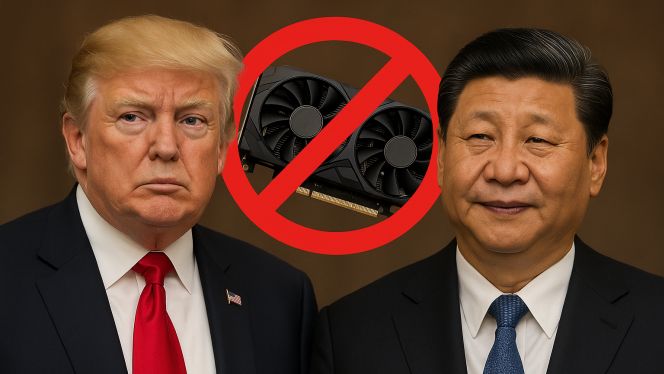
TECH NEWS – The United States has now banned the sale of another product range, which could tear up the existing trade agreement between the two countries.
The trade war between America and China shows no sign of abating, as the Trump administration continues to revise its policies and signals that the US is in no rush to resolve the dispute. The Bureau of Industry and Security (BIS) has just announced a new round of export controls directly targeting China’s ambitions in the semiconductor field. This time, restrictions hit EDA software from Synopsys, Cadence, and Siemens. The new rules forbid selling advanced-node EDA tools to China without a license, a move that could spell serious trouble for leading tech firms like Xiaomi and Lenovo—companies that rely on custom system-on-a-chip (SoC) designs.
The limitations on selling EDA solutions to China will likely only affect upcoming products, so current business deals remain untouched. But these latest curbs are arriving just as US and Chinese negotiators are meeting in Geneva for crucial trade talks, with both sides searching for a workable compromise. The BIS measures make it clear that America is not about to let China leap ahead in the microchip race. The EDA clampdown also coincides with Xiaomi’s unveiling of the high-performance Xring 01 processor—a device Chinese media are already calling a local technological wonder.
According to the Financial Times, these EDA restrictions may only serve to boost China’s domestic chip sector, as several Chinese firms are now working on in-house EDA tools. Among them, Empyrean stands out, reportedly offering solutions sufficient for 7nm (and below) manufacturing. With the US tightening export controls, demand for local Chinese alternatives is sure to grow—likely kicking off a wave of development in China’s EDA sector. We all know what that means for the industry’s balance of power.
In reality, many Chinese organizations have long relied on pirated versions of US EDA software, adapting and localizing them for their own chip design needs. In the long run, the latest restrictions are unlikely to dramatically impact China, but they will throw a wrench into the ongoing trade negotiations between the two global powers.
Source: WCCFTech, Financial Times















Leave a Reply