
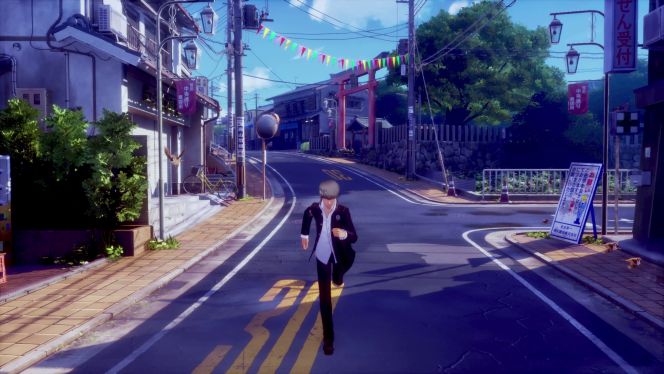
Atlus’s new JRPG faces an unexpected challenge. The world has changed drastically since Persona 4’s original release, and this once-cutting-edge RPG now shows a vision of life that may be completely alien to younger players.
After the stylish highs of Persona 3 Reload, all eyes are now on Persona 4 Revival. Every Persona game tackles a big issue facing society—especially young people. For example, Persona 2 is all about the way rumors twist reality, while Persona 3 dives deep into loneliness, suicide, and apathy. What makes Persona 4 unique is that it pulls all those themes together and points them at a single idea: who are we, really?
You might appear to be a good person, but you may hide a darker truth. Or appear shy but actually crave friendship. Or act tough when all you want is love. Persona games always build their stories around a piece of current technology—in Persona 4’s case, it’s television. I first played Persona 4 Golden on PS Vita (fantastic version!), but the original game launched back in 2008. Just look at the TV landscape then: Sin tetas no hay paraíso, Pekín Express, Aída, Dexter, and Californication were all airing. Feels like a lifetime ago, right?
Streaming didn’t exist yet—Netflix didn’t even arrive in Spain until 2015. Families still gathered around the TV, relying on it for weather and news. Persona 4 draws from that era, capturing a society that believed everything they saw on television. Take Rise Kujikawa, for example: she’s an idol who always looks happy on TV but is actually anxious and became a celebrity hoping to make friends. Spoiler: it didn’t work out for her.
Does Persona 4’s World Even Exist Anymore?
But it’s 2025 now, and things have changed. Families rarely watch TV together; when celebrities say something weird, we have a thousand other sources—including their social media—to check the facts. There are endless podcasts digging into the human side of every story, and mental health is discussed openly. Just recently, I heard Natalia Lacunza on La Pija y la Quinqui being refreshingly honest about her feelings—a level of candor Rise never got back in her day.
For me, this cultural shift is a big reason Persona 4 Revival may not land as well with today’s teens. Television isn’t a one-way pipeline anymore, full of secrets and selective narratives. We don’t depend on TV schedules to understand the world, and this affects the game’s story and gameplay. In Persona 4, stepping into a television was a metaphor for exploring characters’ minds—in 2008, it was brilliant and novel, but now, who dreams of being on TV or seeing how shows are made from the inside?
So, those moments are bound to lose some impact. The way Rise and the others express their struggles will seem odd to younger players—and the same goes for moments like Kanji Tatsumi’s confession. We’ve changed so much. In that way, Persona 3 actually feels fresher: its focus on smartphones and loneliness is more relevant in 2025, especially after the pandemic, unlike the TV-obsessed Persona 4.
Maybe the Solution Is to Embrace the Rural Setting
Of course, there’s a way forward, but not if Persona 4 Revival sticks as rigidly to the script as Persona 3 Reload. The developers need to lean into the game’s rural town setting and build from there, updating text, dialogue, and situations so that even a 17-year-old can understand the old-school obsession with TV. Going back to a small town is like time travel; the story should lean into that vibe.
In other words, the new version needs to offer a vintage, nostalgic look at the past, not just copy what felt contemporary in 2008. Maybe the “Revival” subtitle is a hint. I hope they make those tweaks—Persona 4 has a fantastic story to tell, and it’d be a shame if it didn’t connect with the next generation.
Source: 3djuegos















Leave a Reply