
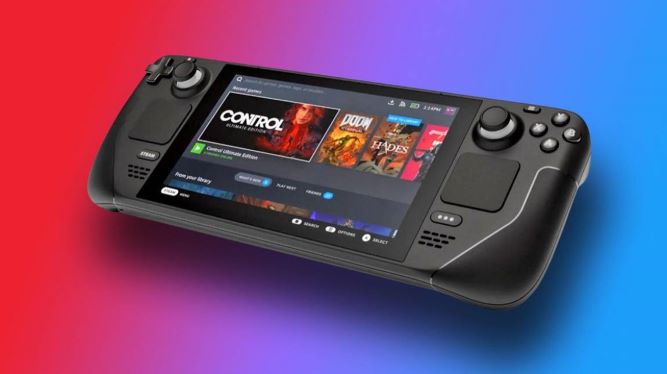
Do we really need a Steam Deck 2 already? Playing games on Valve’s handheld is getting tougher by the year—hardware just isn’t keeping up with the newest releases, raising big questions about the future of this device.
Back in summer 2021, during the big Steam Deck rollout, Valve hyped its groundbreaking handheld in interviews with IGN. A rep from the studio insisted, “we haven’t found anything this device can’t handle [due to lack of specs].” Fast forward four years, and things aren’t quite so rosy.
By summer 2025, we’ve already hit several cases where the Steam Deck falls short of developers’ minimum requirements for major new games. In February, Monster Hunter: Wilds technically ran on Valve’s handheld, but it was totally unplayable in practice: unstable frame rates under 20 FPS even on the lowest settings.
Just a few months later, Doom: The Dark Ages brought the same pain. id Software’s game technically boots up, but it runs so badly that the devs officially labeled the Steam Deck “incompatible” in their Q&A. On Reddit, some diehards bragged about hitting 30 FPS in the campaign’s opening, but only by making huge sacrifices—not exactly a win.
Both titles are special cases, to be fair. Monster Hunter runs on Capcom’s RE Engine, which is notoriously bad at handling massive, open environments. Doom, meanwhile, demands a GPU with ray tracing as part of its default rendering process.
In short, the Steam Deck has hit two games in a row that are simply out of its league. The triple-A industry isn’t going to slow down, and if every major PC launch already comes with optimization headaches, what’s the future for Valve’s handheld?
Hardware Is Getting Tight
Honestly, it’d be a shame if the Steam Deck—the trailblazer for the whole portable gaming PC trend—couldn’t run The Witcher 4, Atomic Heart 2, or the next Mass Effect just because of specs. But that’s looking more and more likely with how things are going.
Some users now treat it as an “indie machine” and use GeForce Now for the latest blockbusters—but that’s nowhere near as seamless as it used to be. Do we need a Steam Deck 2? For many, this handheld is and always was a haven for indies, while new workarounds like GeForce Now are plugging the gaps for high-end games. In that light, there’s no rush: the price, features, and power are holding up—for now.
Meanwhile, Valve’s rivals are rolling out more tempting models every year—Xbox, for example, has a dedicated interface and is bringing the Steam library into its own ecosystem. That’s no threat to Gabe Newell’s team just yet, but it might chip away at their lead. Maybe Valve is just waiting for the perfect moment to make a big announcement.
Source: 3djuegos













Leave a Reply