
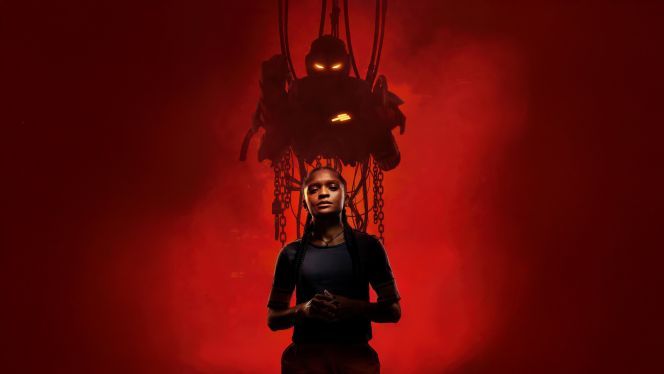
SERIES REVIEW – Marvel Studios’ latest entry, Ironheart, serves up nostalgia and clichés in equal measure. While the show tries to inject fresh energy into the Marvel universe, it’s weighed down by a tired formula and the unmistakable fatigue that’s set in across the franchise. No matter how likable the lead may be, Ironheart rarely escapes the confines of Marvel’s usual playbook, and superhero fatigue has become impossible to ignore in the final product.
Ironheart is one of the last remnants of Phase Five in the Marvel Cinematic Universe, and, fittingly, a show dreamt up under Marvel Studios’ old-school production system. Even the studio now recognizes that endless universe-building and crisscrossing storylines are losing their appeal, so the focus lately is on more standalone, original projects. Ironheart is a survivor—unlike many others, it dodged the axe, even though filming wrapped back in 2022 and the release was delayed more times than fans care to remember.

The Woman Behind the Armor
Riri Williams first appeared in Black Panther: Wakanda Forever, instantly bringing new flavor to the Marvel mythos. She was originally slated for a major role in Armor Wars—initially planned as a film, then a series, before disappearing into Marvel limbo. She was supposed to team up with Don Cheadle’s War Machine, wading through themes of AI, weaponization, and the Stark legacy, but much of that material ultimately migrated into Ironheart’s story.
The series picks up right after Black Panther: Wakanda Forever. Riri is still the brilliant inventor who got into MIT absurdly young, but her eccentricity and stubborn streak quickly get her expelled after yet another unintended, major accident. She hasn’t abandoned her side hustle—selling her genius to the highest bidder, a habit we saw in Wakanda—all to upgrade her suit and finally create the AI she dreams about. After packing up, she returns to her family in Chicago, willing to break any rule to keep her invention evolving. This brings her into contact with a local criminal gang led by Parker, aka The Hood—a name that will ring a bell for longtime Marvel fans, thanks to the latest season of What If…? The Hood wields a magic cloak, the true power of which we’ll get to later.

Old Wounds, New Directions
Across six episodes, the show tries to tackle some heavier themes. Riri’s backstory—especially her attachment to her stepfather Gary’s car—finally makes sense, and the fate of both Gary and her best friend Natalie become central threads. This gives Dominique Thorne real space to shine, a chance barely afforded to her in Black Panther: Wakanda Forever. While Ironheart isn’t exactly groundbreaking, Riri is a genuinely appealing protagonist, and, much like Iman Vellani’s Ms. Marvel, she’s easy to root for and follow.
The show constantly nods to Stark tech, and there’s even a mysterious character who connects directly to the original Iron Man (no spoilers). The overall vibe is “DIY Iron Man”—Riri can build a new suit or weapon out of almost nothing. Magic plays a big role, too, as Marvel’s been teasing for months, and it finally gets an intriguing spot in the canon. The catch? Ironheart throws out a lot of cool ideas, but rarely sees them through; most plot threads are teased, then dropped, and the show raises more MCU questions than it answers.

What Was the Point?
Which brings up the obvious question: why was this series made at all? Why push it through, only to burn off all six episodes in two weeks instead of stretching it out like previous Marvel shows? The marketing wasn’t much help either—Disney heavily promoted producer Ryan Coogler, while Robert Downey Jr. made a Good Morning America cameo to officially “pass the torch” to Riri Williams, the new Iron Man. Ultimately, the answer to “why?” is buried in the final episode.
The finale brings in new plotlines and characters, making it hard to imagine they won’t resurface—especially with all the magical angles. But in the end, Ironheart is a Marvel show you’ll forget almost immediately: most action scenes are by-the-numbers, the visual effects sometimes look outright unfinished, and Riri’s suits are still divisive (as in Black Panther: Wakanda Forever), though the final version is at least more memorable.
Required Viewing or Marvel Misfire?
Few supporting characters stand out; comic regulars like Clown or the Blood Brothers are basically glorified extras, and The Hood (played by Anthony Ramos) never becomes a real threat—the cape looks like a cosplay prop and the performance is flat. Great superhero shows live or die on their villains, but here the antagonist is just ticking a box. In the end, Ironheart feels like Marvel-by-spreadsheet: Riri’s journey is sympathetic, but the series itself will vanish without a trace in the Marvel glut of 2025—even though all six episodes drop July 1. And yes, there’s a post-credits scene, naturally.
-Gergely Herpai “BadSector”-
Ironheart
Direction - 4.8
Actors - 5.2
Story - 5.4
Visuals/Music/Sounds/Action - 5.6
Ambience - 5.1
5.2
AVERAGE
Ironheart is a nostalgic but middling Marvel series, rescued from total obscurity only by its talented lead. The action and visuals fall short of Marvel’s best, and both the supporting cast and main villain are instantly forgettable. Only the most devoted Marvel fans are likely to power through all six episodes of this decent but ultimately formulaic experiment.













Leave a Reply