
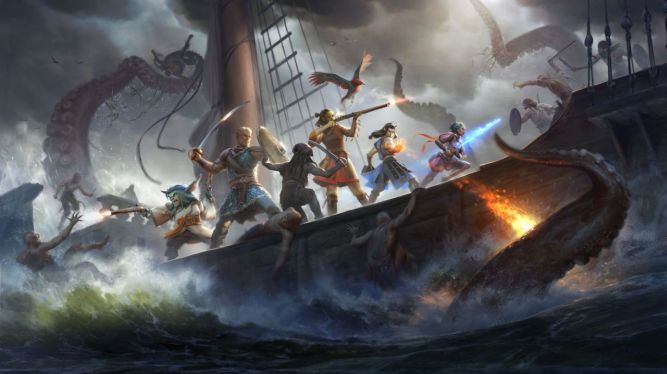
They opted for a “one size fits all” approach, because designing easier difficulty modes isn’t actually that hard in those kinds of games.
In an interview with PCGamer, Josh Sawyer, a leading developer at Obsidian Entertainment, delved into the evolving design philosophies surrounding difficulty and complexity in RPGs. The golden age of CRPGs, he explained, was fleeting. As the industry shifted focus to consoles, traditional RPGs lost some mainstream appeal. While critical of some design choices, Sawyer still credits Bethesda for helping RPGs regain prominence and notes that Obsidian has always tried to preserve that signature “crunch” and reactivity often missing in today’s mainstream titles like The Elder Scrolls and Dragon Age.
“I probably started right in the middle of the PC RPG resurgence—Fallout, Baldur’s Gate, Icewind Dale and Icewind Dale 2, which weren’t nearly as big or influential as those other games, but PC RPGs were good at the time. I’d say maybe around 2008, with Fallout 3 and Oblivion—that was like, ‘Whoa, RPGs!’ Bethesda was really pushing things into the mainstream. There’s this idea of the ‘super accessible RPG.’ I think you can cater to different kinds of players, but not with a one-size-fits-all model.”
He praised studios like Owlcat for offering extensive difficulty customization and urged others to follow suit.
“I’d love to see more developers really go deep, ask the players: What do you want? Let’s build for that. I’d like us to be more thoughtful, because I want to support the sweaty boys! I’m at least sweaty-adjacent in how I play. If I’m not playing on the hardest setting, I’m just one level below. It frustrates me when a game gives me nothing to tweak.”
That said, he also understands the appeal of more relaxed, exploration-friendly experiences, where players can just cruise through. With good planning, he says, supporting a wide player base isn’t as hard as it sounds.
“It’s especially a mistake to sacrifice depth for accessibility. Hardcore RPG fans still crave complexity, tough decisions, gear to experiment with, customization, reactivity, and mature storytelling. I value all of that. If you build systems that support these things, they can also scale and simplify where needed. It’s not no work—but it’s not as much work as you think, if you dedicate the time.”
Sawyer acknowledged that Pillars of Eternity 2: Deadfire needed adjustments post-launch to hit that balance, but he’s proud of the depth and difficulty the game ultimately achieved.
Source: PCGamer














Leave a Reply