
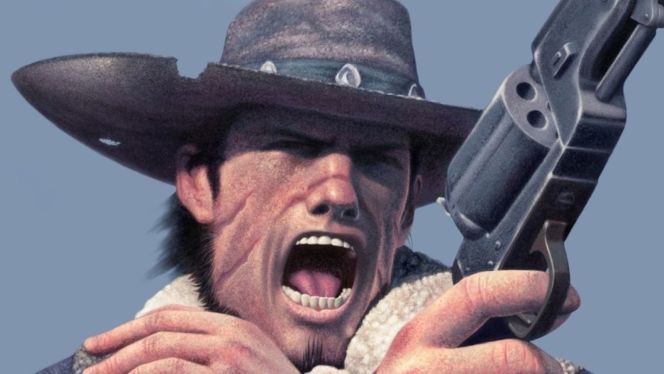
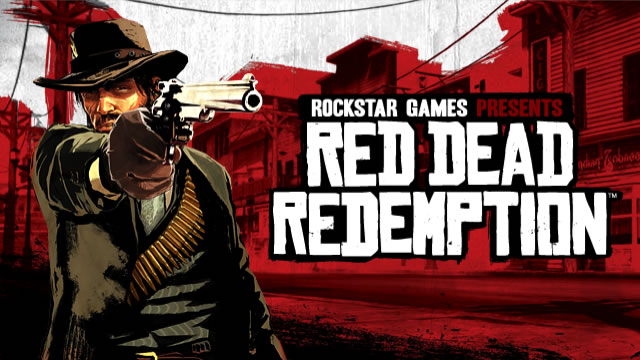
RETRO – Many gamers forget that Red Dead Redemption 2 is technically the third entry in the series, and much of that is thanks to six bottles of tequila and a certain Capcom boss. Red Dead Revolver is largely overlooked today, but without it, Rockstar’s western universe might never have existed as we know it. So why was this now–forgotten title so pivotal, and what are the behind–the–scenes secrets even hardcore fans might not know? Here’s the full story!
There’s no debate: Grand Theft Auto is what put Rockstar on the map. It’s no wonder, since GTA V shattered every sales record, and many already expect GTA 6 to outdo even the wild success of Michael, Trevor, and Franklin’s escapades. Still, it would be unfair to ignore the Red Dead western saga, which has thrilled gamers with two – or rather, three – installments. While most believe it all began with John Marston and continued with Arthur Morgan, the truth is, Red Harlow came first.
Before there was redemption, there had to be a revolver – specifically, Red Dead Revolver. The trilogy’s first entry launched in 2004, and while almost everyone has forgotten about it, the reality is that without this game, Rockstar might never have taken the plunge into westerns. And as with any legendary game franchise, there’s an extraordinary story behind it.
To really understand it, you first need to meet one of gaming’s most fascinating personalities: Diego Angel. Angel, who was born in Colombia, moved to Chicago in his late twenties to pursue film directing. That’s when he fell in love with computer animation, and he eventually settled in San Diego to found Angel Studios, which in its early days earned barely $5,000. Thanks to Diego Angel’s perseverance, the studio slowly grew into something much more significant.
Wild West Business: Tequila, Capcom, and Nintendo
Angel Studios’ unique advantage was that they were among the first Western studios to land deals with Japanese companies. After collaborating with Silicon Graphics on tech demos that eventually reached Nintendo, they got a taste for game development. At first, they supported other projects, but they soon became the first Western studio to work with Capcom: they were responsible for the incredible Nintendo 64 port of Resident Evil 2, which managed to squeeze two PlayStation discs onto a much smaller N64 cartridge.
This and several other projects caught the attention of Rockstar, which from then on began collaborating with Angel Studios. In fact, the driving games Midnight Club and Smuggler’s Run were both developed by the San Diego–based team. In a late 2000 interview with IGN, Sam Houser said: “I love Angel Studios, and there’s no way I’m ever going to stop working with them.”
So how did Angel Studios manage to land deals not just with Nintendo, Capcom, and Rockstar, but also with Disney, Polaroid, NASA, ESPN, and HBO? The answer is Diego Angel. His legendary charisma – and his “three Ps” philosophy of Passion, Patience, Perseverance – opened every door, and he always chased the best opportunities, not just the most lucrative ones.

Tequila, SWAT, and Spaghetti Westerns – How Red Dead Was Born
“Money was never my main focus. I wanted to build a company around expertise and what we could offer. I knew the money would come in time.” That’s how Angel recalled things to Polygon years later. He was known for keeping his staff motivated in unusual ways – like “Sippy Wippy” Fridays, when he’d do tequila rounds at the office. That drink became his calling card in Japan, too: “Every month I brought six bottles of tequila to Japan. They loved it.” Angel’s successful Resident Evil 2 port led Capcom boss Yoshiki Okamoto – who had previously worked on Street Fighter 2 – to approach Angel Studios with a new idea.
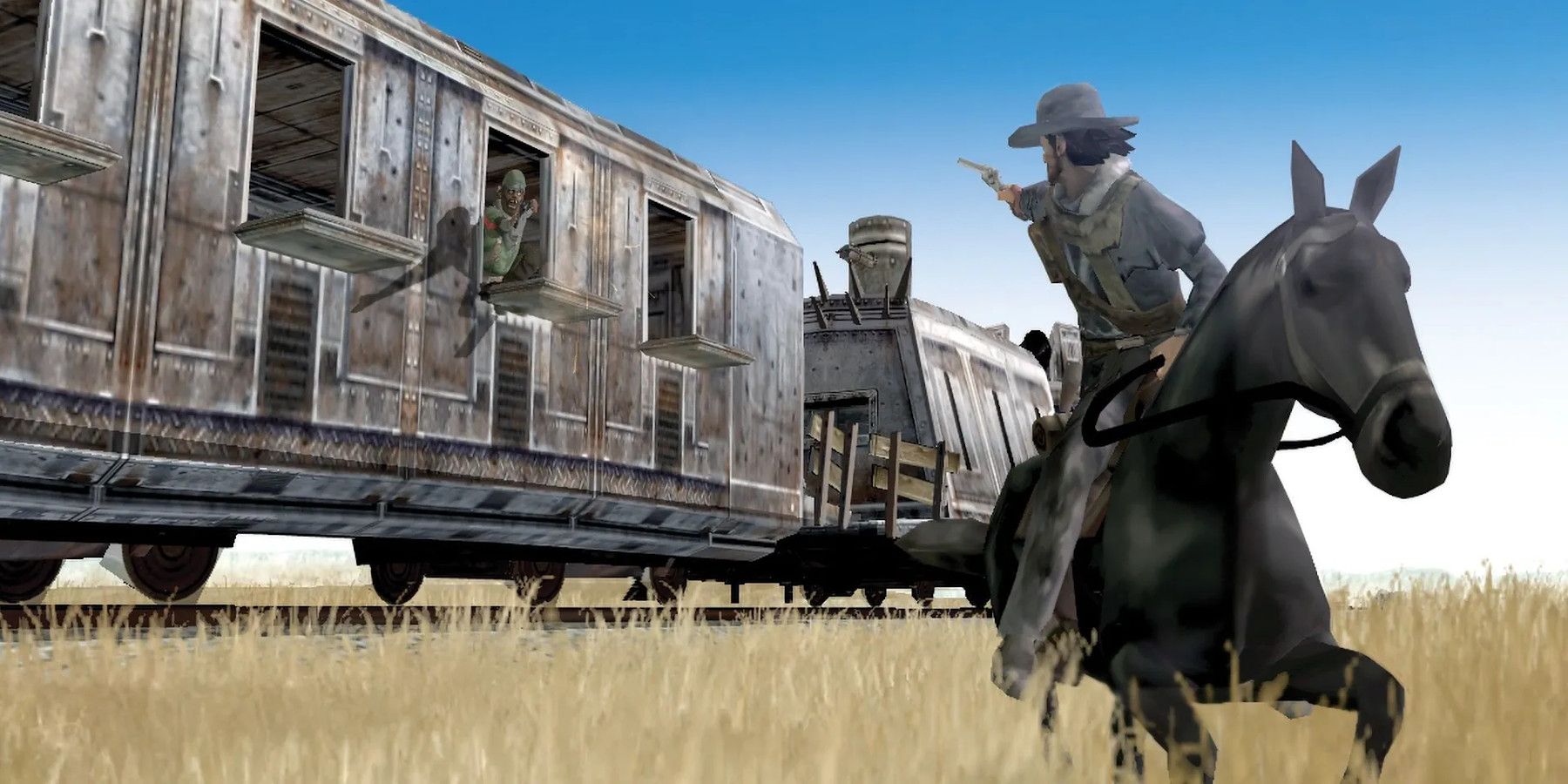
Okamoto wanted a third–person shooter called SWAT, where players could control multiple characters with unique abilities. The team spent three months developing a prototype, but the project shifted direction twice, until Okamoto ultimately suggested making it a western. The Spaghetti Western genre was already a hit in Japan, so the internal codename became “Spaghetti Western Action Team.”
The development process was anything but smooth – cultural differences led to conflicts on both sides. Ultimately, the idea of seven playable characters was dropped, and the game was rebranded as Red Dead Revolver. Capcom officially announced the title in March 2002, but Angel Studios still doubted the game would ever be finished.

Without Rockstar, the Western Wouldn’t Have Been Reborn
That’s when Rockstar came back into the picture. The Houser brothers loved Diego Angel, and the whole company had great respect for Angel Studios. While the studio was working on Midnight Club or Smuggler’s Run, Sam and Dan Houser always tried to get a look at the Western project, though publishing contracts kept them away. Darren Bader, the art director of Red Dead Revolver, recalls: “I remember Sam and Dan always saying, ‘Man, we just want to walk in and see what the hell you’re doing with that western – because we’ve always wanted to make a western game.'”
Angel Studios initially turned down Rockstar’s offer, but eventually received a valuation that matched Angel’s expectations, leading to the birth of Rockstar San Diego. There weren’t any tough negotiations with Capcom about the western’s rights, since they believed the project wasn’t going in the right direction and only kept the Japanese publishing rights.
For the public, it seemed strange when Capcom officially canceled Red Dead Revolver in August 2003, just nine months after Rockstar had acquired the studio. But just four months later, Rockstar announced development was continuing. In truth, work never actually stopped – it was just a legal formality. “Legally and technically, the project was canceled, but in reality, it was just transferred to Rockstar.” That’s how Stewart Spilkin, the game’s producer at the time, put it to Polygon.
Same Series, Different Worlds
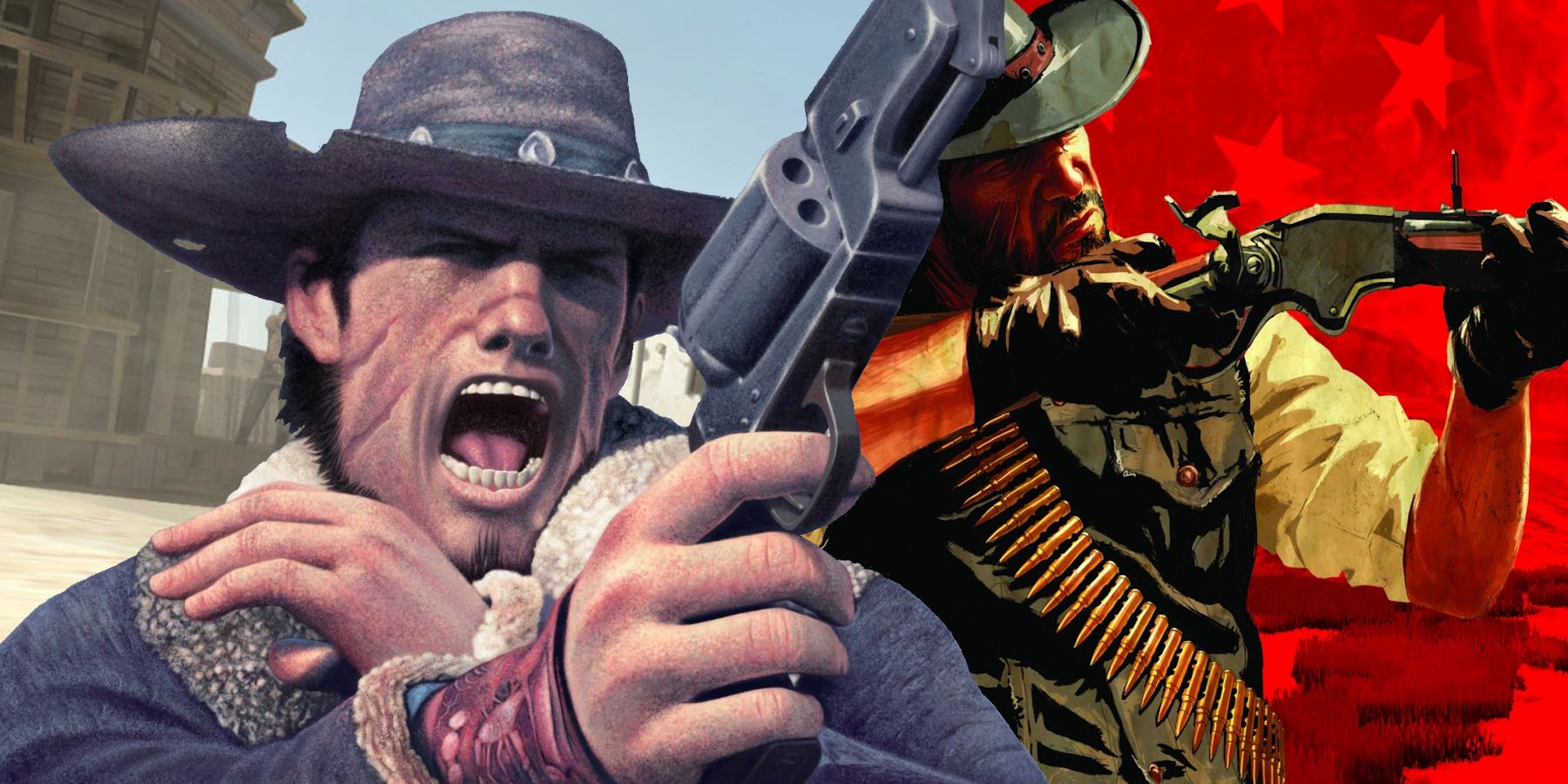
While everyone sees the evolution between Red Dead Redemption 1 and 2, the differences aren’t as dramatic as the leap in console generations might suggest. Red Dead Revolver offered a totally different experience – linear, mission–based gameplay, with each stage having its own score system and a shop at the end for buying weapons. It wasn’t open world, but the main character, Red Harlow, could wander freely around town talking to NPCs.
What’s most interesting is that gameplay mechanics familiar from the Redemption games – like bullet time (here called Red Eye) and dueling – already appeared in this installment. And you could play not just as Red, but also as Jack Swift, Annie Stoakes, Javier Diego, Shadow Wolf, and Buffalo Soldier, each with their own signature weapon.
Revolver and Redemption – Two Universes, One Legacy
What remains from Red Dead Revolver are many of the gameplay elements: bullet time, duels, multiple playable characters – but the story and the world are completely separate. “The two series take place in totally separate universes. Redemption is the story of John Marston and Arthur Morgan, while Revolver exists in its own unique world.” That’s how Dan Houser described it in an interview about the first Redemption DLC, Undead Nightmare.
Red Dead Revolver scored only a 74 on Metacritic and, by July 2010, had barely reached a million copies sold – well short of the Redemption series’ multi–million–selling success. If you’re curious, you can still find it on PlayStation and Xbox digital storefronts.
-theGeek-
Source: 3djuegos





Leave a Reply