
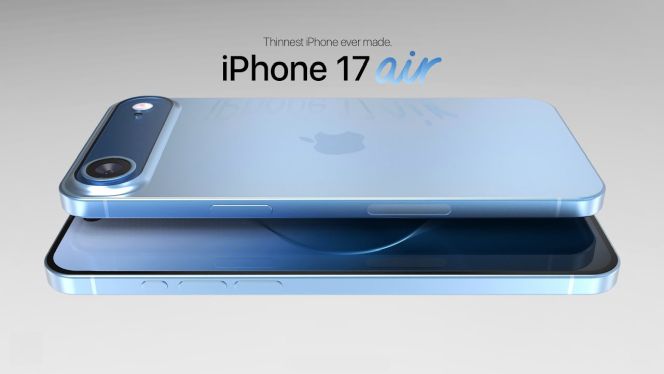
TECH NEWS – The Cupertino-based company may find itself in an unusual situation this year with its smartphones, as some models will not have the Pro pair.
Almost two years ago, Apple introduced a new surface treatment for iPhones that was promised to be more durable than the stainless steel or aluminum frames used on previous models. The titanium finish on the iPhone 15 Pro models gave the devices a fresh, matte look. However, it appears that the company will revert to an aluminum frame for the upcoming iPhone 17 models. However, a new rumor claims that at least one model, the iPhone 17 Air, will continue to have a titanium casing to overcome the drawbacks of the ultra-thin design.
Previously, The Information reported that Apple would drop the titanium chassis with the release of the iPhone 17 and iPhone 17 Pro models, which would end the devices’ durability. Nevertheless, a prominent analyst claims that the ultra-thin iPhone 17 Air will feature a titanium frame, setting it apart from the rest of the product line. Jeff Pu isn’t the only analyst to speculate that the titanium finish is here to stay; Ming-Chi Kuo also said that the iPhone 17 Air will have a titanium-aluminum alloy frame with a lower titanium content than the current Pro and Pro Max frames.
According to the analyst, the iPhone 17 Air will be the only device with a titanium frame, though it will have less titanium than the current iPhone 16 Pro models. It remains to be seen whether the new alloy will increase the frame’s durability, which the Air model will need given its anticipated thinness compared to the current iPhone 16 and the soon-to-be-released iPhone 17 models. Previously, we heard that the iPhone 17 Air would be positioned between the standard and Pro models in terms of functionality and design. It will have a single-lens camera on the back and potentially the same main sensor as the Pro models.
The iPhone 17 Air will also be powered by the A19 chip and have the same 12 GB of RAM as the Pro models. Using titanium for the iPhone 17 Air makes sense, as the company doesn’t want to risk another Bendgate fiasco. Although aluminum is lighter than titanium, durability appears to be a bigger concern for the Cupertino giant than making the device lightweight.
This is one of the trade-offs to make the device significantly thinner than the rest of the range.
Source: WCCFTech















Leave a Reply