
You may not realize it, but there’s a very high chance you’re canon in Dungeons & Dragons, and real people can play your story. In the setting of Planescape, there is a city called Sigil connecting the campaigns of many games that you have probably played yourself.
Today, many large fiction production companies aim to expand their franchises into multiverses: expansive spaces designed to accommodate various flavors and alternative realities for their stories, ultimately generating activity and debate among their communities of enthusiasts. You probably recognize Marvel as the great reference for this idea today, but this time we will talk about something that embodies the concept of uniting stories of all kinds: Dungeons & Dragons from Wizards of the Coast.
The D&D 5E Player’s Manual (2014) reads: “The worlds of Dungeons & Dragons exist as part of a vast cosmos called the multiverse. They are connected to each other and to other planes of existence […] Within this multiverse there are an infinite number of worlds, many of which have been published as official D&D settings. Alongside these worlds lie hundreds of thousands more; those created by generations of D&D players for their games.”
Or, in other words, D&D encompasses much more than the popular world of the Forgotten Realms (the setting hosts Faerûn): Spelljammer or Dragonlance, to name a few, are also part of the adventures located within the framework of the “most important RPG in the world” as WotC says; But I don’t know to what extent people are aware that the worlds and games created by other players also exist within that multiverse.
Worlds converging on Planescape
To explain why this happens, we must first understand and accept that Dungeons & Dragons is a “pen and paper” RPG. Technically, it is possible to play with the imagination following the guidelines of a Dungeon Master and nothing else; and due to its open-ended nature, all matches are played with at least some degree of entropy that is completely beyond the control of Wizards of the Coast.
That element of chaos and spontaneity is an indivisible part of D&D’s gameplay, so we could consider that there is no single campaign perfectly defined and adjusted by the writers: most of the things that happen are determined by the players and the DMs, unlike a video game in which we only have a certain degree of freedom to control actions predefined by the developer for one or the DMs. several characters.
Because imagination is just another playable element in D&D, the game expands infinitely with unofficially created worlds and stories. Some are community efforts to explore other IPs in the gameplay framework of D&D, for example, and others are entirely original. But all this converges in a multiverse of unlimited possibilities, which are canonical and appear at a certain point in a specific setting, Planescape.
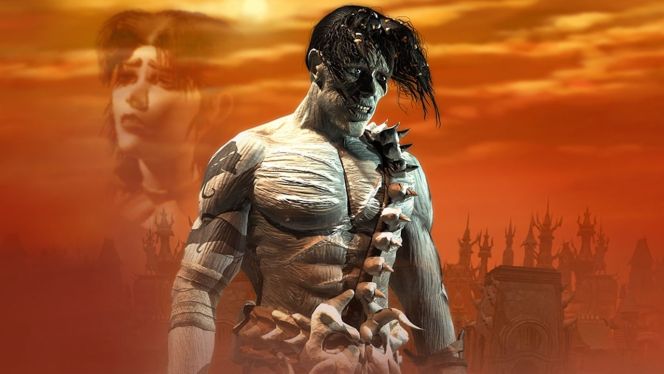
The adventures of Planescape were first published in 1994, allowing D&D players to explore the place where gods and other unexplained creatures came from. In the video game industry we know it well from the revered Planescape: Torment by Black Isle (the authors of Fallout or Baldur’s Gate) created on the classic Infinity engine.
And as part of this setting, it was written about Sigil, the City of Gates, which allows players to jump from one universe to another using a physical (fictional) location. The book Sigil and the Outlands (2023) itself says: “anything from any D&D setting and anything you can imagine can appear in a Planescape campaign”.
The truth is that Dungeons & Dragons is a very big franchise, with a lot of reach, and if you’re reading these lines, chances are you’ve already played a few D&D campaigns even if it’s without realizing it: through Baldur’s Gate, Icewind Dale, Planescape: Torment, or any form of role-playing. Even Japanese RPGs are inspired (in general) by Ultima and Wizardry, which are some of the many attempts to digitize this same game.
And through Sigil, the city of Planescape, it is perfectly possible to visit any of those games that you have played yourself. With your characters, the names you’ve chosen, and the choices you’ve made; the NPCs you’ve killed or saved, and the friends you’ve played with. That’s all part of some D&D world, and therefore has happened in that multiverse, and therefore can be played using the official WotC books.
Do all people exist in Dungeons & Dragons? No, because if someone has never played role-playing, you can’t visit their campaign. But you always have ways to mechanize a new one inspired by your old game of the original Baldur’s Gate, for example, and use the same official rules of 5E to jump from that world as you left it to another that suggests a published adventure you bought in a bookstore, and both sequences coexist (both yours, as acquired) and are connected to each other through Sigil.
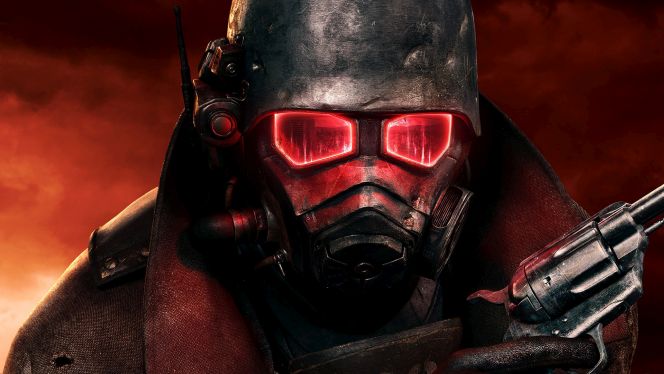
What a headache, right? The bottom line is that all of the worlds of D&D, official or not, are canonically connected to each other through a city called Sigil. And because imagination is a core part of the experience, you’ll always have free rein to mechanize and integrate any of your video game stories (your personal version) into a Planescape story. And whether you like it or not, even your modding of Interplay’s original Fallout is within the realm of imagination; which means it exists in D&D.
Source: 3djuegos














Leave a Reply