
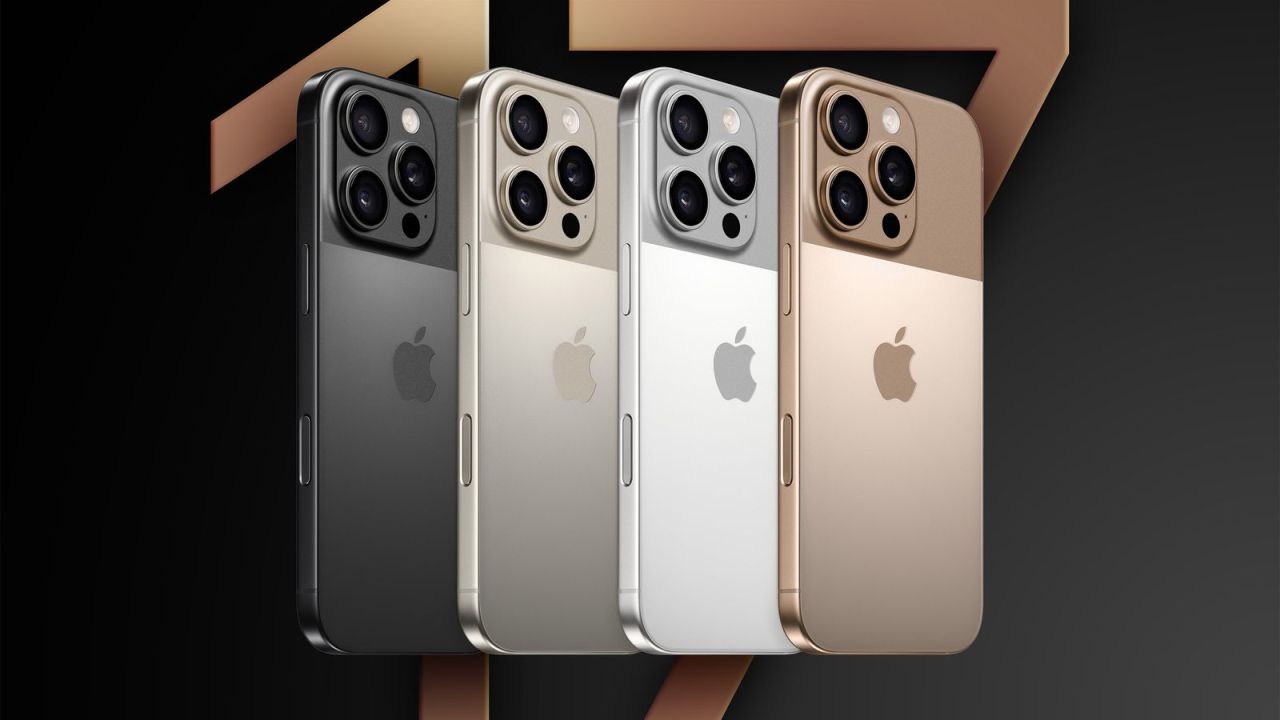
TECH NEWS – How many days of work are needed to buy one of Apple’s most expensive smartphones this year? The answer depends heavily on where you live.
Some argue that economic inequality is an unavoidable feature of capitalism. Still, the extent of income disparities across the globe remains staggering. And what better way to illustrate this than with Apple’s iPhone 17 Pro as the benchmark. The World of Statistics recently compiled a handy affordability index, using the newly launched $1,100 iPhone 17 Pro (base model, 256 GB storage) as a reference. The index calculates how many 8-hour working days, at the average hourly wage in a given country, are needed to purchase Apple’s flagship device.
Working days needed to buy the new iPhone 17 Pro (256 GB):
🇱🇺 Luxembourg: 3
🇨🇭 Switzerland: 3
🇺🇸 United States: 4
🇧🇪 Belgium: 4
🇩🇰 Denmark: 4
🇳🇱 Netherlands: 4
🇳🇴 Norway: 4
🇦🇺 Australia: 5
🇦🇹 Austria: 5
🇫🇮 Finland: 5
🇮🇪 Ireland: 5
🇩🇪 Germany: 5
🇨🇦 Canada: 5
🇫🇷 France: 6
🇸🇪…— World of Statistics (@stats_feed) September 13, 2025
As the tweet shows, in Luxembourg and Switzerland it only takes three workdays—24 working hours in total—to afford an iPhone 17 Pro. In the United States, the figure rises to four days, or 32 hours. Across most G20 countries, the iPhone affordability index remains under 50 days, or 400 hours. The stark exception is India, where buying the device requires 160 working days—1,280 hours. This is hardly surprising, given that the average monthly wage there is just 27,300 INR (about HUF 103,000).
With a standard 40-hour work week across four weeks, that translates to an hourly wage of 171 INR (about HUF 645). That’s staggering. Now, let’s look at Hungary: the iPhone costs around HUF 550,000, while the net average salary is HUF 479,500. This means roughly 27 workdays are required—more than a full month’s pay. (And if we consider that the median wage is even lower, with many earning only HUF 200,000–300,000, the situation looks far worse.)
Apple regularly adapts its product lineup for markets like India, introducing cheaper alternatives such as the iPhone 16e. In Q2 2025, Apple ranked sixth in the Indian smartphone market. Total shipments across all OEMs reached 39 million units during the quarter, marking a 7% year-over-year increase.
Source: WCCFTech



![Altera: Even Penguin Soldiers Could Be Out to Get Us! [VIDEO]](https://thegeek.games/wp-content/uploads/2026/03/theGeek-Altera-302x180.jpg)
![Lizard State: If There’s No Sam Fisher, Indie Devs Fill the Gap! [VIDEO]](https://thegeek.games/wp-content/uploads/2026/03/theGeek-Lizard-State-302x180.jpg)








![Altera: Even Penguin Soldiers Could Be Out to Get Us! [VIDEO]](https://thegeek.games/wp-content/uploads/2026/03/theGeek-Altera-300x365.jpg)
![Lizard State: If There’s No Sam Fisher, Indie Devs Fill the Gap! [VIDEO]](https://thegeek.games/wp-content/uploads/2026/03/theGeek-Lizard-State-300x365.jpg)
Leave a Reply