
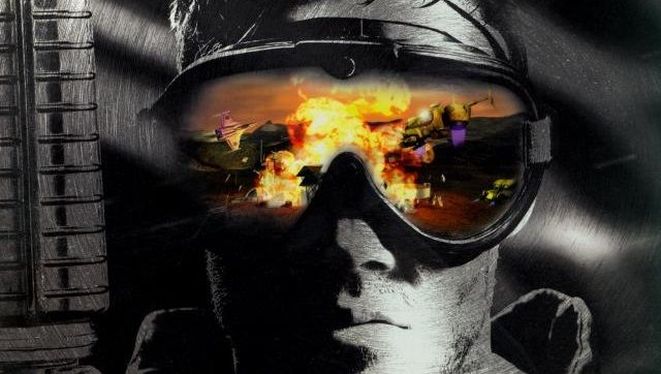
RETRO – Thirty years ago, on this very day, September 26, 1995, a game exploded onto the scene that didn’t just launch a new trend – it reshaped an entire genre forever. Command & Conquer wasn’t just another strategy title: it was the alpha and omega of digital warfare, the dawn of the “click-to-conquer” era that completely redefined how we think about battles on a screen. Westwood Studios’ legendary creation wasn’t just the beginning of a hit series – it became a vital part of an entire generation’s shared gaming memory. And even now, three decades later, we all still remember that iconic moment when a voice whispers in our ear: “Reinforcements have arrived.”
In the early 1990s, real-time strategy games – or RTS – were still finding their footing. Westwood Studios’ 1992 classic, Dune II, had already laid the groundwork, but the developers knew that was just the warm-up. Command & Conquer was no accident – it was the product of a deliberately crafted, ambitious vision. A game designed to be faster, more cinematic, more tactical, and more addictive than anything before it. And most importantly: the player was no longer just a “lieutenant” pulling strings from behind the scenes, but a true commander on the digital battlefield.

From the Shadow of Dune II to Global Domination
Development on Command & Conquer began in early 1993, immediately after Westwood wrapped up Dune II. Brett Sperry, the studio’s co-founder, later recalled: “Command & Conquer was the ultimate fulfillment of the Dune II wish list.” The goal was clear: to create “the emperor of RTS games” – a title that would not just build on its predecessor’s ideas but redefine the genre itself.
Even the name reflected their determination. Sperry was obsessed with calling the game Command & Conquer, believing it perfectly encapsulated the essence of its gameplay. The control system was also inspired by existing tech: the now-iconic drag-select and context-sensitive clicking were influenced by Apple’s desktop interface – two small but revolutionary innovations that forever changed how we command armies in real time.
Interestingly, the game was originally set in a fantasy world. But Westwood quickly shifted course: the geopolitical tensions of the 1990s – especially the Gulf War and growing fears of terrorism – pushed the team toward a modern warfare setting. Louis Castle explained: “War was everywhere in the news, and the threat of terrorism was on everyone’s mind.” Sperry believed that future wars would no longer be fought between nations but between decentralized, ideology-driven organizations and the Western world.
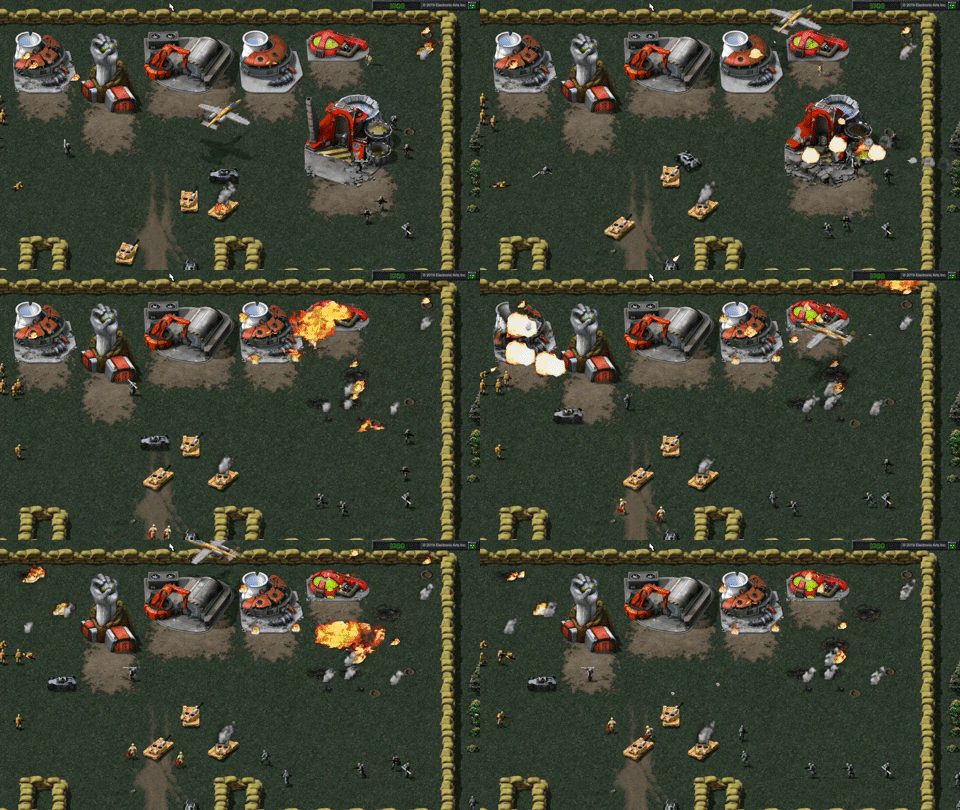
The developers wanted players to feel like their computer was a real military command terminal. Even the installation process was designed to feel like hacking into a classified military system. Paul Mallinson of Computer & Video Games described development as “fast, focused, and incredibly fun.” Joe Bostic, lead programmer, admitted: “Sometimes I couldn’t believe they were paying me for this.”
Even the central resource concept had cinematic roots: Tiberium was inspired by the 1957 B-movie sci-fi classic The Monolith Monsters. Castle summed it up: “We wanted a central resource everyone would fight for.” The conflict between GDI and the Brotherhood of Nod was therefore not just ideological, but also a struggle for control over Tiberium.

Tiberium, Betrayal, and Dinosaurs – How a Game Became a Legend
The story revolved around Tiberium, which changed the world almost overnight. GDI fought for global stability and order, while the charismatic Kane and his Brotherhood of Nod embraced revolution. The campaign could be played from both perspectives – a revolutionary concept at the time – offering entirely different viewpoints on the same war.
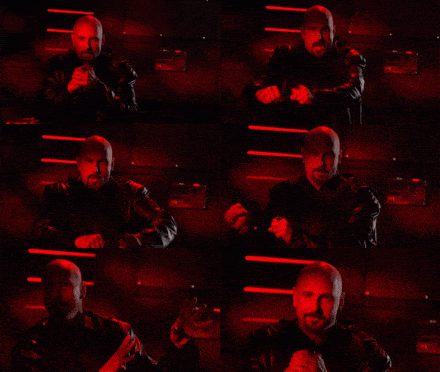
One of the game’s boldest choices was the use of live-action cutscenes. With a limited budget, filming took place in offices and warehouses, and most of the actors were members of the development team. Joseph D. Kucan portrayed Kane, who remains one of the most iconic villains in gaming history. “We never thought we could compete with TV or film, but Kucan created something special.” – Castle recalled.
Gameplay followed the classic RTS formula: building bases, harvesting resources, producing units, and making real-time tactical decisions. Even the installation process and menu design contributed to the illusion that the player was a military commander running operations from a war room. Frank Klepacki’s dynamic, industrial soundtrack – including the legendary Act on Instinct – perfectly heightened the tension of battle.
The game was released for DOS in 1995, followed by the updated SVGA edition, Command & Conquer: Gold, for Windows 95 in 1996. That same year saw a Macintosh version, with PlayStation and Sega Saturn ports arriving between 1996 and 1997, and a Nintendo 64 port in 1999. Due to a Virgin–Sega agreement, the console version was a Saturn exclusive for a time. In 2007, Electronic Arts made the game available for free, and it was later released digitally on PlayStation Network.
In 1996, Westwood released an expansion pack titled The Covert Operations, featuring 15 new missions and a hidden dinosaur-themed mini-campaign – an Easter egg available only in this expansion that quickly became a fan favorite. The spin-off Sole Survivor focused entirely on multiplayer, where players controlled single units in deathmatch and capture-the-flag modes.
Although a 3DO version was planned, it was never completed. In 2008, a fan-made patch ensured the game would continue to run on modern 32- and 64-bit systems, complete with bug fixes, higher resolutions, and new language support.
Waging War on the Charts – and in Gaming History
Command & Conquer wasn’t just a revolutionary game – it was a massive commercial success. By October 1995, it was the fourth best-selling CD-ROM product in the United States, and by April 1996 it had sold 500,000 copies. By September, that number had climbed to one million, and by February 1997 it had reached 1.7 million. Overall, the game sold more than three million copies worldwide, with particularly strong sales in Germany and France.
Critics were unanimous in their praise. Metacritic awarded the PC version a 94/100, GameSpot gave it 9.3/10, PC Gamer scored it 91%, and Sega Saturn Magazine rated it 94%. PC Gamer and Computer Gaming World named it Strategy Game of the Year, while Computer Games Strategy Plus crowned it Game of the Year.

Bob Strauss wrote in Entertainment Weekly: “If you loved playing with toy soldiers as a kid, now you’ll feel like you’re walking across a minefield straight into heaven.” Next Generation wrote: “This is a game every strategy fan must own.” Chris Hudak of GameSpot called it: “One of the most brilliantly designed computer games I’ve ever seen.”
Even more critical voices spoke highly of it. Martin E. Cirulis of Computer Gaming World described it as “essentially a very networkable Dune II”, but praised its story, interface, and online features. Peter Smith of Computer Games Magazine concluded: “Every detail in this game screams quality.”
Command & Conquer didn’t just mark the beginning of a new era – it reshaped an entire genre. StarCraft, Age of Empires, and Company of Heroes all followed in its footsteps. Even now, three decades later, when someone says “RTS,” the first name that comes to mind is this one. As Kane himself said: “Peace through power.” – and with that, the age of digital warfare truly began.
-Gergely Herpai “BadSector”-






Leave a Reply