
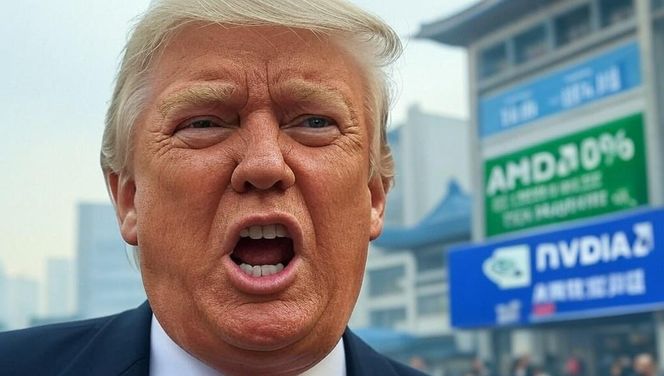
TECH NEWS – Computer components could face significant price increases if the Trump administration’s plan becomes a reality.
It seems that consumer PC products are once again under the threat of tariffs, as the Trump administration’s new policy could make them significantly more expensive. The U.S. government is currently assessing the scope of its chip policy and focusing on bringing manufacturing back to American soil. Instead of relying solely on investments from companies like TSMC, the administration is now considering imposing tariffs on foreign electronic devices, calculated based on the value of the chips they contain.
This means that if companies like Nvidia and Apple manufacture their chips in offshore facilities, their products could face tariffs — impacting a wide range of consumer products including laptops, CPUs, and GPUs. According to the plan (which has not yet been finalized and may still change), the Department of Commerce would impose tariffs on imported products equal to a percentage of the estimated value of the chips inside them.
The aim is to push companies like TSMC to fully shift production to the United States instead of pursuing a dual-sourcing strategy. However, Reuters did not disclose the exact mechanism by which the government plans to determine the chip content value of foreign-made products. If such a policy takes effect, the U.S. government would have to establish a body to assess factors such as country of origin and destination, product type, and chip type — all of which would entail substantial operational costs.
Most Nvidia and AMD graphics cards are manufactured in Taiwan, Thailand, and Indonesia, and many of them contain chips produced in TSMC’s Taiwanese facilities. The same goes for consumer processors, which would also fall under the new tariff rules. Under these chip policies, tariffs could rise as high as 100% if manufacturers fail to comply — significantly increasing the cost of consumer products.
AMD is already moving its Ryzen CPU production to TSMC’s Arizona plant, and Nvidia is making similar efforts to commit to domestic manufacturing. It is therefore not yet clear whether their products would be subject to the tariffs. However, the threat remains until these chip-related policies officially come into force.















Leave a Reply