
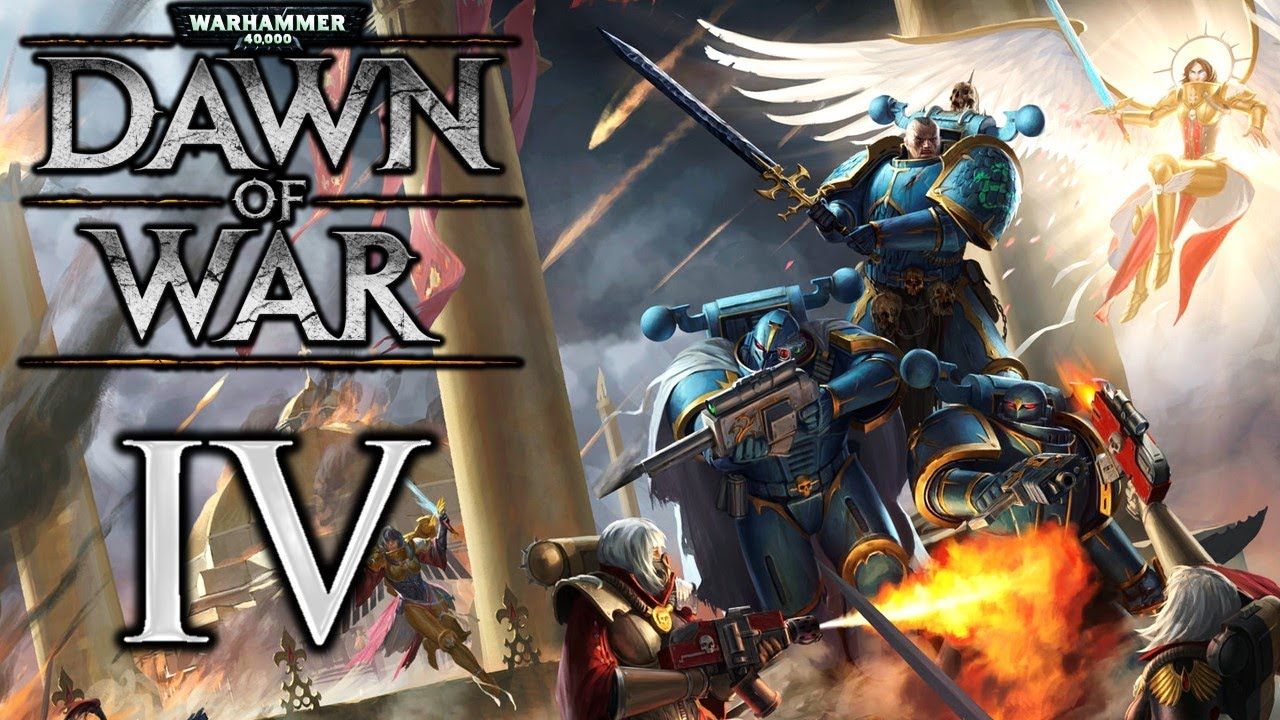
There’s a twist, though: King Art isn’t trying to remake the original game — it wants to recapture the feeling it gave players. And that, according to the developers, is a far bigger challenge.
Jan Theysen, creative director, and Elliott Verbiest, lead game designer, explained how their inspirations shaped the project. Each Dawn of War title has taken a bold stylistic leap from the previous one, and Dawn of War IV aims to be a “buffet” of the series’s best ideas. A new interview from the PC Gaming Show Tokyo Direct gave us a closer look at how these design choices come together on the battlefield.
Theysen revealed that they ultimately chose the first Dawn of War as their guiding star — the game that had the most profound influence on the sequel. Every team member agreed that their favorite element from the original was the sync kill system. When enemy units clashed, they didn’t just drop dead next to each other — they actually fought, and you could see soldiers getting wounded after being struck instead of simply falling over randomly.
Verbiest added that they wanted to go beyond that system, expanding it not only with synchronized kill animations but also with choreographed melee combat, powered by a new “combat director” system. According to Theysen, the main challenge with any sequel is not to recreate the old game itself but to recreate the *feeling* players had when they played it. That’s why base-building, massive armies, and the return of iconic factions like the Blood Ravens and Orcs are all back.
In the past, achieving a game of this scale required mods or a return to Dawn of War 3. Now, however, even without towering mechs, you’ll see huge numbers of units and structures on screen during intense firefights — eliminating fears that the action would feel watered down.
With four co-op campaigns, the return of the Last Stand mode, and three different types of battles, there will be no shortage of things to do when Warhammer 40,000: Dawn of War IV finally lands on PC.
Source: PCGamer

![Koshmar: The Last Reverie Looks Like an Action Adventure Trapped Between Dreams and Madness on PC and Consoles [VIDEO]](https://thegeek.games/wp-content/uploads/2026/04/theGeek-Koshmar-The-Last-Reverie-302x180.jpg)







![Koshmar: The Last Reverie Looks Like an Action Adventure Trapped Between Dreams and Madness on PC and Consoles [VIDEO]](https://thegeek.games/wp-content/uploads/2026/04/theGeek-Koshmar-The-Last-Reverie-300x365.jpg)

Leave a Reply