
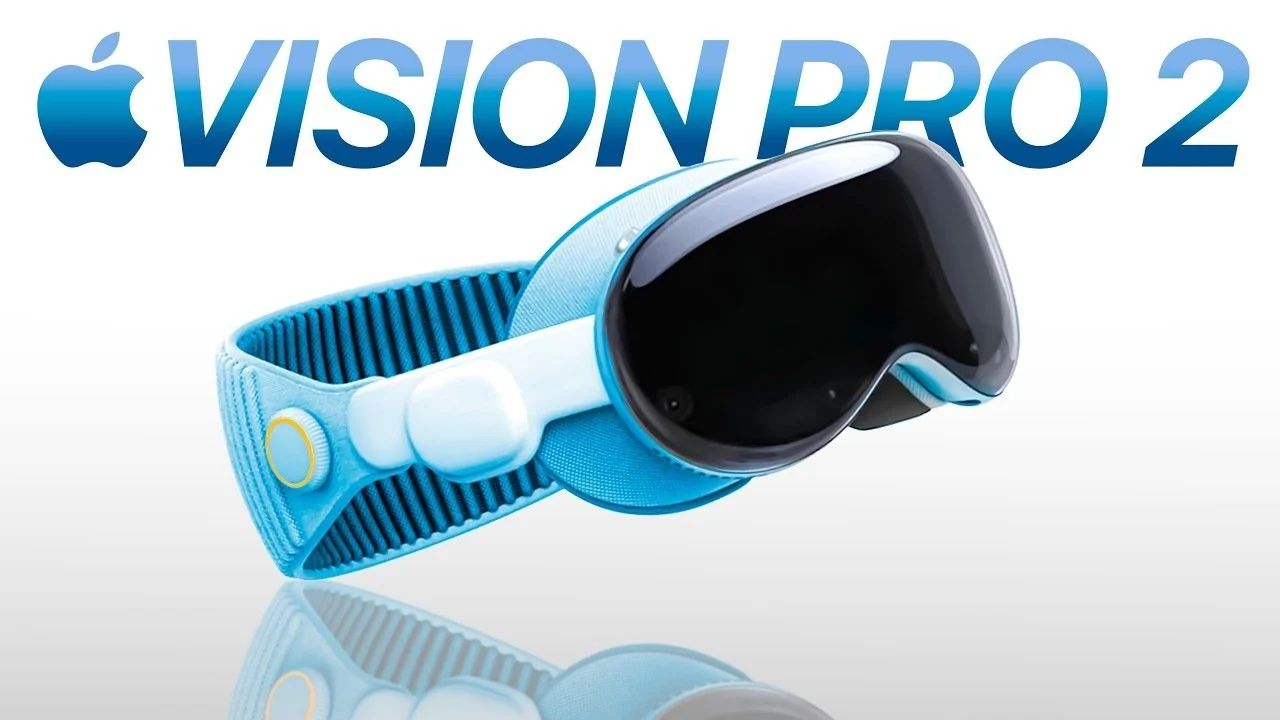
TECH NEWS – Plans for the AR headset, which were scheduled for release in 2027, may have changed after seeing Mark Zuckerberg’s company’s smart glasses.
Just hours after the FCC listing seemingly confirmed the upcoming launch of a less expensive version of the Vision Pro headset, Bloomberg editor Mark Gurman reported that Apple had postponed plans for the high-end version to prioritize developing AI-compatible smart glasses. Gurman outlined Apple’s broader strategy of introducing AI products that appeal to a larger mass market. The company is doing so to compete with Meta, which appears determined to dominate the AI-based smart glasses market.
Apple has halted all work on the high-end version of the Vision Pro headset, which was expected to launch in 2027 with the internal code name N100. However, the company is continuing to develop a cheaper version of the headset, codenamed N109. The “Head Mounted Device” with model number A3416, which was listed on the FCC’s website this week, is likely the cheaper version of the Vision Pro headset. Apple reportedly plans to launch its new AI-compatible smart glasses in 2026. The glasses will have integrated cameras, microphones, and speakers, and allow the wearer to communicate with an improved version of the company’s AI assistant, Siri.
Apple’s new smart glasses will support several key features, including hands-free notifications, real-time AI assistance, and AI-based translations. However, these glasses are not expected to have a built-in AR display. Apple is attempting to compete with Meta’s iconic Ray-Ban smart glasses, which offer eight hours of mixed use, two hours of continuous “live AI” support, Ultra HD 3K video recording capability, and an upcoming optimized noise cancellation system called “Conversation Focus.” The glasses have a built-in display large enough to read text, watch short videos, view directions, and see live translations. With a resolution of 42 pixels per degree (PPD), the display is higher resolution than any other Meta consumer VR headset.
Meta claims the glasses have a unique light source and waveguide that provides up to 5,000 nits of brightness. This allows the glasses to work well both indoors and outdoors. The glasses are available for $800 with the Meta Neural Band accessory, which provides a control interface. This interface allows users to navigate applications with hand gestures by detecting signals transmitted between the brain and hand via electromyography (EMG).
Apple does not seem to be trying to imitate Meta’s Ray-Ban Display smart glasses, but rather to copy the capabilities of its less conspicuous sibling model, which does not have a built-in display.















Leave a Reply