
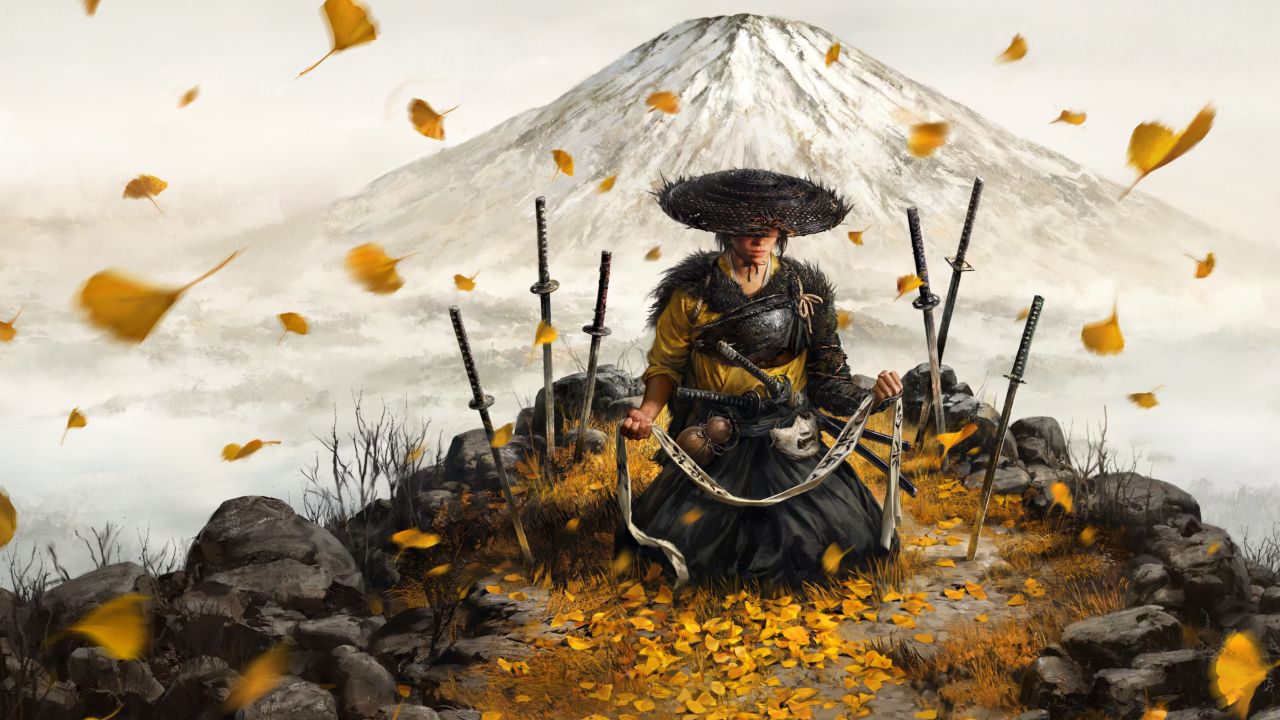
There’s a reason Ghost of Yotei gives players so many ways to climb — Sucker Punch wanted players to explore Hokkaido’s untamed beauty at their own rhythm. Creative director Jason Connell says this philosophy is at the heart of the entire experience: the feeling of unrestrained freedom.
Two things have captivated players since Ghost of Yotei was unveiled: its breathtaking open world and the ability to explore it at a relaxed pace. The protagonist, Atsu, can travel through Ezo on foot, on horseback, or by scaling cliffs and temples. Climbing became a cornerstone of the design process, as Sucker Punch believed it embodied the game’s fundamental idea — freedom.
In an interview with GamesRadar+, creative director Jason Connell explained how this notion shaped the gameplay and how it differentiates Ghost of Yotei from Ghost of Tsushima. “There’s this sense of freedom, right?” he said when asked about the new climbing mechanics. “That’s one of the main reasons we spent so much time ensuring that players could climb anywhere.”
Connell added that open-world games grounded in realism can’t rely on “magical teleportation” to move their protagonists. “That would break the reality bubble we’re trying to create. Instead, we focus on non-combat verbs that fit naturally within the world.” Because of Hokkaido’s mountainous terrain, climbing became the logical way to navigate the environment. “It was hard to imagine a game with this level of freedom without including climbing,” Connell admitted.
At the same time, the team is also improving how players descend. “We’re investing in faster, more expressive ways to go down — like quick rappels from the tops of shrines or sliding sections.” The goal, according to Connell, was “to turn Hokkaido’s epic verticality into an opportunity instead of an obstacle.”
Nature as the Player’s Guide
Beyond climbing, Connell discussed other key design choices. Unlike many open-world games, Ghost of Yotei doesn’t use yellow paint or exaggerated navigation markers. The creative team wanted Hokkaido’s natural scenery to guide players instead of breaking immersion. “We didn’t want to ruin the art team’s work with intrusive visual cues,” Connell said. The result is an organic navigation system that, much like the wind mechanic in Ghost of Tsushima, makes exploration intuitive and immersive.
Source: 3djuegos













Leave a Reply