
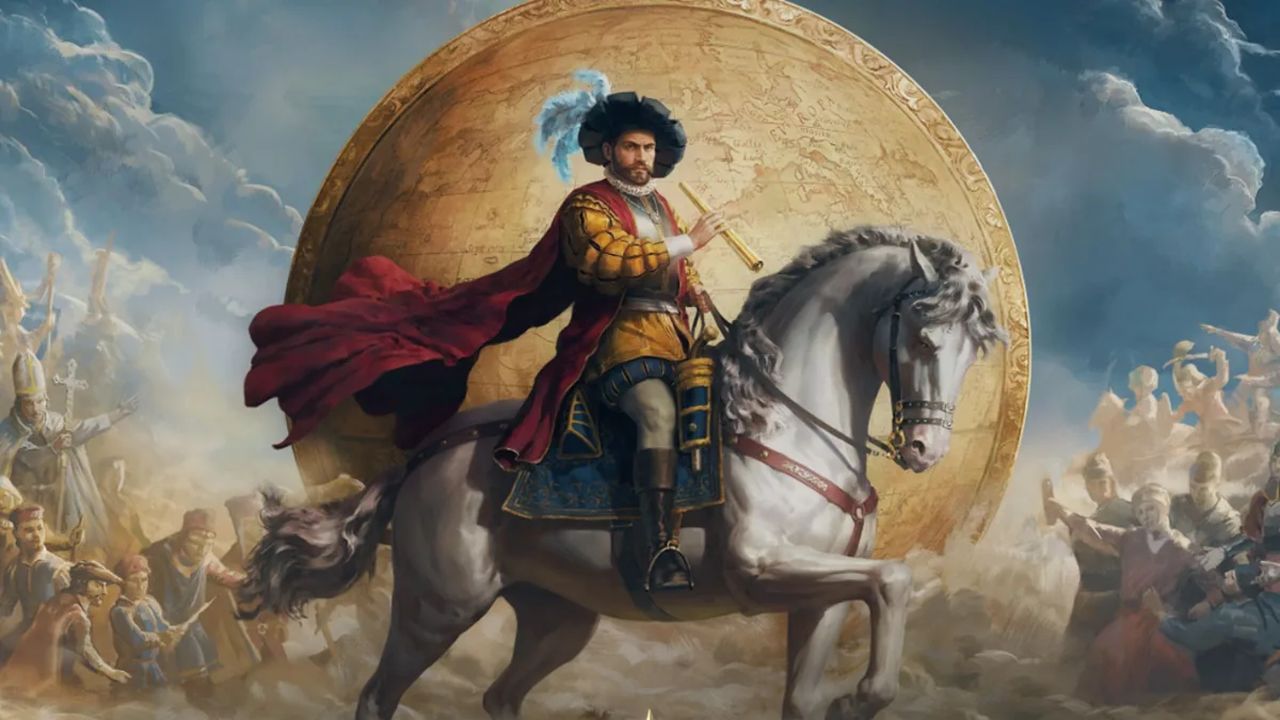
REVIEW — Europa Universalis V Throws You into Deep Water Starting in 1337, Among Dynasties, Trade Routes, and Religious Conflicts, and It Becomes Clear in the Very First Hours That Understanding Is the Real Victory Here. Its Layered Population Model, Logistics, and Diplomacy Paint a Living, Unpredictable World Where Seemingly Small Choices Echo Decades Later. This Is Not a “Try It for an Evening” Kind of Game, but a Strategic Commitment for Long Months in Which Every Step Matters.
Paradox Tinto builds on more than two decades of series foundations and widens the strategic canvas: an earlier start date, a more detailed population model, reworked diplomacy, and automation options that let you focus on decisions that define the big picture. The map is richer, the timeline longer, and events act not as set dressing, but as risks and opportunities. The goal is not merely conquest, but governance with all its burdens and consequences.

Winning Is Not Enough — You Have to Understand the Whole System
Paradox Interactive has long been strong in grand strategy. Fans have marched through World War II (Hearts of Iron), the intrigues of medieval dynasties (Crusader Kings), and the social transformation of the 19th century (Victoria). Since 2001, Europa Universalis has stayed true to this approach: realism, a vast strategic map, and long-term thinking. The fifth entry is a conscious continuation in which complexity is not a bonus but the heart of the game. Newcomers should watch a few guides, because the systems are dense and the opening hours are unforgiving.
Even the painterly main menu and the opening musical motif tune you to the idea that every detail carries weight. The game follows you from the mid-14th century to the dawn of the 19th, to the threshold of revolutions, and you decide every essential matter of state along the way. Abundance and variety are not for show. They exist so you can feel history’s motion in your own hands.

“I Am the State”
The new start year is 1337, earlier than in previous entries. The task in short: run and develop your country while expansion is only one of many paths. At the start you can pick from recommended nations across three play styles: trade and economy with the Low Countries, diplomacy-focused Naples, or aggressive conquest with the Ottomans or Castile. This choice is not cosmetic. Each country has its own rules. As Naples, border defense is a matter of survival. The Mongol Golden Horde’s strength lies in its mobilized army. In Islamic states, alcohol prohibition has tangible consequences for trade.
Here history is an event generator. The Hundred Years’ War, the Reformation, or the Black Death are not background, but storms that redraw regions and kneecap economies. These situations are not mere set-pieces. They are decision points that create new combinations in every campaign.

“Water Rules in the End”
The biggest shift is the population and social-strata model. You are not nudging a single big number, but managing groups: nobility, clergy, burghers, and peasantry. Each has its own satisfaction meter, and if support drains away, tension rises in the background until it turns into revolt. Every stratum has its own work output, consumption needs, and pain threshold, so demographics and economy march together. With labor shortages, production stalls. With price spikes, emigration starts. With supply disruptions, famine follows. The crown — that is, you — rearranges relationships with every decision. Let support collapse and you quickly get falling tax revenue, street unrest, or open rebellion.
Conquest alone is not enough. Holding on is the hard part. Provinces are judged by their distance from the capital, road density, loyalty, and bureaucratic presence. Looser control means higher autonomy, lower taxes and output, and even collusion with enemies. Empire size is not a trophy. It is a to-do list. Integration is slow and often takes decades. It needs bureaucracy, cultural accommodation, infrastructure, and loyalty. Rush it and you get revolts. If the strata resist, the nobility disobeys and the burghers refuse to pay.

AI Is a Good Servant, But Do Not Let It Rule
The game offers extensive automation: tax collection, trade, construction, research, and even some military tasks can be delegated. This means less fiddling and more energy for diplomacy, reforms, and grand objectives. The AI is not infallible, though. It may invest in the wrong place, underspend on a critical border, or “optimize” by cutting the navy in ways that cost you dearly later. The key is balance. Configure it well, and you save time. Leave it unchecked, and expensive mistakes follow. Patches will likely refine behavior, but even now, it is a big help if you use it wisely.
War is often decided in the depots. Warfare is the intersection of logistics, morale, economy, and demographics. Every loss is not just a number in a ledger, but also missing workers and a production gap. Supply lines, stockpiles, ports, and warehouses often decide the battle before the first volley. A hard-won victory after a long siege is especially satisfying, yet the game does not force you toward the sword, because you can reach your goals through diplomacy, trade, and internal stability. Sometimes the best war is the one that never starts.

Today’s Friend Can Be Tomorrow’s Foe — That Is Diplomacy
Diplomacy may be the series’s most complex and most human system to date. States keep track of favors and slights. Favor points are real political capital. You do not act in a vacuum. Your decisions can clash with the interests of social strata. Align with a Protestant league and the clergy grumbles. Sign an overly friendly trade pact, and the nobility sulks. Your reach extends beyond Europe through colonies, trade nodes, and distant markets, as well as agitation, dynastic marriages, and economic pressure.
You get sober reality instead of the romance of colonization. It needs money, people, and time, plus supplies, defense, a fleet, and administration. Miss any one of these and a colony withers through famine, unrest, or disease. Indigenous societies are not extras. They are actors. Some trade, others resist. A reputation for cruelty spreads and feeds back into European diplomacy. Profits arrive slowly, but over the long term, they are priceless, opening new routes, adding luxury goods to the economy, and boosting prestige.
Europe — How Universal Are You
The refreshed Clausewitz engine delivers a more detailed map, smoother animations, and richer effects without sacrificing strategic clarity. Cities visibly grow. Forests and rivers feel alive. Armies evolve with each era. The music adapts by country and situation in peace and in war, giving your decisions a rhythm. Performance is solid at the core, but the late game can slow down, and the AI can sometimes feel passive or inconsistent. Paradox’s long-term support suggests more polish will come, but for now you learn to live with a few sharp edges.
-Gergely Herpai “BadSector”
Pros
+ Deep, layered population and economy.
+ Real domestic politics with tangible class consequences.
+ Memory-based diplomacy and flexible warfare.
Cons
– Slow, patience-testing province integration.
– Automation sometimes misprioritizes and needs oversight.
– Steep learning curve for newcomers.
Developer: Paradox Tinto
Publisher: Paradox Interactive
Genre: Grand Strategy, Historical Management
Release Date: November 2025
Europa Universalis V
Gameplay - 8.2
Graphics - 8
Learning curve - 6.5
Music/Audio - 7.8
Ambience - 8.5
7.8
GOOD
Europa Universalis V isn’t about ticking off a list of scenarios; it presents a world model where the consequences of your choices echo decades later. Its strata-based population, memory-driven diplomacy, and logistics-focused warfare combine to deliver rare depth. Despite slow integration and occasional AI missteps, it’s a monumental experience that richly rewards patience—perfect for players who love untangling complex systems.



![Altera: Even Penguin Soldiers Could Be Out to Get Us! [VIDEO]](https://thegeek.games/wp-content/uploads/2026/03/theGeek-Altera-300x365.jpg)