
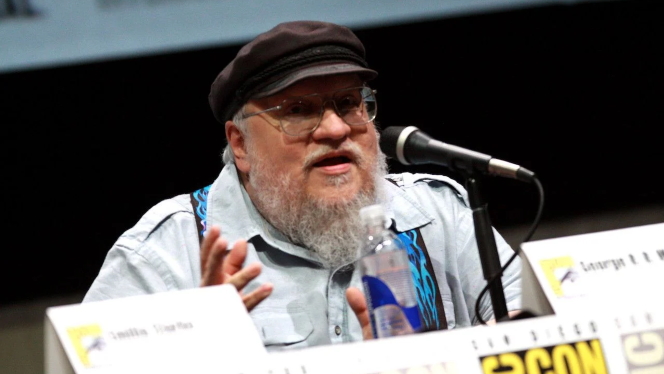
MOVIE NEWS – George R. R. Martin has never hidden how much generative AI worries him, but this time the creator of Game of Thrones is going beyond blog posts and interviews. The author of the A Song of Ice and Fire novels is using a ChatGPT-written “alternate sequel” to A Clash of Kings as evidence in a US lawsuit against major AI companies, and for now the case seems to be moving in his favor.
It is no secret that Martin views AI with deep mistrust and has said so repeatedly over the years. But the man behind Game of Thrones is not just complaining from the sidelines: he is actively trying to contain what he sees as a threat to his copyrights, which includes taking some of the biggest names in artificial intelligence to court in the United States. So far, that crusade is going rather well for him and for the growing group of writers who have joined the effort.
As reported by Sensacine, a US federal judge recently ruled that a copyright infringement lawsuit brought by several high-profile authors against OpenAI and Microsoft can go ahead. In short, Martin and his fellow plaintiffs argue that large language models such as ChatGPT were trained on their copyrighted books without permission, allowing the AI to generate text that mimics their style, themes, and characters – effectively creating derivative works without paying the people who wrote the originals.
The judge reached this decision after examining a concrete example: a ChatGPT-generated sequel to A Clash of Kings. Martin’s legal team asked the model for a detailed outline of a follow-up to the second book in A Song of Ice and Fire that would not mirror the third novel actually published, A Storm of Swords, and would instead send the story down a different path. ChatGPT answered enthusiastically, suggesting an alternative continuation and even proposing a title for it, A Dance with Shadows, before launching into plot ideas.
What If Another Challenger To The Iron Throne Emerged?
The result was a lengthy synopsis packed with familiar-sounding elements: the discovery of a new form of dragon-related “ancient magic,” the arrival of a fresh pretender to the Iron Throne in the form of Lady Elara, described as “a distant relative of the Targaryens,” and even a renegade faction of the Children of the Forest. Many of these beats likely draw on fan theories and online speculation, but on the page they end up looking uncomfortably close to the sort of twists you might expect from a Martin-penned sequel.
In the judge’s view, that is enough for a reasonable jury to decide that the allegedly infringing passages are “substantially similar” to the plaintiffs’ works. That does not mean ChatGPT or its creators have already been found liable, but it does mean the lawsuit will move forward – an important victory for Martin and his fellow authors, among them Michael Chabon, Ta-Nehisi Coates, Jia Tolentino, and Sarah Silverman. For now, all parties must wait to see how the case evolves in the coming months and years.
Meanwhile, fans of A Song of Ice and Fire are still waiting for the real thing. The next novel, The Winds of Winter, followed by A Dream of Spring, has been delayed for more than a decade, and there is no clear sign that the wait is about to end. The consolation prize is that HBO is preparing two new Game of Thrones series for 2026, with the clear intention of turning the franchise into an even more sprawling fantasy empire.
Source: 3djuegos




![Koshmar: The Last Reverie Looks Like an Action Adventure Trapped Between Dreams and Madness on PC and Consoles [VIDEO]](https://thegeek.games/wp-content/uploads/2026/04/theGeek-Koshmar-The-Last-Reverie-302x180.jpg)


Leave a Reply