
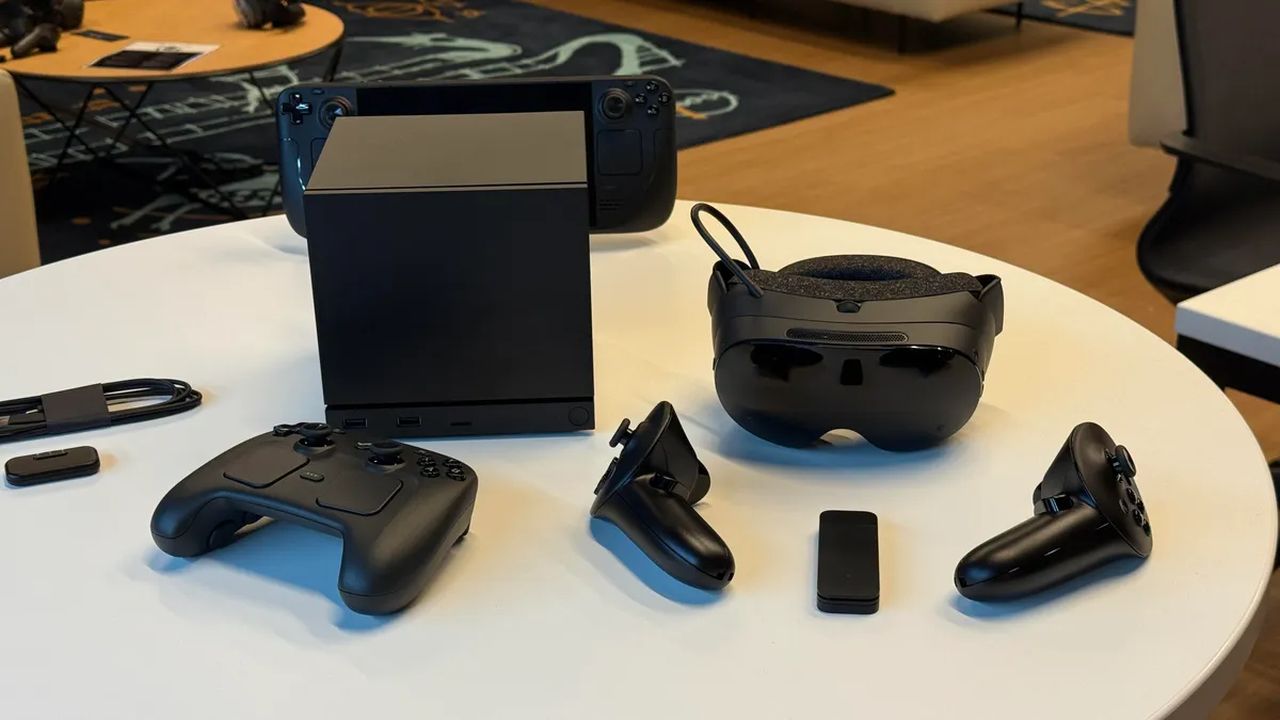
TECH NEWS – Although the device may initially bring to mind the Nintendo GameCube, Valve’s hardware takes a slightly different approach.
The company recently announced three pieces of hardware, which has already been covered in the news. The company then received numerous interviews and press coverage. In an interview with Eurogamer, Yazan Aldehayyat, a Valve hardware engineer, discussed how the company designed the Steam Machine. It wasn’t because Valve wanted to make its own Nintendo GameCube (hence the internet nicknames Gabe Cube or Steam Cube). Valve began designing the Steam Machine when they seriously considered the cooling and heat management challenges it would face when placed on a desk or on a living-room TV stand.
“If you know how much heat you need to remove and what temperatures you’re dealing with, then you know how much air you need. If you know that, then you can lock in a fan design pretty early on. Once you know the size of the fan, everything else falls into place. Living rooms are actually one of the most challenging thermal environments,” Aldehayyat said.
Devices, whether consoles or small media players, are typically hidden in cabinets or surrounded by heat sources such as TVs or fireplaces, posing greater cooling challenges. Valve can only try to take these factors into account. It’s no surprise, then, that the design of its new console-like PC emerged from a desire to improve the performance of the Steam Deck without creating a device that would eventually be considered more of a desktop computer. Years ago, Nintendo proved that consoles don’t have to be huge boxes or towering plastic-and-tech constructions to be popular and living-room friendly.
The Steam Machine measures 152 x 162.4 x 156 mm, while the Nintendo GameCube measures 110 x 161 x 150 mm. Clearly, technology has come a long way: Valve can manufacture a device that runs modern games while requiring only a few millimeters more space than a nearly 25-year-old console.




![[TGA 2025] Tomb Raider: Legacy of Atlantis: Another Remake of the First Game! [VIDEO]](https://thegeek.games/wp-content/uploads/2025/12/theGeek-Tomb-Raider-Catalyst-Legacy-of-Atlantis-Remake-Crystal-Dynamics-302x180.jpg)








![[TGA 2025] Tomb Raider: Legacy of Atlantis: Another Remake of the First Game! [VIDEO]](https://thegeek.games/wp-content/uploads/2025/12/theGeek-Tomb-Raider-Catalyst-Legacy-of-Atlantis-Remake-Crystal-Dynamics-300x365.jpg)
Leave a Reply