
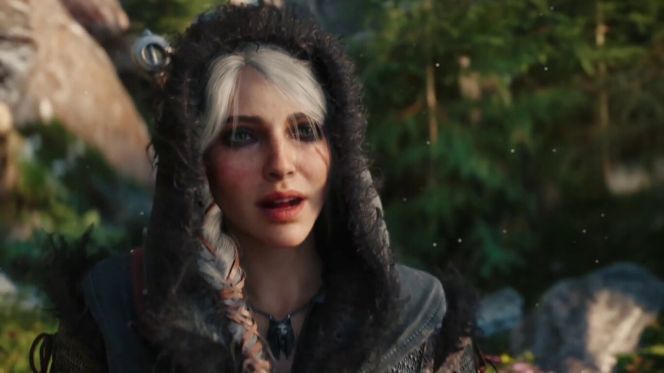
On paper, it sounds almost impossible, but that is exactly what CD Projekt is aiming for: to speed up development on The Witcher 4 and the following entries to a pace the studio has never managed before. According to the team, the key is Epic Games’ technology, specifically Unreal Engine 5, which they believe can finally streamline the entire production pipeline for the next Witcher trilogy.
Major publishers face a serious challenge when they have to manage several games at the same time, and CD Projekt RED is no exception. The studio is currently juggling multiple open-world RPGs, including new entries in the The Witcher series and the sequel to Cyberpunk 2077. Right now, the most advanced project inside the company is clearly The Witcher 4, which already has close to 450 developers working on it and is planned for release in the coming years, but behind the scenes there is a much more ambitious plan taking shape.
New The Witcher Trilogy In Six Years
Because the gaps between mainline entries have traditionally been very long – The Witcher 3 came out more than ten years ago – CD Projekt wanted to reassure both players and investors by restating a clear, long-term roadmap for its flagship franchise. As outlined in the transcript of the Q3 2025 earnings call, the company insists that it remains fully committed to this ambitious strategy.
The Polish developer intends to release a brand-new The Witcher trilogy over a six-year period, starting with the launch of The Witcher 4, which in realistic terms could arrive sometime in 2027 or 2028. This is a faster-than-usual release cadence and is built above all on the decision to abandon the studio’s proprietary REDengine in favor of Unreal Engine 5. The team believes this transition is crucial, because it will allow them to accelerate development by reusing assets, systems, and core mechanics across all three games.
The goal is to establish a more disciplined and efficient way of working, avoiding the technical issues and bottlenecks that marred the disastrous launch of Cyberpunk 2077. CD Projekt RED hopes that, with support from Epic Games, its teams will be able to focus on storytelling and art rather than wrestling with a controversial in-house engine. The company openly admits that adapting to Unreal Engine 5 has presented its own challenges, but if everything goes according to plan, we could see The Witcher 5 roughly three years after The Witcher 4, with a similar gap before the sixth entry.
CD Projekt RED has therefore publicly reaffirmed that it is standing by this far-reaching schedule, even as it acknowledges that this is a long-term plan in which the first step is absolutely critical. At the moment, The Witcher 4 is in full-scale production, with the largest development team in the company’s history assigned to this dark-fantasy RPG, which will put Ciri at center stage.
“We’ve been using Unreal Engine 5 for The Witcher 4 for four years and we’re very happy with what we’ve achieved,” says Michal Nowakowski, the company’s co-CEO.
“We’re very pleased with the results. We’re happy with the engine’s evolution thanks to the experts at Epic Games and with how we’re learning to make it work in an open-world game as large as The Witcher 4 aims to be. I think the next games should be released over a shorter period of time. Our plan is still to release the complete trilogy over a six-year period, which would mean we’d plan to have a longer development time between The Witcher 4 and The Witcher 5, between TW5 and The Witcher 6, and so on,” he explains (via TweakTown).
What About The Witcher Remake And Its Spin-Off?
Alongside this new main trilogy, CD Projekt RED is also pushing ahead with two other highly anticipated projects set in the same universe. One is the remake of the first The Witcher, developed in collaboration with Fool’s Theory, which will also use Unreal Engine 5 to rebuild the adventure that started it all from the ground up. The idea is not just to spruce up the visuals, but to modernize combat, storytelling, and quest design in a full open-world recreation.
This remake currently has no release window and will likely arrive after The Witcher 4, since parts of its development are being built on work carried out for that project. Project Sirius, a co-operative spin-off of The Witcher, is a different story. It went through a major reboot in 2023, after its initial incarnation failed to convince CD Projekt itself. Since then, the project has been almost completely rethought with a more controlled, focused design, and it is moving forward slowly as a medium-term effort intended to capitalize on the success of the upcoming Witcher trilogy.
It is reasonable to assume that we will not see anything substantial from this spin-off until The Witcher 4 is much closer to launch, and its own release will most likely slip into the next decade. That seems even more likely given that CD Projekt RED announced months ago that it had acquired the studio responsible for its development. Meanwhile, the other major pillar of CD Projekt’s future remains the sequel to Cyberpunk 2077, which continues to benefit directly from the long-running success of the original sci-fi RPG.
After selling 35 million copies in less than five years and surpassing The Witcher 3’s sales over the same time frame, this upcoming futuristic RPG is still in development and is currently in pre-production. The team now has up to 135 developers, and CD Projekt plans to grow that number to between 300 and 400 employees in 2026 and 2027. In practice, this means that Cyberpunk 2 will not arrive before 2028 – and even that target is already seen as unrealistic, with the game not expected to be released until sometime after 2030.
Source: 3djuegos



![Altera: Even Penguin Soldiers Could Be Out to Get Us! [VIDEO]](https://thegeek.games/wp-content/uploads/2026/03/theGeek-Altera-302x180.jpg)
![Lizard State: If There’s No Sam Fisher, Indie Devs Fill the Gap! [VIDEO]](https://thegeek.games/wp-content/uploads/2026/03/theGeek-Lizard-State-302x180.jpg)








![Altera: Even Penguin Soldiers Could Be Out to Get Us! [VIDEO]](https://thegeek.games/wp-content/uploads/2026/03/theGeek-Altera-300x365.jpg)
![Lizard State: If There’s No Sam Fisher, Indie Devs Fill the Gap! [VIDEO]](https://thegeek.games/wp-content/uploads/2026/03/theGeek-Lizard-State-300x365.jpg)
Leave a Reply