
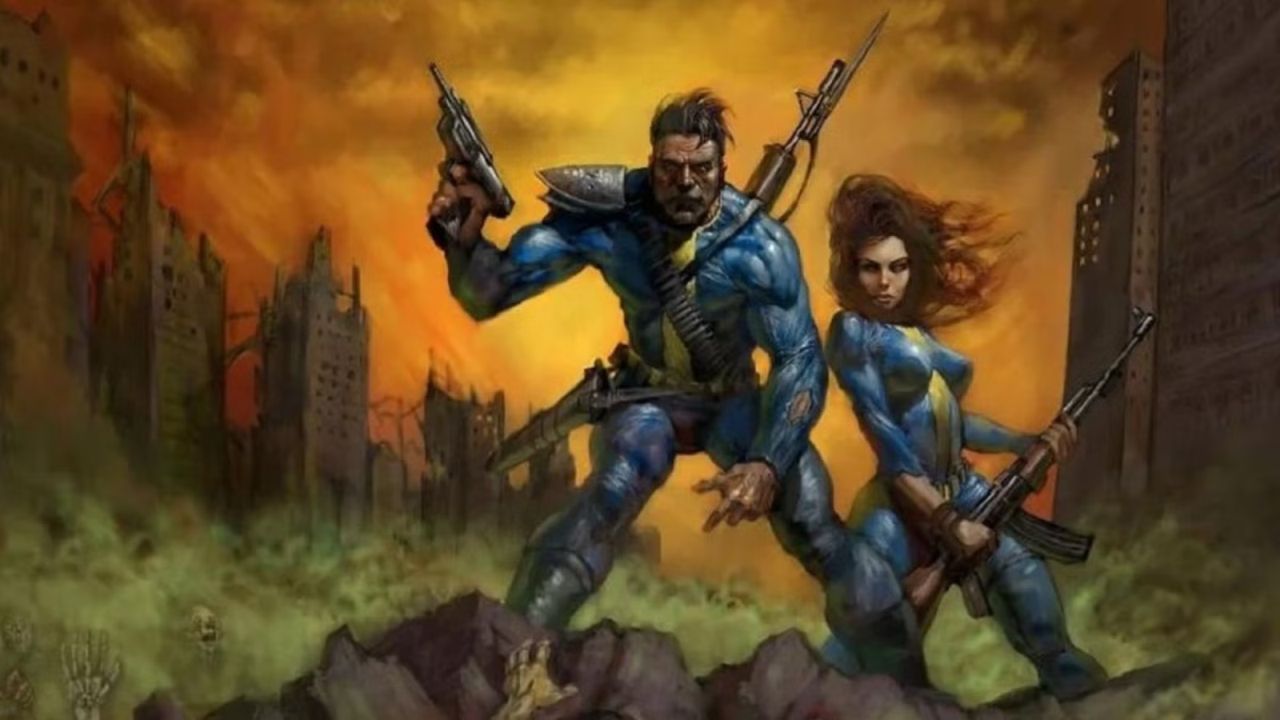
According to the executive producer at Bethesda Game Studios (BGS), the serious, dystopian elements of the Fallout franchise are essential to understanding how its world became what it is today.
Fallout is many things, but fundamentally, it is satire—a long, exhausting example of where the intimidation of the Cold War era could have led: a world blown up and contaminated with radiation, filled with Deathclaws. Before nuclear weapons, the world was flooded with retrofuturism based on nuclear energy. This drove world governments crazy, leading them to use atomic bombs. According to Tim Cain, China started it (we wrote about this earlier).
This led to incomprehensible man-made horrors: flesh-shedding ghouls, dog-sized cockroaches, and a lot of really good music. Howard is right that the optimistic Stepford smile of a society on the brink of war makes Fallout full of life. This spirit of war echoes in a world completely unsuited to it.
“It’s a check on our own world, a cautionary tale in some respects. I think what really makes the world of Fallout special is the world before the bombs fall. That’s what separates it from other post-apocalyptic fiction.” You mentioned seriousness, and tone is one thing we talk about a lot because it’s tricky. There have to be serious, hard moral choices and moments. Then, in the next scene, you’re being goofy and blowing heads up. Having that change and having the actors be able to do both is what really makes the whole thing work,” Howard said.
The comic satire of the pre-war world must be balanced with the bloody horrors of the post-apocalypse. This balance is so difficult that Howard wasn’t sure the iconic phrase “War never changes” was appropriate for the big screen, especially since the Fallout series was renewed for a second season.
On the topic of Fallout, there have also been rumors about remasters of Fallout 3 and Fallout: New Vegas, which we’ve also written about.
Source: PCGamer













Leave a Reply