
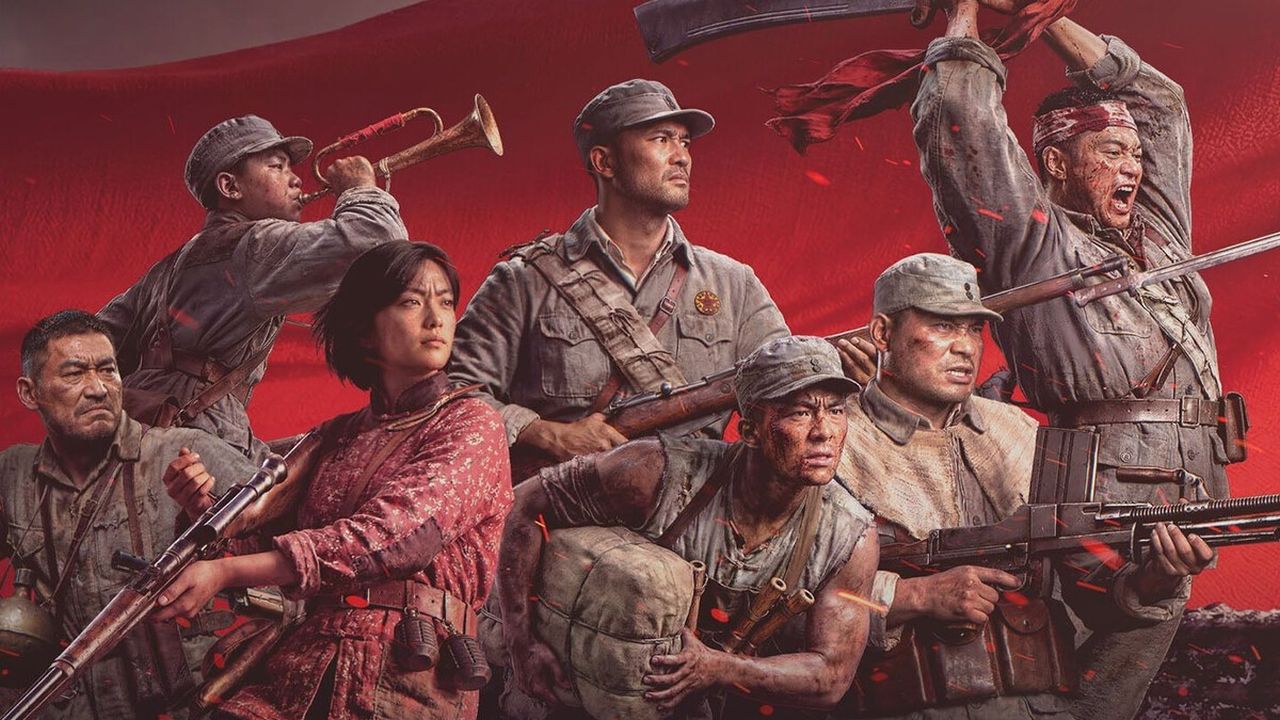
China is pouring serious money into a single-player shooter that many are already calling its own Call of Duty. Titled Fourteen Years of Flames, the game tackles the Second Sino-Japanese War with unflinching detail, a choice that is stirring unease in Japan while Beijing presents it as a long-overdue historical reckoning.
For years, Call of Duty has been shorthand for blockbuster war epics in gaming: spectacular battles, Hollywood-style action, and fictional heroes dropped into real conflicts. Yet, as journalists like Alan MacLeod have pointed out, growing involvement from U.S. government institutions has only amplified the propagandistic tone of many campaigns, with America framed as the unquestioned savior of almost every crisis. Military messaging, however, is not a U.S.-only phenomenon. The latest example is the project many are dubbing a “Chinese Call of Duty”: Fourteen Years of Flames, a shooter that revisits the Second Sino-Japanese War from a distinctly Chinese point of view, with a strong emphasis on historical atrocities attributed to Japan.
Some critics are quick to label the game anti-Japanese, arguing that it is designed to rekindle hostility. But history is full of shameful and deeply uncomfortable episodes, and this conflict is undeniably one of them. The Second Sino-Japanese War, officially fought between 1937 and 1945, has roots in Japan’s 1931 invasion of Manchuria and is now widely regarded as an integral part of World War II. Stretching over almost a decade, it became one of the most tragic and controversial chapters of the Asian theater.
The war was marked by prolonged ground campaigns, relentless bombing, systematic violence against civilians, and widespread guerrilla warfare. The toll was staggering: China is estimated to have lost around 21.3 million people, some 17 million of them civilians. The brutality was such that historians like Laurence Rees, a British expert on twentieth-century totalitarian crimes, have described the conflict as an “Asian Holocaust”, since it accounts for more than 90% of the casualties in the Pacific War.
A War Game That Doubles as a Harsh History Lesson
Against this backdrop, Fourteen Years of Flames is being positioned with a dual purpose: entertainment and education. The developers are not just promising a gripping war story, but also a window into a chapter of Chinese collective memory that rarely reaches a global audience. In a country where video games are a dominant cultural force, projects like this can help build a distinctly national narrative around the war and raise historical awareness among younger players, in a way that films or books often struggle to match.
For China, the conflict remains an open wound that has already inspired dozens of movies and series attempting to capture the cruelty of the Japanese occupation. Now Fenghuo Studio is taking that legacy into the realm of first-person shooters. In Fourteen Years of Flames, players step into the boots of seven main characters across 16 missions based on real historical events, visiting fronts that range from remote villages in the northeast to Chongqing – the wartime provisional capital and one of the most heavily bombed cities of World War II.
The studio says its goal is to recreate the era as faithfully as possible: weapons, gear, vehicles, and environments are built from historical references, using what they describe as a “1:1 scale model” approach. The protagonists themselves are fictional, but their stories draw heavily on interviews and testimonies from actual veterans who witnessed both Japanese atrocities and the brutal reprisals carried out by guerrilla fighters. According to the team, this is their way of striving for a more balanced, nuanced narrative rather than a simple tale of good versus evil.
A “Chinese Call Of Duty” With a Very Different Front Line
It is no surprise that players have started referring to the project as a “Chinese Call of Duty”. On paper, it clearly embraces the classic narrative-FPS formula: cinematic storytelling, bombastic military action, and a tightly directed single-player campaign at its core. The key difference is the setting. Instead of revisiting battles in Europe or the better-known Pacific campaigns, the game shines a spotlight on a conflict that has rarely been explored in mainstream Western titles.
This is where Fourteen Years of Flames could stand out. It leverages the familiar structure of a big-budget war shooter while focusing on a front that has largely been invisible to international audiences. At the same time, it inevitably raises questions about where to draw the line between historical remembrance and modern propaganda – debates that will, if anything, generate even more curiosity around the game.
For now, Fourteen Years of Flames does not have a release date, there is no gameplay footage, and the project is reportedly not being dubbed or translated into other languages. Even so, it already looks like a rare outlier in today’s market: a game built around a scarcely portrayed theater of war that aims to confront players with one of the bloodiest conflicts in modern history.
Source: 3djuegos














Leave a Reply