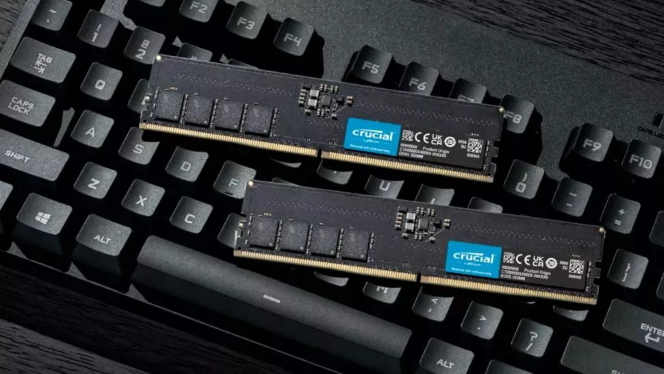
TECH NEWS – The DRAM shortage will therefore have an increasingly negative impact on a growing number of things. Instead of price increases, we will end up with less hardware.
According to an internal analysis by SK Hynix, growth in DRAM products will be limited and unable to meet demand. DRAM prices are already bad, but the situation has gotten out of hand, making it extremely difficult for the general public to obtain affordable PCs. With the exception of high-bandwidth memory (HBM) and stacked-die DRAM (SOCAMM) modules, growth in DRAM products will remain limited until at least 2028. This is because major memory manufacturers have shifted their focus to meeting the needs of AI servers, so the likelihood of a significant increase in production capacity for the consumer market is low.
Existing supplier inventories are reportedly at historic lows, further exacerbating distribution pressures. Manufacturers such as SK Hynix are pursuing conservative capacity expansion strategies that focus on maintaining profitability rather than flooding the market with new DRAM offerings. Demand for server DRAM is growing almost exponentially. It is estimated that servers’ share will increase from 38% in 2025 to 53% in 2030. Thanks to the AI boom, cloud providers have been rapidly building AI training data centers, which is expected to result in a DRAM supercycle. Manufacturers have likely already sold their DRAM production capacity for 2026, and traditional PC DRAM production is not expected to meet demand for several years.
We have already seen a sharp increase in the market share of AI PCs, and it is expected that AI PC systems will account for approximately 55% of the total PC market by 2026. This is despite the fact that total PC shipments are expected to remain unchanged in 2025. Regarding NAND memory, SK Hynix’s analysis reveals that supply growth may lag behind consumer demand due to higher demand (and profits) in the server sector. Overall, this analysis shows a worrying trend in the consumer market. We had expected this trend to continue until 2027, but it now appears it will persist until at least the end of 2028.
The ongoing DRAM shortage may force smartphone manufacturers to reintroduce the microSD slot. However, it may also result in weaker specifications for future devices by reducing the total amount of RAM. Entry-level models may only be equipped with 4 GB of RAM. The shortage is slowing down the introduction of 16 GB RAM chips in flagship smartphones. Companies such as Samsung are shifting their focus from HBM production to DDR5 production to maximize profits. For a time, high-end smartphones offered 24 GB of RAM, but that may soon be a thing of the past.
According to Counterpoint Research, the Samsung Galaxy A16 5G, which has 8 GB of memory, was the best-selling Android smartphone in the third quarter of 2025. This means that buyers will have to increase their budgets if manufacturers officially commit to changing the specifications in the future. “Mid-range” models typically have up to 12 GB of RAM, and their memory can range from 6 GB to 8 GB. The only benefit of this shift is that manufacturers could pressure Google to optimize Android to work better with less RAM, as Apple has done with iOS. However, in the era of on-device AI processing, more memory is beneficial. Previous claims suggest that 20 GB will eventually become the mainstream specification to support this feature. Fortunately, there are ways to overcome this obstacle during the current shortage.
Apple is working on storing large language models (LLMs) in storage instead of RAM, and Samsung is reportedly developing a special type of UFS storage optimized for generative AI. The DRAM shortage shows no signs of ending soon. If smartphone manufacturers make hardware compromises in future releases, they will need to find creative ways to improve the user experience or risk losing sales.