
MOVIE NEWS – France has been flooded with tributes following the death of Brigitte Bardot, with President Emmanuel Macron among the first to publicly honor her memory. The actress and singer, who became a worldwide sex symbol early in her career before deliberately leaving cinema behind, later committed her life to animal welfare activism. Brigitte Bardot died at the age of 91.
For decades, Brigitte Bardot stood as an emblem of defiance, youth and striking beauty, helping to propel cinema into a new phase shaped by sexual freedom. Her uninhibited screen presence, most famously displayed in Jean-Luc Godard’s Contempt, challenged taboos and altered how desire was portrayed on film. In the latter part of her life, she consciously distanced herself from filmmaking, redirecting her energy toward an uncompromising campaign in defense of animals.
Her passing was confirmed on Sunday through a statement released to CNN by the Brigitte Bardot Foundation. “The Brigitte Bardot Foundation pays tribute to the memory of an exceptional woman who gave everything and renounced everything for a world more respectful of animals,” the statement said. “Her legacy continues through the actions and struggles the Foundation pursues with the same passion and unwavering loyalty to her ideals.”
In France, she was universally recognized simply as B.B. During the 1950s and 1960s, Bardot mesmerized audiences while provoking outrage among moral guardians with her frank and unapologetic sensuality. She became a major box-office draw in the United States and played a crucial role in introducing American audiences to foreign-language films at a time when Hollywood’s strict censorship rules left little room for open depictions of sexuality.
Assessing her cultural influence, Life magazine noted in 1961: “Everywhere girls walk, dress, wear their hair like Bardot and wish they were free souls like her.”
President Emmanuel Macron also paid tribute, stating that Bardot “embodied a life of freedom.” “Her films, her voice, her dazzling glory, her initials, her sorrows, her generous passion for animals, her face that became Marianne – Brigitte Bardot embodied a life of freedom,” he wrote on X. “We are mourning a legend of the century.”
:max_bytes(150000):strip_icc():focal(954x473:956x475)/brigitte-bardot-101725-45c49b41d7954197bcfa15ae2ef43b2d.jpg)
Freedom, Desire and a Star Who Shattered Conventions
As one of the earliest examples of a fully modern celebrity, Bardot consistently split public opinion. Long before figures such as Madonna, she pursued romantic relationships according to her own rules and showed no regret for a hedonistic lifestyle lived in a pre-feminist era. In a widely cited 1959 essay published in Esquire, Simone de Beauvoir observed: “In the game of love, she is as much a hunter as she is a prey. The male is an object to her, just as she is to him. And that is precisely what wounds masculine pride.”
Bardot frequently dismissed her own acting talent and rarely enjoyed unanimous critical acclaim, yet her magnetic presence was undeniable for nearly two decades across more than forty films, including …And God Created Woman, Contempt and Viva Maria!. Alongside her film career, she also became a successful recording artist in France during the 1960s.
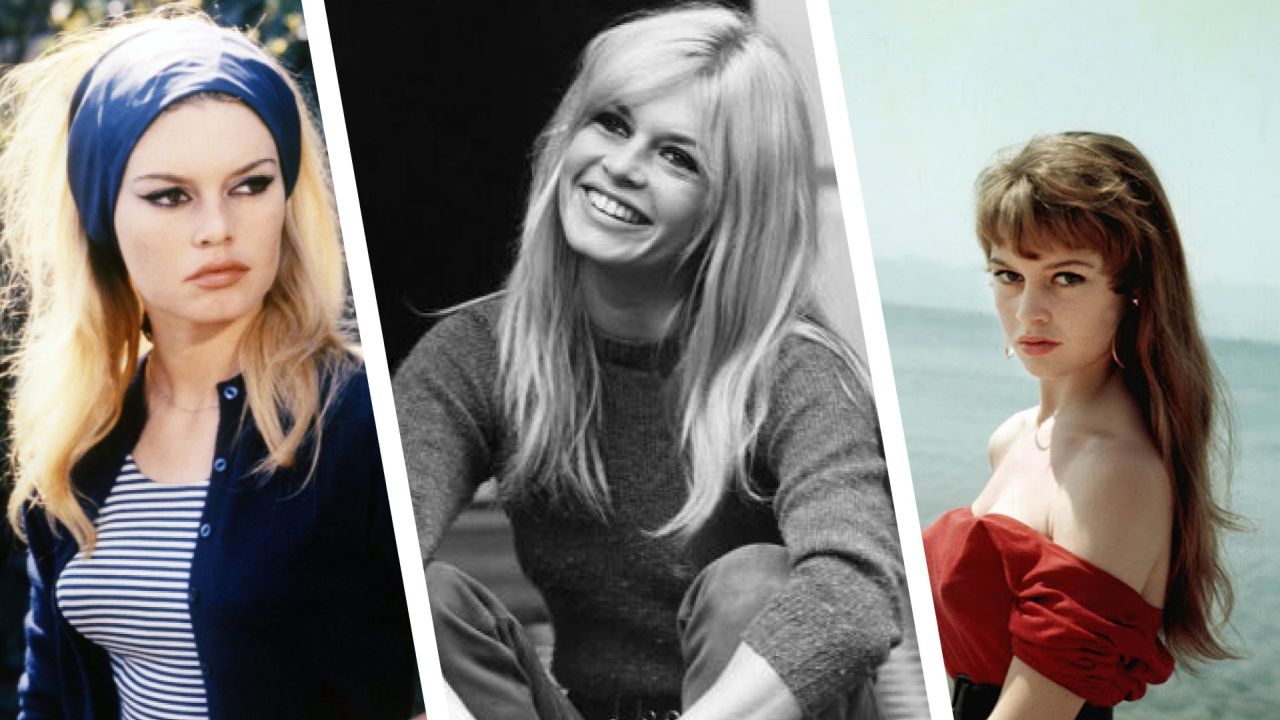
Her influence extended far beyond cinema and music. Bardot’s fashion choices kept her firmly at the center of popular culture throughout the second half of the twentieth century. Her bleached blond hair, unstudied appearance and relaxed, form-fitting clothing continued to feel contemporary long after the 1960s had passed. Actresses such as Jane Fonda and Julie Christie echoed her style, while models including Kate Moss and Claudia Schiffer later adopted her deliberately tousled, sensual look.
A London art dealer reflected on Bardot’s enduring appeal while presenting a photo exhibition in 2009 celebrating her 75th birthday. “She was natural, she went barefoot, she didn’t brush her hair, she wore no makeup, she wore flat-soled pumps because she trained as a ballet dancer,” James Hyman told The Guardian. “It was an image of freedom, exuberance and youth. She stood for authenticity, instinct and liberty. For women, it carried a feminist meaning – it was about behaving as men did, taking lovers and having affairs.”
Leaving the Spotlight Behind to Serve a Cause
After withdrawing from the film industry at the age of 39 in 1973, Bardot redirected her fame toward exposing and combating animal suffering. “I gave my beauty and my youth to men, and now I am giving my wisdom and experience, the best of me, to animals,” she told an audience at a 1987 auction of her personal belongings held to raise funds for the Brigitte Bardot Foundation.
She nonetheless remained a deeply controversial figure. Bardot drew criticism for statements perceived as anti-immigrant, particularly when condemning Islamic rituals involving animal slaughter. Her 1992 marriage to Bernard d’Ormale, an associate of far-right politician Jean-Marie Le Pen, reinforced the perception that she had become increasingly disconnected from a modern, pluralistic France.
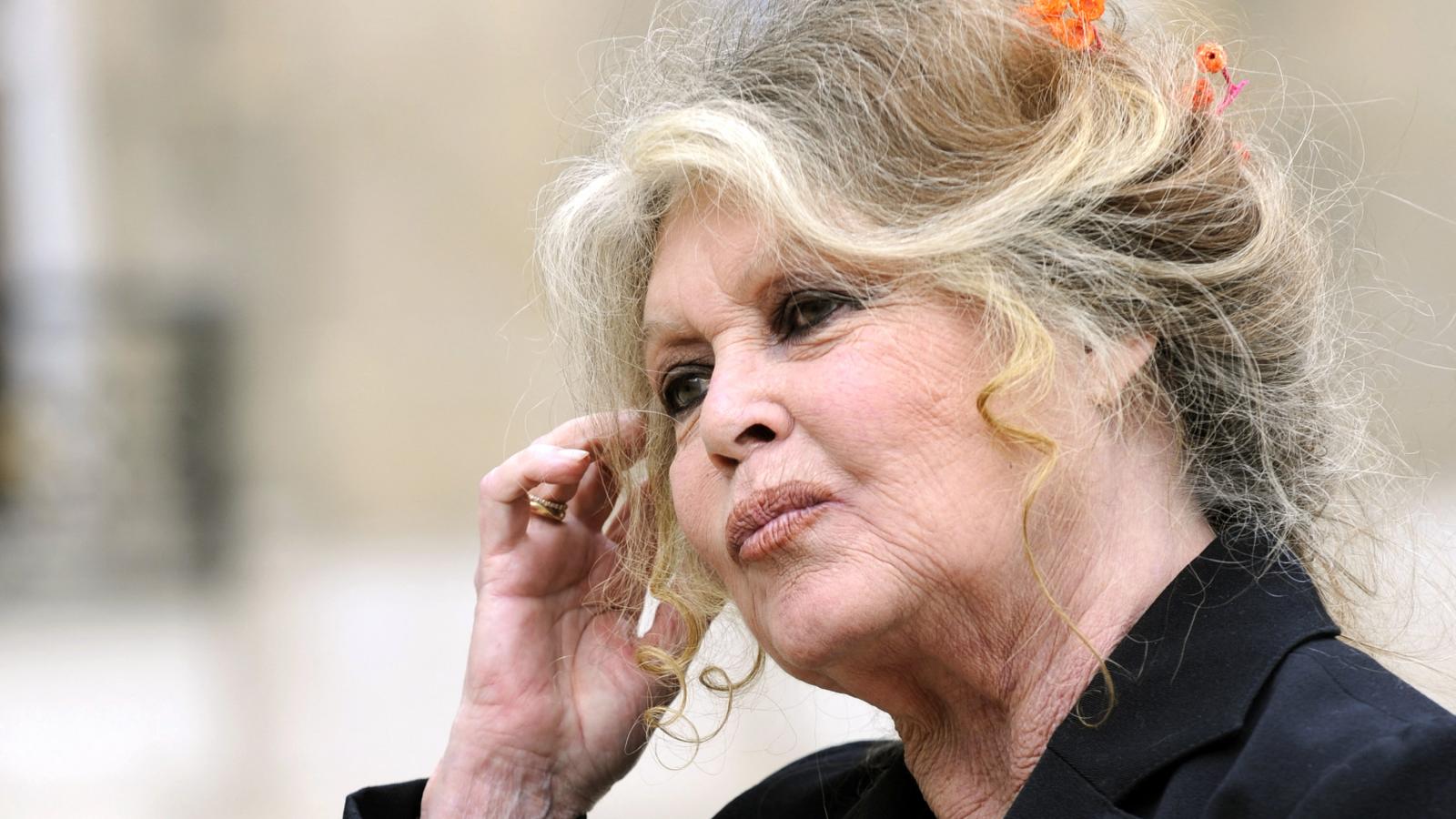
Defying public expectations once again, Bardot chose to age without cosmetic intervention and rejected plastic surgery, unlike many of her Hollywood contemporaries. The former cinematic “sex kitten” allowed her hair to turn gray and made no attempt to conceal the lines on her face left by years of sun exposure.

Challenging Taboos and Claiming Women’s Pleasure
Born on September 28, 1934, Brigitte Bardot grew up in an upper-middle-class Parisian family far removed from the glamour of the entertainment industry. She initially dreamed of becoming a ballerina, but her appearance on the cover of Elle magazine at the age of 15 caught the attention of film director Marc Allégret and, in particular, his young assistant Roger Vadim. Six years older than Bardot, Vadim would become her partner and play a decisive role in launching her career.
Her family initially opposed the relationship and barred the couple from seeing each other. In distress, Bardot attempted suicide – the first of several reported attempts – before her parents eventually relented and agreed to the marriage in 1952, when she turned 18.
Bardot slowly built her career through minor roles in French films and drew photographers’ attention at the 1953 Cannes Film Festival with her youthful spontaneity. Three years later, Vadim directed his first feature, …And God Created Woman, casting his wife as a young seductress who comes between two brothers. Audiences were captivated, from her first nude appearance behind hanging sheets to the sweat-soaked erotic dance near the film’s conclusion.
“People pretended to be shocked by Brigitte’s nudity and unabashed sensuality when, in fact, they were attacking a film that spoke without hypocrisy of a woman’s right to enjoy sex, a right that until then had been reserved for men,” Vadim wrote three decades later.
The groundbreaking film marked the first of five collaborations between Vadim and Bardot, and its overwhelming success propelled her into the Top 10 of U.S. box-office stars by 1958. Until then, foreign actresses generally achieved international fame only after appearing in American productions, yet Bardot resisted pressure to relocate to Hollywood.
The Vadims divorced in 1957 following Bardot’s affair with co-star Jean-Louis Trintignant, the first in a series of highly publicized romances that would make her a constant target of paparazzi.
“My life was totally turned upside down,” Bardot told CNN in 2007. “I was followed, spied upon, adored and insulted. My private life became public. Overnight, I found myself imprisoned – a gilded prison, but a prison nonetheless.”
Fame Under Siege: Bardot and the Paparazzi Era
At the height of her stardom, Bardot moved between light, sexually charged comedies such as Une Parisienne, Come Dance With Me! and Babette Goes to War, and more demanding dramatic roles in En Cas de Malheur and La Vérité. In the latter, she earned acclaim for portraying a suicidal young woman put on trial for murder after accidentally killing her lover.
The production of La Vérité proved emotionally exhausting, coming shortly after the birth of her only child, Nicolas, and as her second marriage, to actor Jacques Charrier, was collapsing. Bardot gave birth while confined to her Paris apartment, as crowds of photographers waited outside.
After completing the grueling role, Bardot again dominated headlines when she attempted suicide in September 1960 on her 26th birthday. A boy miraculously discovered the missing star in the woods of a country estate after she had taken pills and cut her wrists.
Despite repeated crises, Bardot demonstrated remarkable resilience, even enduring criticism that labeled her a bad mother for relinquishing custody of her son. She soon returned to the screen in the autobiographical drama Vie Privée, portraying an emotionally fragile star trapped by the weight of fame.
Source: CNN










![However, an anonymous GOG employee paints an even darker tone of the internal situation: „We were told it’s a financial decision. GOG’s revenue couldn’t keep up with growth, the fact that we’re dangerously close to being in the red has come up in the past few months, and the market’s move towards higher [developer] revenue shares have, or will, affect the bottom line as well.](https://thegeek.games/wp-content/uploads/2019/02/the-gog-1-302x180.jpg)




Leave a Reply