
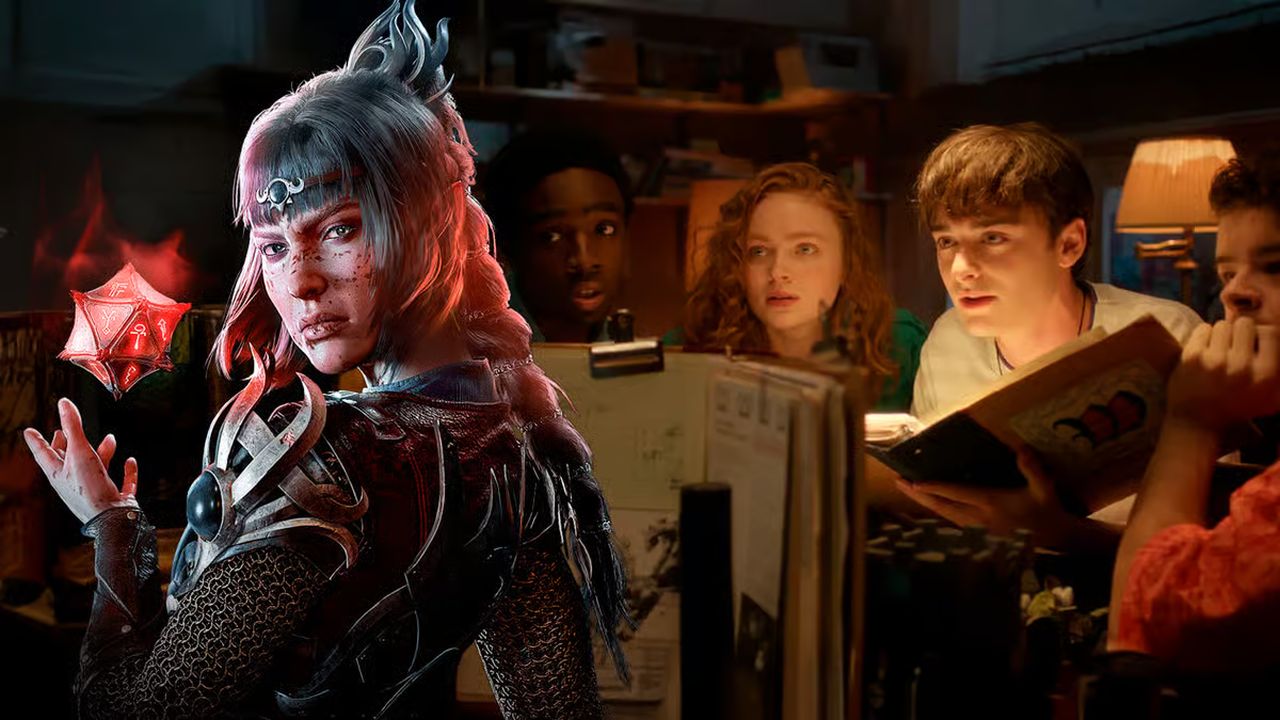
MOVIE NEWS – You might be more forgiving of Stranger Things’ ending once you know what helped shape it. Matt and Ross Duffer say the finale is another clear sign of the show’s long-running bond with Dungeons & Dragons – and this time, the blueprint wasn’t just tabletop fantasy, but the party-based combat logic of Baldur’s Gate 3 in the way the final showdown with Vecna is staged.
It’s the end of the road for Stranger Things after a nine-year run, and the finale didn’t land the same way for everyone. Season 5’s closing chapter sparked plenty of debate – sometimes for reasons the creators probably didn’t love. Some viewers called it rushed, others argued it was riddled with plot holes, and fans who were fully on board with the outcome saw it as the perfect goodbye. No matter where you stand, one thing is now firmly on the record: the last battle was built with Baldur’s Gate 3 in mind, and that isn’t a fan theory – it’s coming straight from the people who made the episode.
According to Matt and Ross Duffer, the series’ creators and the directors of the finale, the final confrontation with Vecna took cues from the combat rhythm of Larian Studios’ RPG. Their point wasn’t that the show suddenly “became a video game,” but that the scene works like a coordinated encounter: by the time the story reaches its end, every character has hit the peak of their personal arc, and that growth sets the table for the closing fight.
In their view, the payoff comes from the group functioning as a complete unit rather than relying on one hero moment. The idea is simple: each person brings a specific skill set to the table, and the only way the team survives is by chaining those strengths together. That’s the heart of Dungeons & Dragons, and it’s also the kind of party synergy Baldur’s Gate 3 has taught a massive audience to recognize.
Matt Duffer, speaking to Variety, described the logic as a clear “team-at-its-best” scenario: once everyone is fully formed as a character, they’re ready for the endgame. The episode leans into the same principles tabletop players obsess over – positioning, timing, and coordination – because that’s how you topple an enemy who looks untouchable on paper.
The Duffers even pointed to the specifics of the action language: some characters use flammable oils, others toss Molotov cocktails, while the rest commit to melee, ranged, or magical attacks. It’s a collective plan rather than a pile of individual moves, echoing the way RPG combat rewards cooperation and punishes solo thinking.
Beyond the Baldur’s Gate 3 influence, the brothers also mentioned that the finale’s last scene contains multiple video game nods – but they refused to name them, essentially turning it into an Easter-egg hunt for viewers. In truth, that kind of gesture fits the DNA of Stranger Things, a series that has always pulled from video games, Dungeons & Dragons, and board-game culture as part of its identity.
When a Video Game Reference Backfires
Still, not every gaming connection landed cleanly. Season 5 includes Capcom’s classic Ghosts ’n Goblins, and fans were happy to see it – until they noticed the version on screen. In Episode 3, Derek Turnbow is shown playing the game in his room, but what we see isn’t the original NES release.
Instead, the footage matches the arcade edition, which looks noticeably more advanced, with sharper presentation and more detailed sprites and backgrounds. It’s the kind of slip that casual viewers might ignore, but the show’s audience isn’t casual about period-correct pop culture – and that mismatch irritated plenty of fans who expect Stranger Things to nail its references as carefully as it usually does.
Source: 3djuegos




![Altera: Even Penguin Soldiers Could Be Out to Get Us! [VIDEO]](https://thegeek.games/wp-content/uploads/2026/03/theGeek-Altera-302x180.jpg)
![Lizard State: If There’s No Sam Fisher, Indie Devs Fill the Gap! [VIDEO]](https://thegeek.games/wp-content/uploads/2026/03/theGeek-Lizard-State-302x180.jpg)





Leave a Reply