
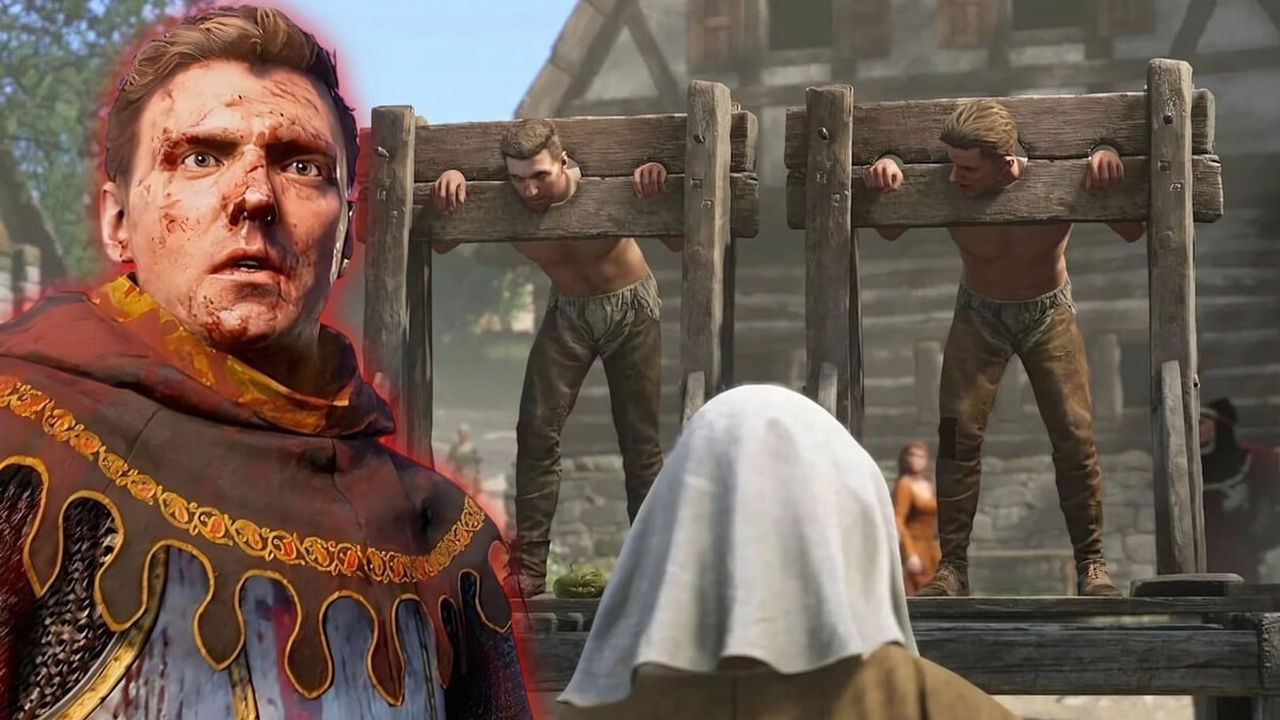
Kingdom Come: Deliverance 2 has misled us: its punishment system is not historically accurate, because Henry’s life would have been much harder in reality. Warhorse Studios deliberately avoided full-on realism when designing the crime system, since that would have been more frustrating than fun.
Fans of Kingdom Come: Deliverance know the series is demanding and sometimes ruthless, with a level of historical detail rarely seen in medieval RPGs. That does not only mean faithful weapons, armor, and architecture, but also a glimpse, however small, of how brutal medieval Europe could be. Even so, Warhorse Studios chose not to make the punishment and crime system fully realistic, focusing instead on making it more striking and impactful, for a simple reason: they wanted to balance complexity with enjoyment so the mechanics would not become excessively punitive for players.
In both Kingdom Come: Deliverance and its sequel, the protagonist Henry of Skalice can be punished by guards whenever he commits a crime, with penalties that scale based on the severity of the offense. If you are caught stealing, for example, you may have to pay a fine and return what you took, or the guards might send you to prison. The system does not always end in death, but it still brings more grounded consequences than many other games in the genre.
Prokop Jirsa, lead designer of Kingdom Come: Deliverance 2, told Edge that these punishments do not match what a peasant would have faced in medieval Europe. He added that if historical accuracy had been followed, any transgression by someone like Henry – even in the sequel, where he rubs shoulders with the nobility as Hans Capon’s right-hand man – would have carried extremely severe consequences. “Making the criminal justice system too realistic would be excessively harsh, especially in Henry’s case. He’s just a peasant, so any crime would be punished severely”, Jirsa added in his interview with the English-language magazine.
In the Middle Ages, Most Punishments Ended in Death
And yet the game’s current system is already pretty harsh. If you played the 2025 RPG, you know Henry’s future depends on what we do. It can involve spending several days in the pillory for repeated theft or even assault, or being flogged publicly in front of a crowd, which adds extra difficulties, especially in the days after the punishment. The most brutal outcomes include branding with a hot iron and, ultimately, the death penalty by hanging.
However, if we compare this to real medieval Europe, the picture shifts dramatically, and Warhorse Studios’ hesitation makes sense. To begin with, the penalty for theft depended on the region, but in feudal territories it could end in death or the amputation of hands if the crime was seen as harming the fiefdom’s economy. Murder, on the other hand, ended in death, but only if the case was clearly proven. In doubtful cases, a peasant could die in a cell while awaiting trial, which at best might have ended with a fine.
Punishments such as the pillory, confiscation of property, or public flogging did exist, but they were generally limited to minor offenses, especially those that disrupted public order, such as brawling or drunkenness. Branding with hot steel was neither routine nor especially common in the Middle Ages, although it did appear in the High Middle Ages as a mix of punishment and public shaming, and it was usually reserved for repeat offenders.
This need to sacrifice realism for fun is nothing new for Warhorse Studios. Last year, the studio acknowledged that the game’s knights ride differently than they did historically, changing the original posture because it was impractical and even comical in-game. Likewise, a system that would have made Henry gain and lose weight based on his diet, tied to the size of his armor, was scrapped because it would have created gameplay that felt too tedious and frustrating.















Leave a Reply