
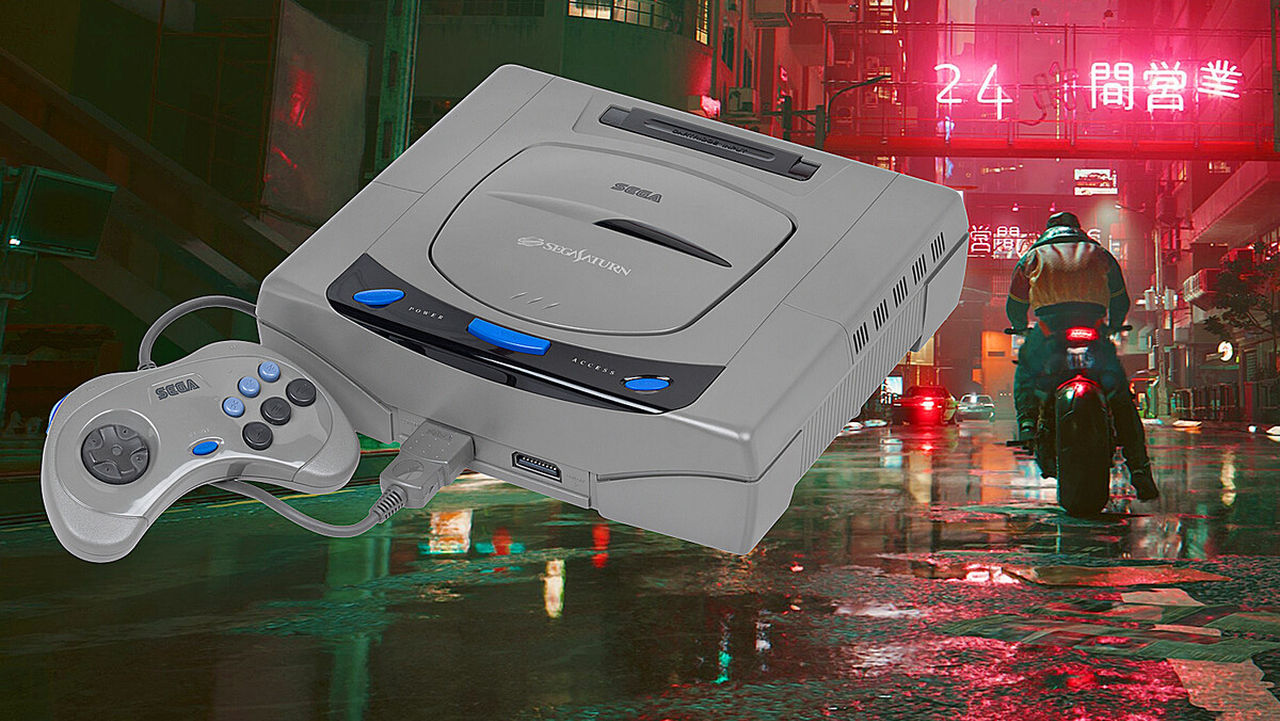
As bizarre as it sounds, a new fan experiment suggests the Sega Saturn could drive a rough, early form of Ray Tracing in certain 3D game segments. The results reopen an old question – how much potential was left on the table when the industry pivoted hard toward 3D?
For plenty of people, Sega‘s slide started with the bolt-on add-ons for the 16-bit Mega Drive (Genesis). Others argue the Dreamcast arrived too early, carrying ideas the market wasn’t ready to buy. And many point to the strange reveal and muddled life of the Sega Saturn as the moment everything went sideways. Built to go head-to-head with Sony‘s first PlayStation, the console never hit its ceiling because one fatal misstep boxed Sega into a corner. Yet the raw specs were no joke – on paper, the Saturn had the edge over its 32-bit rival. The catch is that it leaned into 2D strength while everyone else was steering hard toward 3D. If Sega hadn’t been so wary of 3D, the timeline might have shifted, because YouTube tinkerers have now shown this ill-fated machine could hint at an early take on one of Nvidia‘s headline techniques: Ray Tracing. The demonstration is limited, but it is real enough to make you wonder what else the hardware could have done. And that, in turn, makes the Saturn story feel even more like a missed turn.
A DIY ray-tracing trick that would make Photoshop cry
The person behind the test posted it on their YouTube channel, XL2. In the description, they frame it as a “homemade” take on a technique that has become a modern GPU calling card. The hook? The approach uses BSP (Binary Space Partitioning, a programming method heavily used in early full-3D games) to brighten or darken objects and areas on screen in real time. Or, put even more simply, it builds a 3D-space map that tells the engine to scan the environment and project light or shadow from dynamic sources. That means you are not manually scripting every lighting beat the old-fashioned way, and it only needs to be applied to very specific scenes or slices of a game. Today, ray tracing is famously expensive in terms of rendering power. That is why mainstream support really only became viable with GPUs in the 2000-series era (2018 – 24 years after the Sega Saturn launched). Seeing 1994-era hardware approximate the core idea at all is a striking flex. Of course, it was not just a matter of someone cleanly slotting in BSP and calling it a day. The team behind the XL2 video notes that other techniques also converged to make the experiment work.
A legacy that makes Sega’s fate feel even more painful
The takeaway is simple: if Sega had access to stronger 3D-focused programming talent at the time, it could have shipped fully 3D titles without sacrificing the console’s 2D strengths – and potentially with tricks its biggest rival could not have matched at the same level. The channel says the effect shown in the video could be polished further with more work “and some extra math”, which makes it unsettling to imagine what Hideki Sato’s hardware might have delivered in the right pipeline. What is equally curious is that this sort of capability was not “recycled” into the company’s last console, the Dreamcast. With that kind of technical headroom, Sega might have pushed games that pulled in a mass audience and perhaps avoided shrinking into a pure first-party publisher – all while flirting with techniques that would not become broadly common on PC for another quarter century. Instead, the old problem returned: the inexperience of “the Tokyo guys” in the 3D space kept this potential buried, until curious users finally dug it up years later.
Source: 3djuegos













Leave a Reply