
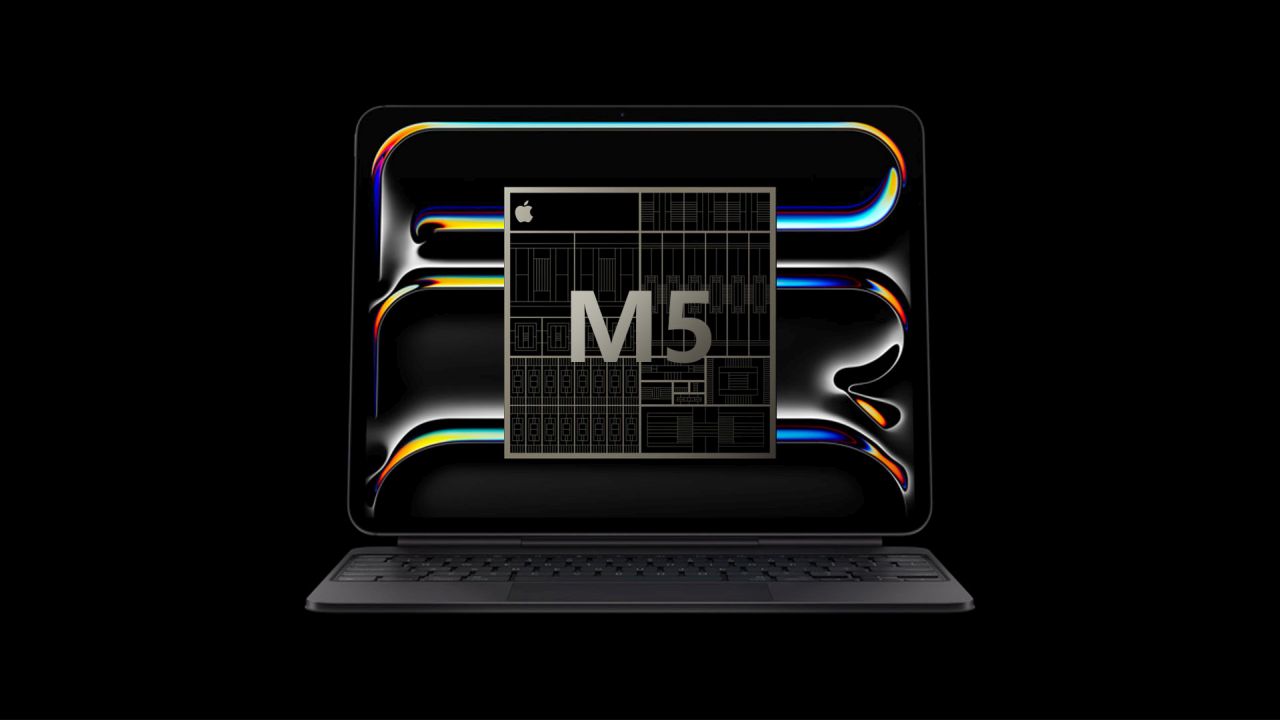
TECH NEWS – The company used a non-native game and mixed up memory bandwidth with something else…
Although the selection of native macOS games is slowly expanding, the number of games available on the platform is expected to always be fewer than those supported by Windows. However, this discrepancy didn’t stop Asus from comparing the Zenbook A16, which has a Snapdragon X2 Elite Extreme processor, to the M5, even though the game isn’t available natively on Apple’s macOS. Asus’s marketing team also seems to misunderstand unified memory bandwidth, suggesting that the Zenbook A16’s transfer speed is higher than that of the M5 MacBook Pro.
These comparisons are shown on slides on the Zenbook A16 product page. Asus claims that the Zenbook A16, equipped with the Snapdragon X2 Elite Extreme processor, is 1.31 times faster than the M5 MacBook Pro when playing Diablo IV. This would be impressive if the comparison were fair, since Diablo IV isn’t available on macOS and can only be played using emulation software like CrossOver, which acts as a compatibility layer. Running games through emulation may result in slightly lower performance depending on the optimization of that layer. Asus did not take this important factor into account when creating the slides meant to highlight the Zenbook A16’s performance. Furthermore, it appears that the company believes unified memory bandwidth is equivalent to HyperSpeed transfer rates.
Based on Asus’s terminology, unified memory bandwidth appears to be the same as data transfer speed, but in reality the two are vastly different. Apple popularized the concept of unified memory bandwidth, which refers to the speed at which the CPU, GPU, and other SoC components can read from or write to a shared pool of memory. It’s important to note that the M5’s 153 GB/s memory bandwidth is a theoretical maximum rather than a real-world result. Due to numerous limitations, applications cannot come close to this value, but Asus still seems to believe that the Snapdragon X2 Elite Extreme is significantly better. For a fair comparison, the company should have pitted Apple’s M5 Pro against the Snapdragon X2 Elite Extreme.
In Geekbench 6, Apple’s “mid-range” chipset is only slightly slower than the M5 Max, meaning it also outperforms the Snapdragon X2 Elite Extreme. Laptops equipped with the Snapdragon X2 Elite Extreme have not yet hit the market.















Leave a Reply