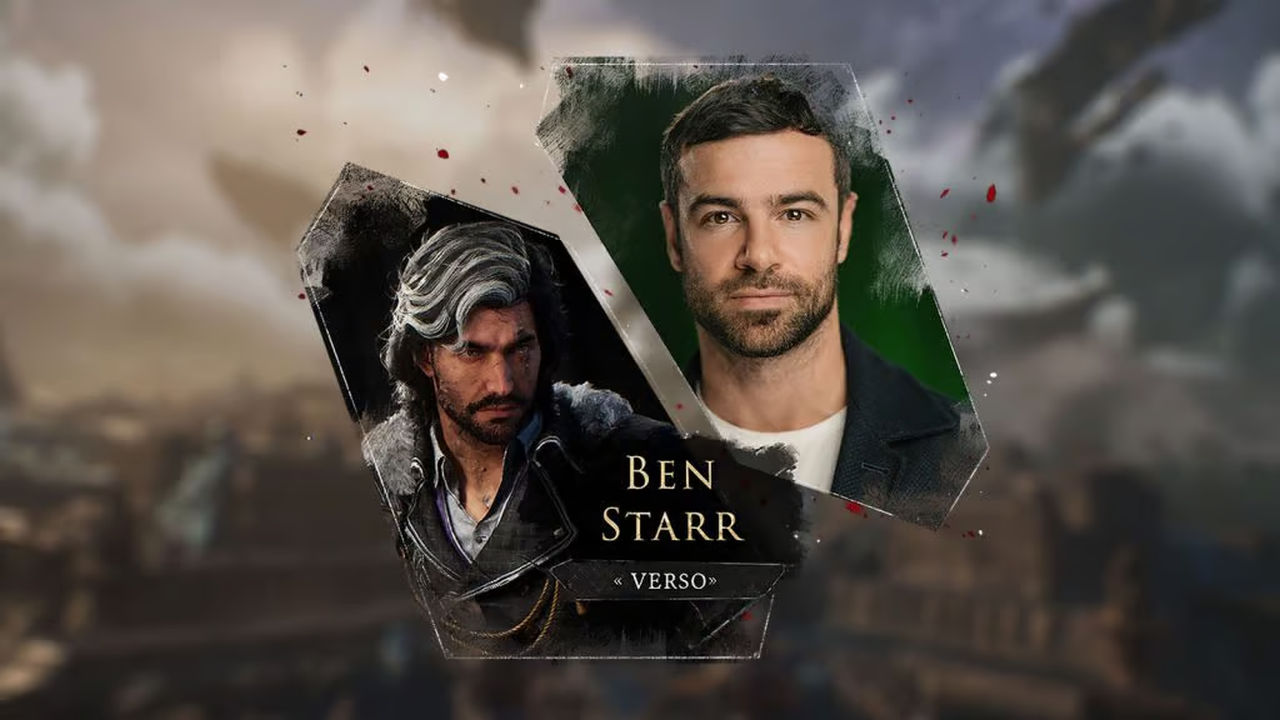
Ben Starr believes gaming is becoming too comfortable recycling what already worked instead of backing bold new ideas. After the breakout success of Clair Obscur: Expedition 33, the actor says 2026 should belong to original IPs, not another parade of sequels and reheated nostalgia.
The entertainment business has always loved a sure thing, and video games are no different. Franchises expand, sequels pile up, old successes get repackaged, and publishers keep leaning on names that already proved they can sell. But every now and then, a completely fresh property cuts through the noise and reminds everyone that audiences are still hungry for something new. For Ben Starr, Clair Obscur: Expedition 33 is exactly that kind of reminder. The British actor, who first gained major recognition through Final Fantasy XVI, sees the RPG’s rise in 2025 as proof that original creations can still hit harder than another safe continuation. That is why he has now thrown out a pretty direct challenge to the industry: “Original IPs should reign in 2026.”
Starr made the comment during a panel at Emerald City Comic-Con 2026, where he was asked about Expedition 33 and his role as Verso, one of the game’s central characters. Instead of keeping the conversation at the level of standard fan Q&A, he used the moment to talk about something bigger: what he sees as a creative problem across the industry. In his view, too many developers and publishers keep circling back to familiar brands, familiar formulas, and familiar comforts, when they should be investing more energy in building new worlds, new stories, and new identities.
He loves old franchises too, but says the industry cannot live on nostalgia forever
What gives his argument a bit more weight is that Starr is not speaking as someone who rejects legacy franchises outright. Far from it. He has already been part of one of gaming’s most established series through Final Fantasy XVI, and he has also been very open about his affection for Legacy of Kain, a cult property that has been dormant for years. He even admitted he would gladly jump aboard if that universe ever came back. But he was equally clear that personal fandom does not change the larger point. Wanting an old favorite to return is one thing. Building an industry that mainly survives by staring in the rear-view mirror is another.
He also made sure not to frame this as an attack on long-running heavyweights that still know how to evolve. Resident Evil came up as his example, because although the series is more than two decades old, it remains strong largely because Capcom found ways to reinvent it instead of simply letting it coast on brand recognition. Even so, Starr made it plain where his own preference lies. Rather than joining the next revival of an already famous name, he would rather land a role in “the next Clair Obscur.” In his words, “Let’s create original characters… that’s what we should aspire to.”
His comments arrive at a time when the upper end of the market is still dominated by sequels, remakes, remasters, ports, and refreshed editions of games that are not even especially old yet. Meanwhile, it is often smaller studios and less risk-averse creators who are pushing the medium toward genuinely new ideas. That is what makes Starr’s remarks hit a little harder than the usual convention soundbite. He is not just praising one successful RPG. He is pointing at an industry that seems increasingly unsure of its own identity, and arguing that the healthiest path forward may be to stop hunting for the next safe repeat and start looking for the next real surprise.