
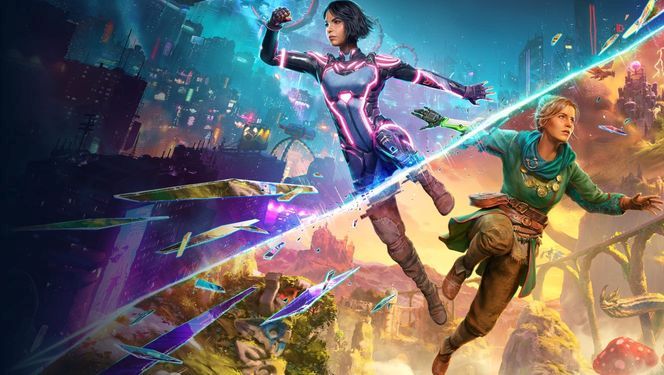
REVIEW – Remember when It Takes Two won Game of the Year? Well, Josef Fares’ latest game takes things to an even higher level. Just when you thought this formula couldn’t evolve any further, Fares and his team prove us all wrong—again. This game never lets up, delivering a longer and more diverse experience than its predecessor—and that’s just the beginning of its strengths.
Once again, we’re diving into a cooperative adventure where seamless teamwork with your partner is essential. Whether you prefer online or local co-op, both options are available, and of course, the signature Friend Pass system from Hazelight is back—now with full cross-platform support. One thing remains crucial: communication. There will be moments when split-second coordination is the only way to push through obstacles.
Now, let’s talk mechanics, because I’m not exaggerating when I say this game packs more ideas into a single playthrough than most titles do in their entire runtime. I’ve seen some absolutely insane stuff—some mechanics so brilliantly designed that they could carry an entire standalone game, while others will have you laughing out loud. Fares’ philosophy hasn’t changed: if an idea is fun, he’ll use it, but he never overstays his welcome. This approach has been dialed up to the max, to the point where I often found myself wanting more of each one.
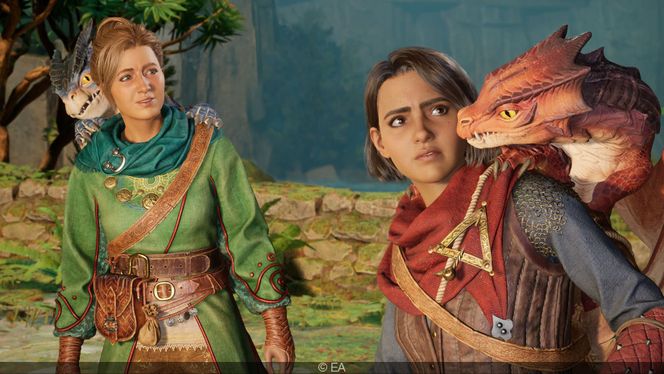
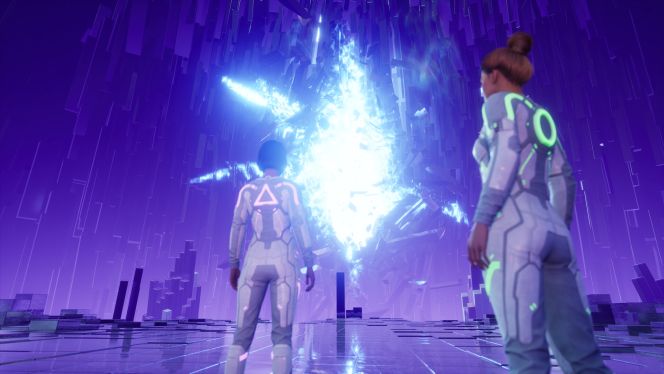
The core movements are all here: double jump, dash, wall-running, grappling hook—everything that makes a game feel fun. But from there, each world flips the script. In one level, you become cyber ninjas manipulating gravity, while in another, you’re accompanied by evolving dragons that gain new abilities as you progress. And that’s just the tip of the iceberg! Some sections are so unique and creative that I won’t spoil them here—you’re better off discovering them yourself. As for the final three levels? I can’t say a word about them, but trust me: the ideas showcased here deserve to be studied. These moments don’t just make history; they redefine it.
Friendship Beyond the Mechanics
I’ve respected Fares since Brothers because he has always understood the language of video games. He doesn’t just tell stories through cutscenes—he integrates his themes and messages directly into the gameplay. That’s what made It Takes Two so special: it perfectly illustrated how a couple going through a divorce had forgotten the key to a successful relationship—collaboration. But let’s be honest: Split Fiction isn’t as tightly bound to its narrative. And there’s a good reason for that.
Hazelight threw every idea they had into this game, and forcing them all into a rigid, story-driven structure would have been impossible. But you know what? It doesn’t matter. Because it works. The core theme here is friendship, and the story arc does a fantastic job of showing how Mio and Zoe gradually grow closer and learn to trust each other. While the story is strong, it might not hit quite as hard emotionally as some of Fares’ past works.
That’s not to say the themes aren’t compelling or timely. The story kicks off with a massive publishing house inviting young writers to test an experimental machine. But they soon realize that the device is designed to learn and evolve based on their ideas. The phrase Artificial Intelligence is never explicitly mentioned, yet it lingers in the background the entire time. And the game keeps asking the big question: what truly makes the creative process unique?
Split Fiction – The Art of Writing and Video Games Collide
At its core, Split Fiction is a story about two writers, Mio and Zoe, who find themselves trapped inside an experimental machine that reshapes the world based on their creations. Mio is skeptical from the start, sensing that something is off about the publisher behind it all, while Zoe approaches the situation with more optimism. What makes it even more compelling is that they both write in different genres—one is a sci-fi author, the other a fantasy writer—and neither of them has managed to get their work published. The game takes us on a journey through their stories, while posing a deeper question: why do we create in the first place?
Creativity is more than just self-expression—it’s a form of therapy. It’s how we process our fears, uncertainties, and the way we see the world. Even if our stories are filled with sci-fi or fantasy elements, they reflect something deeply personal. And that’s where Hazelight’s brilliance shines. While you’re enjoying the game’s mechanics, solving platforming challenges, and working through puzzles, you’re unknowingly being drawn into a story about the very essence of creation itself. Can art truly be art without the human soul behind it?
Mio and Zoe are brilliantly written characters, each with distinct personalities and motivations. Mio initially feels like the stronger lead, as her conflict is more immediately apparent, whereas Zoe’s backstory unfolds later. But don’t worry—by the end, she has her big moment too. Their gameplay differences are so well-designed that they make replaying the game from a different perspective feel like a fresh experience.
A Tribute to the Video Game Industry
Split Fiction isn’t just a fantastic experience because of its story and mechanics—it’s also impressively lengthy. A full playthrough takes about 15-16 hours, but with side quests—or rather, side stories—it extends well beyond that. And these aren’t filler content. These subplots are essential, adding extra layers of storytelling and gameplay that could stand on their own. Do yourself a favor—don’t skip them. Some will have you laughing out loud, while others will leave you staring at the screen in disbelief.
Split Fiction is the kind of game that restores your faith in the industry. It strips away all the cynicism and reminds you why you fell in love with video games in the first place.
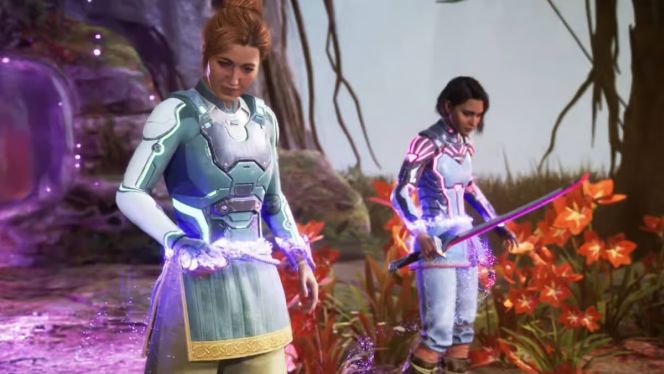
What truly surprised me, though, was how packed this game is with references—not just to gaming, but beyond. It’s not just the occasional Easter egg; it’s a constant stream of tributes. Sometimes, it borrows a full mechanic for just a few seconds, like hopping across barrels Donkey Kong-style, or pulling off a loop that instantly makes you think, “Gotta go fast.” Hidden secrets lead you to Dark Souls-style bonfires, while cutscenes recreate a Sailor Moon-like transformation sequence. And it never stops. These kinds of references can often feel cheap, but here, they’re perfectly integrated. They don’t just exist for nostalgia’s sake—they add something meaningful. Trust me, you’re going to love it.
At the start of this review, I mentioned that I wasn’t immediately drawn to this game in the same way I was with Hazelight’s previous works. Maybe it was the visual style—on trailers, it didn’t always look the most impressive. But in-game, it hits differently. Some levels may seem a bit generic, but others feel like masterful set pieces. A cyberpunk city or a fantastical kingdom, for example, feels absolutely stunning when the camera shifts just right, creating moments that feel genuinely magical.
That Signature Fares Passion
I don’t know if you’ve noticed, but I’m writing this with a special kind of excitement. And that excitement matters. When Fares announced this game, he was practically bouncing off the walls, going on about how awesome it was going to be. But after playing it through, I have to say—he was absolutely right. This game is just that exhilarating, and a big part of that comes from Fares’ signature “no bullshit” philosophy.
A fellow gamer once told me that it’s easy to become numb to the constant bad news in this industry—layoffs, studio closures, canceled projects, uninspired cash grabs, overhyped disappointments. But Split Fiction reminded him why he fell in love with games in the first place. And he’s right: this game scrapes away all that cynicism. It reminds you what makes video games so incredible. Or, as Fares himself would put it: “It’s fucking fun.”
-Gergely Herpai “BadSector”-
Pros:
+ Extremely varied and creative gameplay
+ Excellent cooperative experience that really requires cooperation
+ Funny and memorable side missions
Cons:
– The emotional impact is not as strong as in previous Hazelight games
– Some levels are less visually developed
– You can’t play alone due to the mandatory co-op mode
Publisher: Electronic Arts
Developer: Hazelight Studios
Style: Action-adventure, platformer
Release: March 6, 2025
Split Fiction
Gameplay - 9
Graphics - 8.5
Story - 8
Music/Audio - 8.8
Ambience - 9.2
8.7
EXCELLENT
Split Fiction is yet another testament to Hazelight Studios' mastery of cooperative gaming. Packed with creative ideas, engaging mechanics, and a heartfelt story about the creative process and its struggles, it stands out as something truly special. If you’ve grown tired of the industry’s predictable trends, this is the fresh, exhilarating experience you’ve been waiting for.







Leave a Reply