
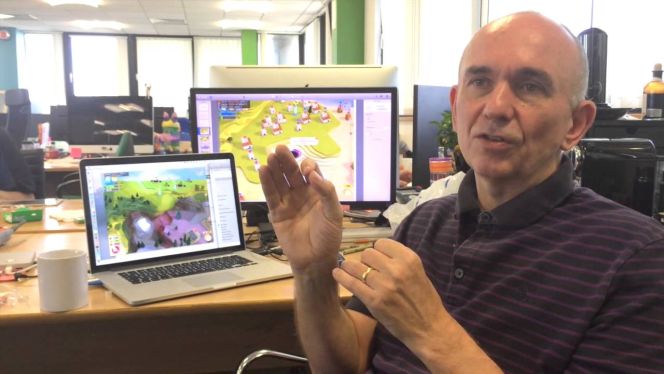
Peter Molyneux, gaming’s perennial promise-maker, had a fundamentally different vision for Microsoft’s hardware than the company itself. But that’s only scratching the surface of why Project Milo—Kinect’s once-bright hope—never made it to release.
Speaking candidly, Molyneux has revealed new details about the rise and fall of Project Milo, his never-released experiment for Xbox 360 Kinect. At the Nordic Game conference in Sweden, the former Bullfrog and Lionhead founder fielded questions about the fate of Milo (aka Milo & Kate), the game that would have allowed players to communicate with a virtual boy via Kinect’s camera and mic. When Microsoft engineer Alex Kipman first showed him Kinect, the device could scan an entire room—something Molyneux found awe-inspiring, but he had no intention of turning it into a party game.
“Kipman asked what I thought. I told him, ‘When you did the demo, you jumped around the room, but I’m a gamer—I don’t want to play standing up. That’s the first thing. It just doesn’t appeal to me. I want to relax, smoke or drink what I want, not dance around like an idiot. If you’re a parent, you know the feeling. There’s this moment when you realize you’re shaping a person’s mind. Wouldn’t it be amazing to build a game around that? That was Milo: inspiring a child. Of course, that was controversial, since a lot of people interpret that idea in dark ways,’” Molyneux explained.
The inspiration came from his seven-year-old son, Lucas—at that age, children soak up new information like sponges. Molyneux dove deeper into the game’s development (including how they “cheated” with voice recognition), and revealed why Milo was ultimately canceled. The first blow was the dramatic downgrading of Kinect’s hardware from what Kipman originally demoed, which sharply limited the project’s potential. The second was Microsoft’s evolving stance: they wanted Kinect to be a party accessory, not a game-focused device.
“While we were building Milo, Microsoft was also reworking Kinect. The original device would have cost consumers $5,000, so they slashed costs to the point that its field of view became tiny—just what’s in front of you. What really killed Milo (and it still breaks my heart) was the decision that Kinect wasn’t for gaming, but for parties—for sports and dance games. That didn’t fit Milo, so the project was dropped. No one ever saw the full experience, but it really was magical. What made it magical? It wasn’t about heroes or aliens. There was no world-ending storyline. It was about the feeling of just hanging out with someone who loves you,” he added.
Initially, Kinect was bundled with every Xbox One, but by then the industry was already moving on—and eventually, Microsoft did too.
Source: VGC, Gamesindustry










Leave a Reply