
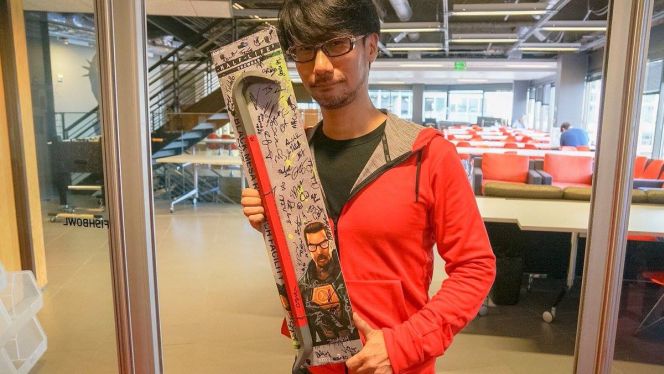
Kojima openly admired Half-Life’s innovations and even wanted to bring some of them into Metal Gear Solid 2—but ultimately, he recognized that not every idea fit. The iconic Japanese creator praised Valve’s fresh approach, but in the end, the series’ narrative focus took precedence over gameplay experimentation.
The history of video games is defined by revolutionary titles—Hideo Kojima made his mark with the Metal Gear saga, while Valve set new standards with Half-Life and Portal. Few realize just how much Death Stranding creator Kojima was inspired by Half-Life when planning the cinematics of Metal Gear Solid 2. He even developed a concept that ultimately never made it into the final game, but it remained a point of fascination for him.
The Valve Influence That Never Made It In
This insight comes from DidYouKnowGaming, whose researchers scour old interviews and development diaries for gaming trivia. In “Development Diary – Hideo Kojima: Four Years of Fighting,” Kojima describes the profound impact Half-Life had on him and how it sparked an ultimately abandoned idea.
After the success of the first Metal Gear Solid, Konami began work on the sequel just as Valve’s Half-Life stunned the industry. “The lab accident scene gave me goosebumps. Great Japanese games don’t have that kind of soul…” Kojima wrote. “I felt like I’d been outdone by the Americans! Even the cinematics offered a refined level of freedom. If I wanted to make MGS’s cinematics interactive, this is how I’d do it… The ending is incredible.”
Half-Life’s cutscenes were indeed innovative: rather than separating story from gameplay, the player could freely interact with scenes, even shooting NPCs who were giving information to Gordon Freeman. Kojima, however, felt that this system wouldn’t fit the highly structured storytelling of Metal Gear Solid.
The Revolution That Got Left Behind
Metal Gear Solid 2—like the rest of the series—relies on dense storytelling and careful dramaturgy. Allowing players to disrupt key cutscenes, as in Half-Life, would risk breaking the narrative entirely. Kojima sought a compromise and came up with the idea of split-screen: one side would show a fixed cinematic, while the player could still control Raiden elsewhere, with both perspectives unfolding in sync with the plot.
Kojima was so intrigued by this split-screen system that he even considered patenting it. But in the end, the feature was removed, and the diary offers no further details as to why. We’ll never know how Metal Gear Solid 2 might have played with these “free cinematics”—in the end, the series retained its traditional approach to storytelling.
Today, Kojima is back in the spotlight with the release of his latest title. As noted in our Death Stranding 2 review, he continues to blend action, stealth, and stunning post-apocalyptic visuals in ways few others can.
Source: 3djuegos












Leave a Reply