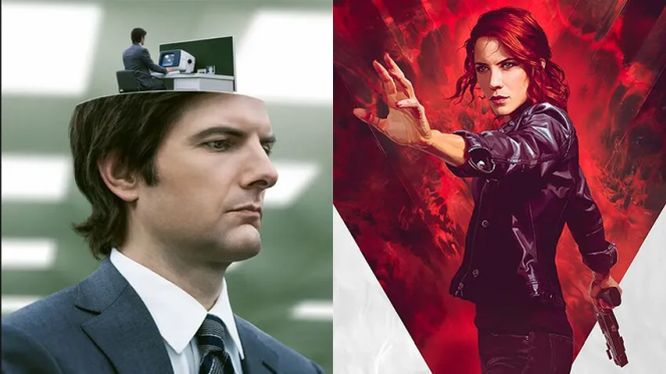
Severance has established itself as one of modern sci-fi’s biggest sensations, and the second season has shattered all expectations—even though its creator has never touched a Remedy game, it’s impossible not to think of them while watching the show.
I honestly can’t think of a better series on television right now than Severance. Since its debut in 2022, it’s become a bona fide sci-fi classic and one of Apple TV+’s defining hits. With its second season, Ben Stiller’s show has proven it can outdo itself, becoming one of the most significant series of recent years. Many have wondered if it drew inspiration from games like The Stanley Parable, but in a recent interview, series writer Dan Erickson revealed he wasn’t even familiar with it before writing. What really caught me off guard, though, was his confession that he’s never played any of Remedy’s titles—even though, as a viewer, it’s impossible not to think of one of their best (and most underrated) games as you watch this series.
Absurd Realism – Controlling the Strange
The story unfolds in a not-so-distant future, where the private corporation Lumon has developed a revolutionary procedure to split its employees’ consciousness: one part for personal life, the other for work. The offices are secretive, locked away from the outside world, and strange, inexplicable things happen inside. If you’ve played Control, this is bound to feel familiar. You might even be reminded of the Immemorial House, the shadowy American agency that investigates paranormal phenomena, where Jesse, the protagonist, searches for her missing sibling. Like Lumon’s headquarters, it is entirely shut off from the outside world, with both locations defined by brutalist architecture—gray and white tones radiating a chilly sense of alienation. This isn’t just about aesthetics; it creates emotional distance while stirring a weird sense of déjà vu. As Control’s art director Janne Pulkkinen put it: “It was important to make the environment itself believable amidst all the supernatural weirdness—otherwise, the whole thing would fall apart.”
The choice of green flooring in Mark’s office in Severance creates a false sense of calm, a stark contrast to the endless mazes surrounding him. Both stories blend the mundane and the absurd: take the executive office, which at first glance could belong to any company, but as soon as we spot Mrs. Cobel’s abstract and dark paintings, reality slips away. It’s just as surreal when Jesse steps into an empty director’s office in Control, only to discover the boss is dead and the scene becomes increasingly bizarre.
Behind the Masks – The Search for Real Faces
Writing believable human characters is hard enough, but creating ones who seem emotionally vacant and superficial is even harder. Both Severance and Control approach this kind of alienation in their own way, yet it’s remarkable how well it works for each.
While watching both seasons of Severance, I kept trying to figure out who Milchick, Mrs. Cobel’s enigmatic assistant, really was. Occasionally his true personality flickers through, but for the most part he’s disturbingly robotic—much like Ahti, the janitor in Control. Though the latter is helpful and firmly on Jesse’s side, his presence is just as mysterious and unsettling. We never really learn why these figures work in such closed-off spaces, or how they know every secret corner so intimately. They’re both eccentric guides you want to trust, but their lack of humanity always keeps you at arm’s length.
Bonds That Hold Us Together
Despite their dystopian settings, both stories cast us into futures where society is increasingly fragmented. While their creators approach this theme differently, what binds them is a focus on the power of human connection. In Severance, the characters have no idea who they are outside Lumon or what they do inside it, making their mutual support essential to survival. Their lives—endless loops of work—are a little more bearable if they stick together. In Control, Jesse’s isolation is broken only by the search for her sibling, which provides hope and motivation. In both narratives, the central characters’ bonds with loved ones help propel them through their ordeals.
With so many similarities, it was impossible not to think of Control while watching the second season of Severance this year. Both are simultaneously ordinary and surreal, with characters hiding secrets and human relationships anchoring the stories. As a fan of the genre, I can confidently say that both Ben Stiller’s series and Remedy’s creation deserve their places as sci-fi favorites—especially now that a sequel to Control is already in the works. The future of sci-fi, it seems, is in good hands.
Source: 3djuegos