
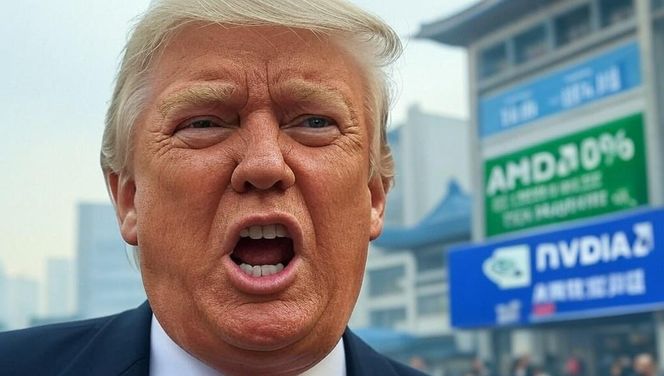
TECH NEWS – US President Trump’s tariffs could lead to big changes in the PC market (beyond the fact that it’s paid for by the individual because companies almost automatically pass it on to consumers).
The US administration is currently negotiating trade deals with countries around the world, but there is little chance of a zero tariff with any of the countries with which America has a large trade volume. With that said, the market is expecting prices of consumer electronics to rise, and according to the Taiwan Economic Daily, they could rise by as much as 10%, and that is given the current level of tariffs imposed by the Trump administration, not after the August 1 deadline. In other words, things don’t look too optimistic for the average consumer.
Since the Trump administration took office, companies such as HP, Dell, and Microsoft have stockpiled consumer products to maintain supply chain flow. When price increases occur, they are reflected across all industry segments. Competitors usually wait before raising prices to ensure consistency, which is why there were no price increases after the tariff war began in April.
The average tariff for each country is reportedly around 20%. Consumer electronics products, including Apple’s iPhones and PC components, could see price increases of up to 10%. This assumes that tariffs will not increase further. IDC reports that we have indeed seen an increase in PC shipments. However, given growing demand, the market is starting to experience supply chain pressure created by tariffs, which will ultimately force companies to raise prices to meet demand.
It will be interesting to see how the situation develops in consumer markets. It seems we should prepare for price hikes across the board. Surely Europe will eventually see this too, after the US.
Source: WCCFTech


![The X-Files may finally continue with Mulder and Scully back in action [VIDEO]](https://thegeek.games/wp-content/uploads/2026/08/theGeek-X-Files-season-12-302x180.jpg)
![Pierce Brosnan’s box-office flop becomes a surprise Netflix hit [VIDEO]](https://thegeek.games/wp-content/uploads/2026/08/theGeek-Fast-Charlie-Pierce-Brosnan-302x180.jpg)

![Saber Interactive Denies that ChatGPT Wrote One of Its New Games! [VIDEO]](https://thegeek.games/wp-content/uploads/2026/08/rideshare-stimulator-1280x720-1-302x180.jpg)


![The Head of Take-Two Is Lying About the Price of Grand Theft Auto VI! [VIDEO]](https://thegeek.games/wp-content/uploads/2026/08/gta-vi-1280x720-1-302x180.jpg)

![The Nintendo Switch 2 Keeps Pace with the Xbox Series S Even in the Case of the Oblivion Remaster! [VIDEO]](https://thegeek.games/wp-content/uploads/2026/08/oblivion-remastered-switch2-1280x720-1-302x180.jpg)

![The X-Files may finally continue with Mulder and Scully back in action [VIDEO]](https://thegeek.games/wp-content/uploads/2026/08/theGeek-X-Files-season-12-300x365.jpg)
![Pierce Brosnan’s box-office flop becomes a surprise Netflix hit [VIDEO]](https://thegeek.games/wp-content/uploads/2026/08/theGeek-Fast-Charlie-Pierce-Brosnan-300x365.jpg)

Leave a Reply