
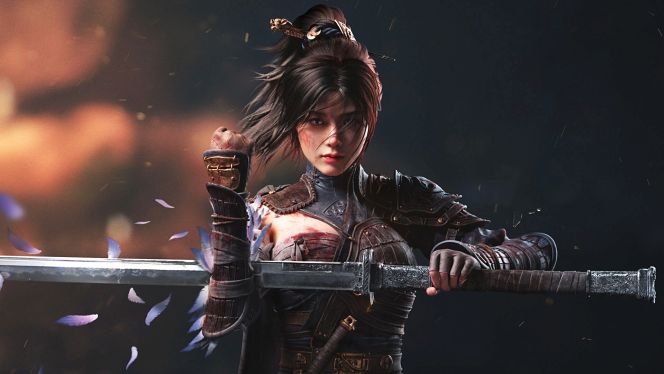
China has a master plan to dominate the video game market, and it’s a trap the rest of the world can hardly escape. While Western studios are already charging 80 euros for AAA titles, Wuchang’s low price hits Western developers right where it hurts.
After a couple of console generations with prices frozen, it finally seems like big publishers have decided that launch prices simply have to go up, no matter what. The reason? The towering development costs of modern games, not to mention the wild inflation of recent years. We all knew an increase would come after so many static years, but the speed and intensity of the hike still managed to catch us off guard.
The Great Price Hike
Perhaps the most obvious case is Nintendo: in just a few years, they’ve gone from charging 60 euros for new releases to 90 euros for some, a 50% jump. PlayStation has been doing it for years, and while Microsoft set out on the same path, they now seem to be backing off—at least with some of their upcoming launches. Naturally, all eyes are now on Rockstar and whether Grand Theft Auto VI will finally smash through the 100-euro psychological barrier.
An Outstanding Game
Enter Wuchang: Fallen Feathers, whose attractive price flies in the face of industry trends. Sure, the $50 tier is quickly becoming the new standard for certain games, but that doesn’t necessarily say much about a title’s quality. Take Clair Obscur: Expedition 33—it found huge success despite debuting on Xbox Game Pass, and there’s no question that its adjusted price played a major role alongside its undeniable quality. But Wuchang: Fallen Feathers is another story altogether. At the time of writing, I’ve poured about 40 hours into Leenzee Games’ latest, and only now am I starting to see the end—though, judging by the trophy list and my PlayStation 5 completion percentage (never 100% accurate, but a decent gauge), there’s still plenty to do.
Beyond the hours invested, what really stunned me are the sheer production values on display. The stunning environments, intricate level design, the scope and depth of the bosses, the incredible variety of enemies, quality animation, technical polish… Clair Obscur: Expedition 33, for all its strengths, relied on budget-stretching tricks—abstract settings, asset recycling, you name it. Wuchang uses a few of these as well, but far more subtly and sparingly. In every respect, it’s a far more ambitious title, and it’s obvious that it enjoyed a budget several times greater than Sandfall Interactive’s project. This is also one of the longest soulslikes I’ve ever played, especially considering that it’s not open-world like Elden Ring but instead sticks to a more traditional interconnected structure. Nobody would have batted an eye if it launched at full price—yet it didn’t. Why?
As I’m writing, there’s still a week to go before the game’s release. I don’t have any insider info or pre-order stats from publisher 505 Games. Here’s what I do know: the game is launching on Xbox Game Pass as well as PlayStation 5 and PC, which is a huge difference compared to its most obvious reference point, Black Myth: Wukong. And I know that China is its main market—a place where neither Xbox Game Pass nor PlayStation 5 really matter, and where PC and Steam rule everything. During my week in the world of Shu, the game has completely sucked me in. True, I’ve got a soft spot for soulslikes, but I’d have to go back to the captivating world of Elden Ring to remember falling under a similar spell. I’ll be the first to admit Wuchang isn’t as groundbreaking or ambitious as From Software’s magnum opus, but in my humble opinion it’s a fantastic game and deserves a spot in the running for year-end awards. If everything goes as it should, I’m predicting a commercial bombshell.
Protectionism, Chinese Style
Black Myth: Wukong sold 20 million copies in a single month—almost all of them in China, its enormous home turf. I don’t think Wuchang will reach that level of success (maybe it’s tougher, or just lacks the instant name recognition of the Monkey King’s tale), but I do believe it’ll cash in on its huge domestic market in a matter of hours. Steam’s regional prices in China are much lower than what we’re used to in the West. It’s only logical that Leenzee Games factored this into their 50-euro price. I’m convinced that if it were up to 505 Games alone, the price would have been much higher, given the sheer scale and quality of the content. But it’s clear that priority access to the Chinese market was the deciding factor here.
China is not a typical video game market. It’s a whole different universe, with no true comparison elsewhere. For starters, it’s gigantic—potentially larger than the European, American, and Japanese markets combined. It’s also a market that until recently was heavily regulated, and where selling consoles was actually banned. It’s a very protectionist place too: the government throws up huge barriers for foreign companies and often demands alternative versions of games that comply with wild, sometimes arbitrary censorship. There’s a small loophole for foreign titles to sneak in, but just like in cinema, it’s clear the authorities want to give local products the upper hand. Ten years ago, Hollywood blockbusters were cleaning up in China—these days, even Marvel movies can’t find an audience. All signs point to the same fate for games. Sure, some Western titles might sneak through and find an audience, but the bigger picture is already set.
So is this a torpedo to the hull of foreign companies unable to access the Chinese market—a clear case of unfair competition?
That’s the real question: if games like Wuchang: Fallen Feathers can rely on their home market to cover costs and then offer lower prices in the West, is this not a direct hit to the hull of companies shut out of China—and isn’t it a textbook example of unfair competition? I think it’s too soon for a verdict, but with the wave of Chinese titles expected in the next couple of years, this issue needs close attention. We can’t be naïve. Trade wars exist, even when they’re not openly declared. Outside of gaming, we’ve seen it play out in the European Union with electric cars. Still, none of this takes anything away from Wuchang’s quality. It’s an outstanding game, and I’d love to see more Chinese productions of this caliber. But the playing field has to be level for everyone—otherwise, we risk suffocating our own studios, forcing them to compete under unfair conditions.
The Real Face of Globalization
Few industries have made the impact of globalization so clear right from the start. I genuinely believe that’s one of gaming’s greatest achievements—and what makes it so fascinating. Unlike film, we’re not beholden to one Hollywood. There are blockbusters from Japan, Finland, wartime Ukraine, France, England, Canada, Sweden, Spain—and yes, now China. But the rules need to be the same for everyone. If 50 euros is the right price for a big blockbuster and the rest are just gouging us, then let them fail. What wouldn’t be fair is for anyone to win just because they hold an ace up their sleeve: complete control over a massive internal market closed to outsiders.
Source: 3djuegos





![MobLand Season 2 Returns with Blood, Chaos and a New Trailer [VIDEO]](https://thegeek.games/wp-content/uploads/2026/08/SKYSHOWTIME_MobLand_S2_1-302x180.jpg)



Leave a Reply