
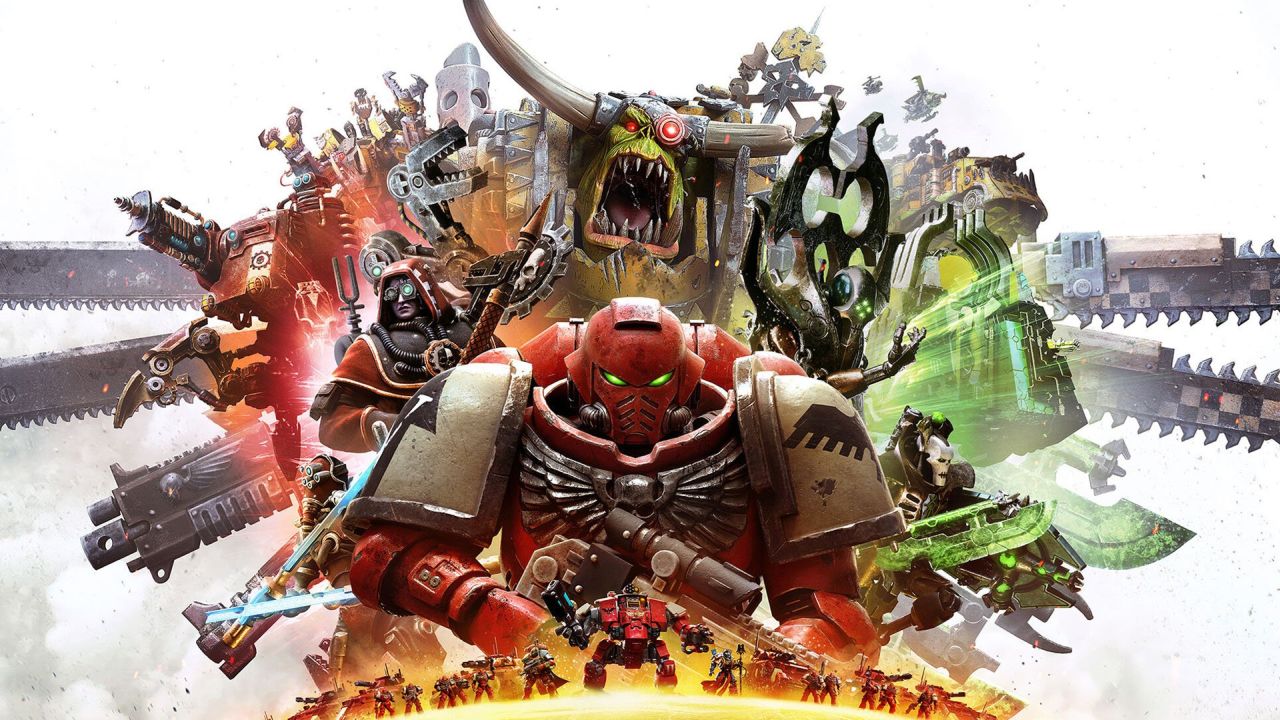
King Art Games surveyed players’ interests directly, which influenced how they developed the latest installment of Dawn of War.
It’s curious how RTS fans—and even the people who develop and fund these games—often forget that the genre’s initial popularity was driven by high-quality single-player campaigns. Looking at StarCraft II, many assume its success came solely from competitive multiplayer and eSports. This mindset led to Stormgate, a game created by veterans inspired by Warcraft 3 and StarCraft II. But the title launched with a bland, unfinished campaign and has been struggling ever since.
While competitive play certainly extended the lifespan of both titles, most players didn’t even touch multiplayer. What drew people in were the best-in-class campaigns, which set benchmarks in storytelling and mission design, cementing these games as some of the best strategy experiences ever made. King Art Games, the studio behind Dawn of War 4, hasn’t forgotten this crucial lesson.
“We are known for making narrative-driven games, and the Iron Harvest campaign was very well received. So for us, it was clear that campaigns would be one of the game’s main pillars. We surveyed Iron Harvest players and asked them which modes were most important. The overwhelming answer was single-player content and the campaign. Instead of just making one Space Marine campaign or a generic shared storyline, we decided to create a full-fledged campaign for each of the four factions. That’s already a huge amount of work, but then we asked ourselves: can we make these campaigns dynamic? Can we include optional missions and ensure that player choices matter? Now we have four substantial campaigns plus the tutorial,” said Jan Theysen, creative director and game director.
“We’re definitely putting most of our focus on multiplayer for this title. Of course, there will be multiplayer modes for those who want to play with friends or other players. But as community feedback showed, and as we ourselves remember from our younger days, what shaped our love for RTS games was always the single-player campaigns. Those were the experiences that stuck with us the most,” added senior game designer Elliott Verbiest.
This is reassuring, though not particularly surprising for Dawn of War, which has always leaned more heavily toward strong single-player campaigns—something that was less true in Dawn of War 3.
Source: PCGamer


![[TGA 2025] Tomb Raider: Legacy of Atlantis: Another Remake of the First Game! [VIDEO]](https://thegeek.games/wp-content/uploads/2025/12/theGeek-Tomb-Raider-Catalyst-Legacy-of-Atlantis-Remake-Crystal-Dynamics-302x180.jpg)


![[TGA 2025] Tomb Raider: Legacy of Atlantis: Another Remake of the First Game! [VIDEO]](https://thegeek.games/wp-content/uploads/2025/12/theGeek-Tomb-Raider-Catalyst-Legacy-of-Atlantis-Remake-Crystal-Dynamics-300x365.jpg)
Leave a Reply