
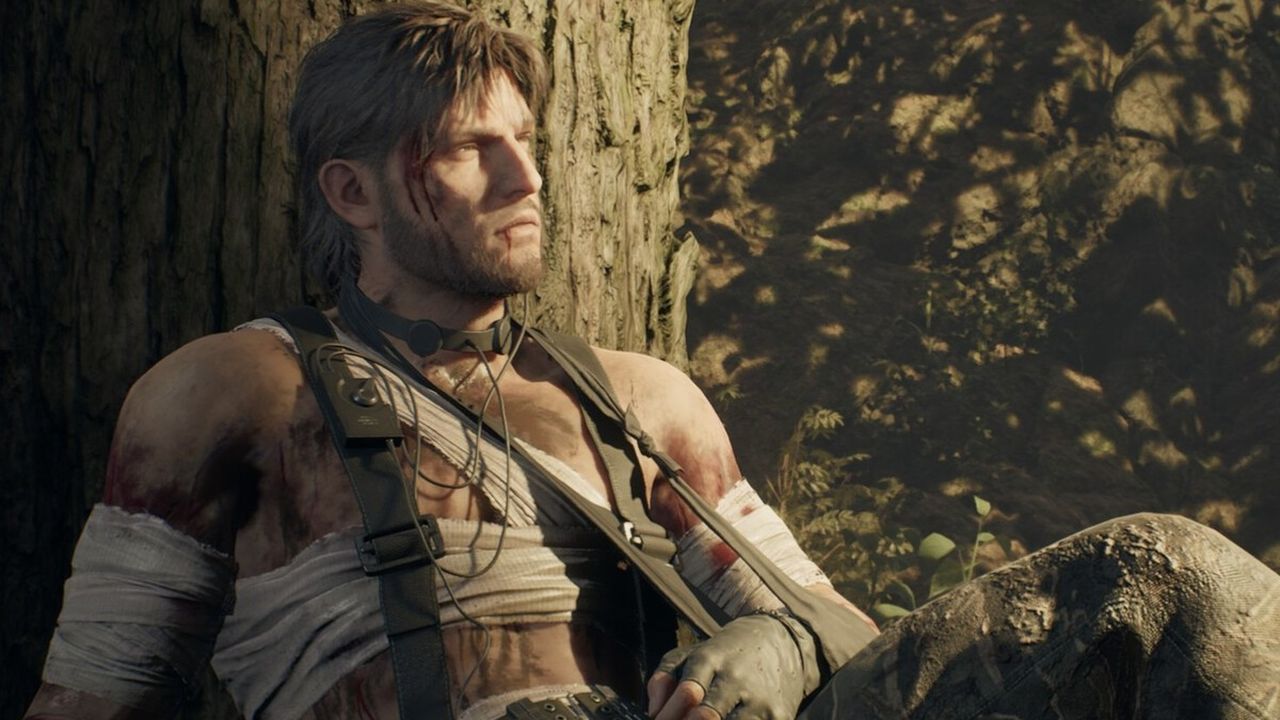
Hideo Kojima even foresaw today’s tensions between the United States and Russia. Now that we’re playing Metal Gear Solid Delta again, it’s time to revisit The Boss’s haunting words.
We often credit The Simpsons with predicting the future, but Kojima isn’t far behind. Peace Walker anticipated our dependence on AI impersonators, Metal Gear Solid 2 nailed the rise of social media and information control, and MGS3? For years, it wasn’t seen as prophetic — until now.
Preparing for the release of Metal Gear Solid Delta: Snake Eater, I replayed the saga in chronological order, starting naturally with MGS3. It struck me how much this game is about legacy: the dialogue between The Boss and Naked Snake, the baton being passed, the painful rite of passage. The Cobras aren’t just soldiers; they are emotions Snake must overcome. Only when he’s strong enough to face pain, fear, sorrow, anger, and uncertainty does he earn his baptism of blood and inherit The Boss’s will.
Back when I first played it as a teenager, I grasped little of the political backdrop. The Cuban Missile Crisis, Sokolov’s quiet influence, Volgin’s nuclear gambit — most of it went over my head. Especially The Boss’s desire for a future beyond capitalism and communism. At the time, I shrugged it off as idealistic rhetoric. Now, replaying it as an adult, her words haunt me.
Discussing it with my brother Juli, a philosophy and history scholar, we realized I had misjudged The Boss. Raised by the Philosophers, she seemed like a thinker. But she’s not. She’s a soldier. She poses profound questions because she’s lived them in battle — but she doesn’t deliver answers. Kojima underlined this again in Peace Walker by invoking Che Guevara.
The Boss: A warrior raising questions, not a philosopher providing answers
Che resembled Big Boss physically, but he mirrored The Boss intellectually. A revolutionary who fought endlessly, urging his people to embrace struggle without resolution. Like Che, The Boss wasn’t meant to sit at a desk theorizing. Her role was to fight, to embody the questions rather than resolve them.
And here’s where Kojima’s eerie foresight comes in. The Boss warned Snake not to pledge allegiance to governments or ideologies, because leaders and systems shift. Neither capitalism nor communism offers real answers. Faith in any nation is misplaced, since power depends on whoever’s in charge — sane or not. Set during the Cold War, the game shows the U.S. and USSR locked in propaganda wars, each claiming the other was robbing its people of freedom. In truth, it was simply a proxy conflict between giants.
Then comes the line that chills me: The Boss laughs, telling Snake that in the 21st century, America and Russia will be allies. Watching Trump shake Putin’s hand on TV years later, attempting a partnership over Ukraine, I couldn’t help but think of her words. That “friendship” — hollow, frightening — was exactly what she described. And if it fails, the cycle of endless war will remain unbroken. Which is precisely where we stand today.
If Kojima wrote a Metal Gear today, what would it cover?
Two decades on, The Boss’s speech feels more urgent than ever. Listening to her now isn’t like hearing a prophet; it’s like hearing today’s headlines. The Cold War never really ended, and its echoes still define us. That’s why Snake Eater is worth revisiting, whether through the classic or the remake. As adults, we can see the terrifying truths Kojima embedded — truths that only grow sharper with time. The Simpsons may amuse us with playful predictions, but Kojima’s vision is darker. And disturbingly accurate.
Source: 3djuegos














Leave a Reply