
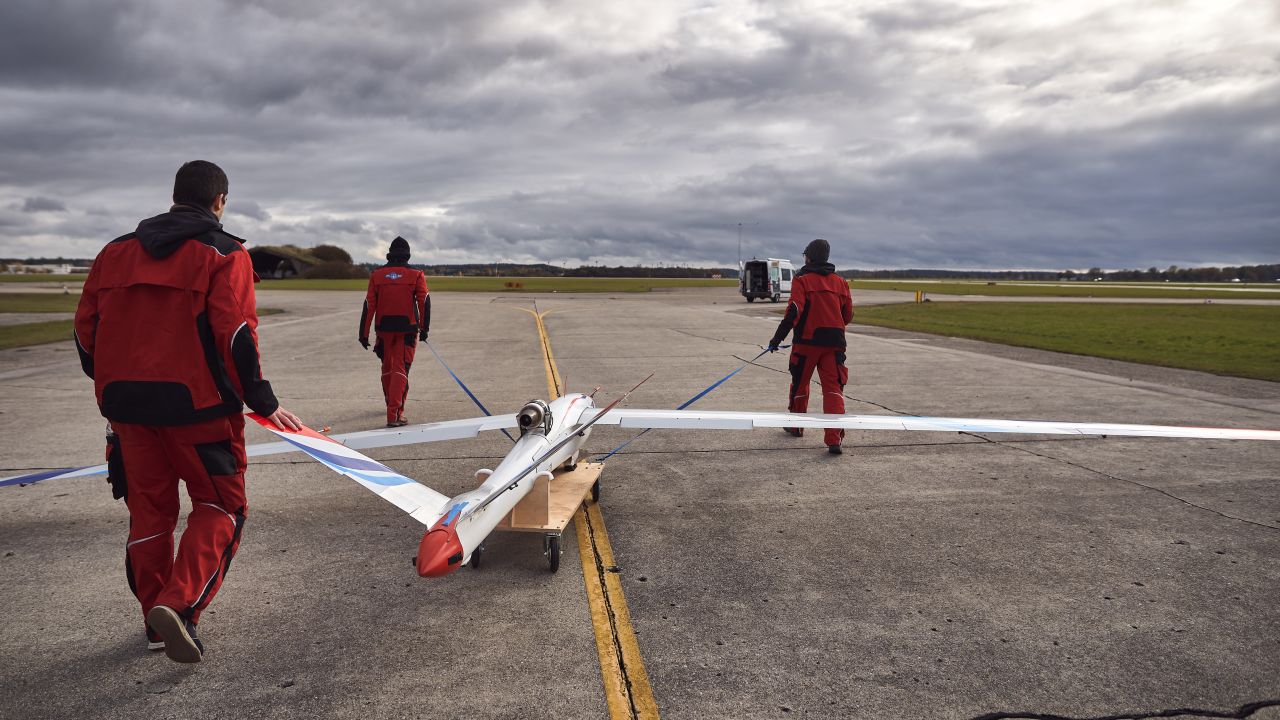
TECH NEWS – A few decades ago, flying was still a rare luxury, but today it has become a natural part of our lives. Summer vacations, weekend city breaks, business trips – the world is only a few hours away. Air cargo transport has also become part of everyday life, from global e-commerce deliveries to urgent industrial shipments. However, the growing volume of air traffic is straining not only airports but also our planet. That is why it has become a key question how to make aviation greener, more economical, and safer – even under extreme weather conditions. Hungarian researchers are working on these issues side by side with the world’s largest aircraft manufacturers.
Experts from the Systems and Control Laboratory (SCL) of HUN-REN SZTAKI are collaborating with Airbus, among others, to make air freight and passenger transport more efficient. Aircraft with lower fuel consumption and reduced emissions not only bring economic benefits but also help shrink aviation’s ecological footprint. Moreover, these innovations promise safer flights even in turbulent conditions.
Without abandoning today’s design principles, but by optimizing closer integration of systems, around 10–15% fuel savings have already been achieved. One key method is boosting the structural efficiency of aircraft and refining their aerodynamic properties. This means minimizing drag while ensuring the wings deliver maximum lift with minimal fuel consumption.
Airbus’s research division is already developing technologies for planes expected to enter mass production by 2035. One major goal is to design highly slender wings that are as aerodynamically efficient as possible. But wingspans cannot be increased indefinitely: if the wing becomes too thick, drag rises and stability decreases. Long, slender wings, on the other hand, can significantly enhance performance—and this is precisely where SZTAKI SCL’s research comes into play.
Researchers are also experimenting with so-called “flying wing” aircraft designs. These could bring an additional 20–25% in fuel savings, but they raise several new issues: many airports would need major modifications to accommodate such aircraft, and passenger seating arrangements remain a challenge. Moreover, studies suggest travelers may be wary of unconventional shapes. Passenger trust is a crucial factor, and it would be a serious risk for manufacturers and airlines to deploy expensive aircraft that many passengers might simply refuse to board.
Flutter Phenomenon and Aeroelasticity
“Longer and thinner wings are more prone to resonance, meaning that under certain conditions, small vibrations can amplify into increasingly larger oscillations. For aircraft wings, this is known as the flutter phenomenon. High-frequency, uncontrolled vibrations can lead to severe structural problems, and in extreme cases, the wing could even break,” explained Bálint Vanek, deputy head of SZTAKI SCL. “Additionally, some airports cannot accommodate aircraft above a certain wingspan. In such cases, wing folding is needed, which adds weight and creates additional challenges for the pilot—or the autopilot.”
One of SCL’s main research areas is precisely modeling and damping wing vibrations during flight. The lab specializes in aeroelasticity—how airflow interacts with the flexible structures of aircraft wings. “Some flight tests can only be carried out in simulation, so we use mathematical models to study wing behavior in turbulence, gusts, and other extreme conditions. Based on these models, we design algorithms that enable the autopilot software to actively control wing behavior,” added Vanek.
SCL is also developing small, fast-acting wing surfaces that can aerodynamically suppress dangerous vibrations in real time. Within the EU’s Horizon2020 research framework, and in partnership with Airbus, they created special actuators for wing control surfaces that are also used by the French company Dassault in its Falcon business jets.














Leave a Reply