
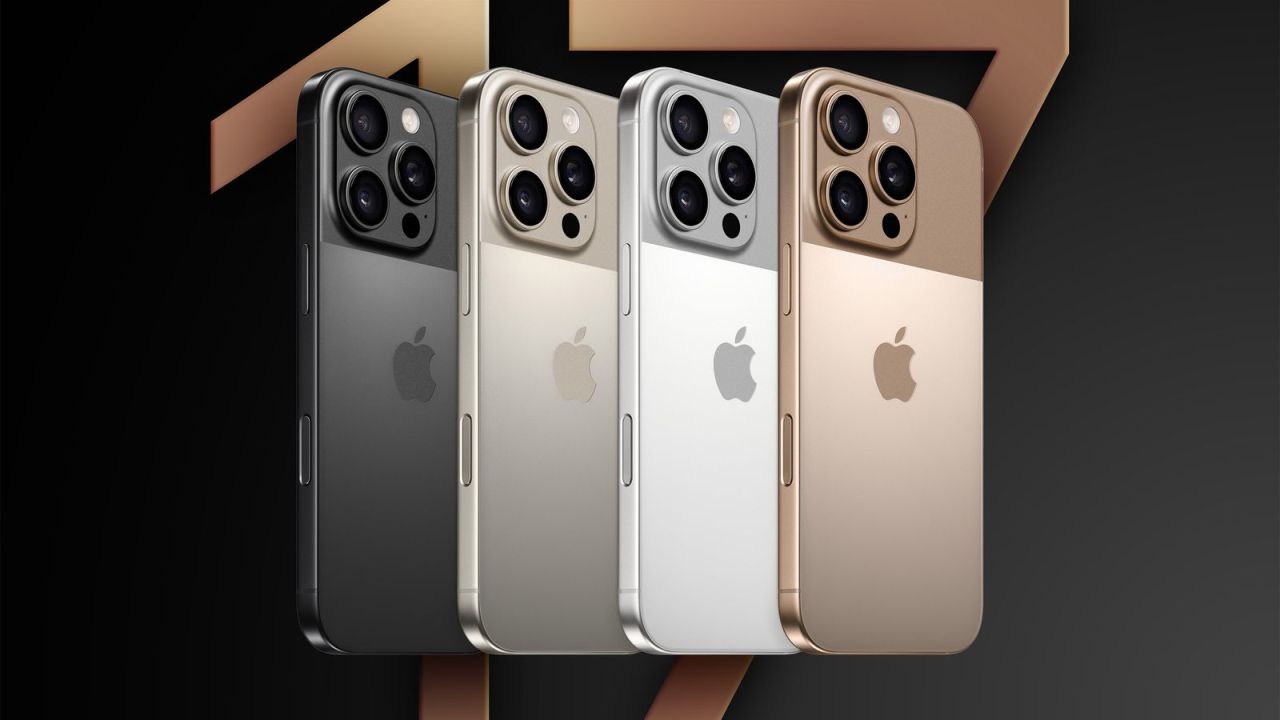
TECH NEWS – There are two news items here: one about a model that has already been released and another about a model that hasn’t even been announced yet.
Apple uses an anodizing process to harden and make the aluminum frame of the smartphone more scratch-resistant. The raw aluminum is dipped in an acid bath and treated with an electric current to create a hardened aluminum oxide shell that is second only to diamond in hardness. However, anodizing does not adhere well to sharp corners. This is precisely the design of the camera bump on the iPhone 17 Pro.
Rather than rounding the edges with a small radius, Apple left a smooth, sharp-edged protrusion that looks elegant but exposes anodizing’s biggest weakness. A video embedded below showed that the flat surface of the camera bump remained strong when tested with a coin and a key. However, the corners wore down almost immediately, revealing the silvery aluminum underneath. Over time, wear and tear is almost certain to occur, and users can do very little about it except use a case.
International anodizing standards specifically recommend rounding sharp corners to improve adhesion of the oxide layer. Apple’s design team clearly prioritized aesthetics over long-term durability; therefore, the corners of the camera bump scratch more easily than the rest of the device. However, this does not mean that the iPhone 17 Pro is fragile, as proven by the annual iPhone bend test. The iPhone 17 Pro did not flinch during the bend test thanks to its solid aluminum unibody design and reinforced frame.
In his latest Power On newsletter, Bloomberg editor Mark Gurman wrote that the foldable iPhone (iPhone Fold) resembles two ultra-thin iPhone Air models placed side by side. When folded together, they form a device that looks and feels like a traditional iPhone. When opened, it transforms into a larger display, making it an elegant, slim, and instantly familiar device for Apple fans. Unlike the original Galaxy Fold, the first iPhone Fold will not be cumbersome or bulky. Early estimates put the price at $2,000 or more, though earlier rumors suggested between $2,100 and $2,300. This would make it the most expensive iPhone ever released. The first-generation iPhone Fold will showcase Apple’s top-level design and engineering. Similar to what it did with the Vision Pro, Apple will gauge the industry’s reaction before moving forward.
Gurman also claims that the company intends to focus iPhone Fold production in China, where Apple already has the most experience with complex devices. Although Apple is trying to diversify its supply chain, products that require the highest expertise will likely remain with existing partners capable of providing the necessary technological sophistication. Earlier rumors suggested moving production to India, but it’s still unclear which devices are part of Apple’s plans.
The current launch window is set for next fall, possibly alongside the iPhone 18 lineup. However, given that this is a brand-new product and Apple is cautious with major redesigns, the launch could be delayed to October or November.
Source: WCCFTech, WCCFTech, Bloomberg


![[TGA 2025] Tomb Raider: Legacy of Atlantis: Another Remake of the First Game! [VIDEO]](https://thegeek.games/wp-content/uploads/2025/12/theGeek-Tomb-Raider-Catalyst-Legacy-of-Atlantis-Remake-Crystal-Dynamics-302x180.jpg)



![[TGA 2025] Tomb Raider: Legacy of Atlantis: Another Remake of the First Game! [VIDEO]](https://thegeek.games/wp-content/uploads/2025/12/theGeek-Tomb-Raider-Catalyst-Legacy-of-Atlantis-Remake-Crystal-Dynamics-300x365.jpg)


Leave a Reply