
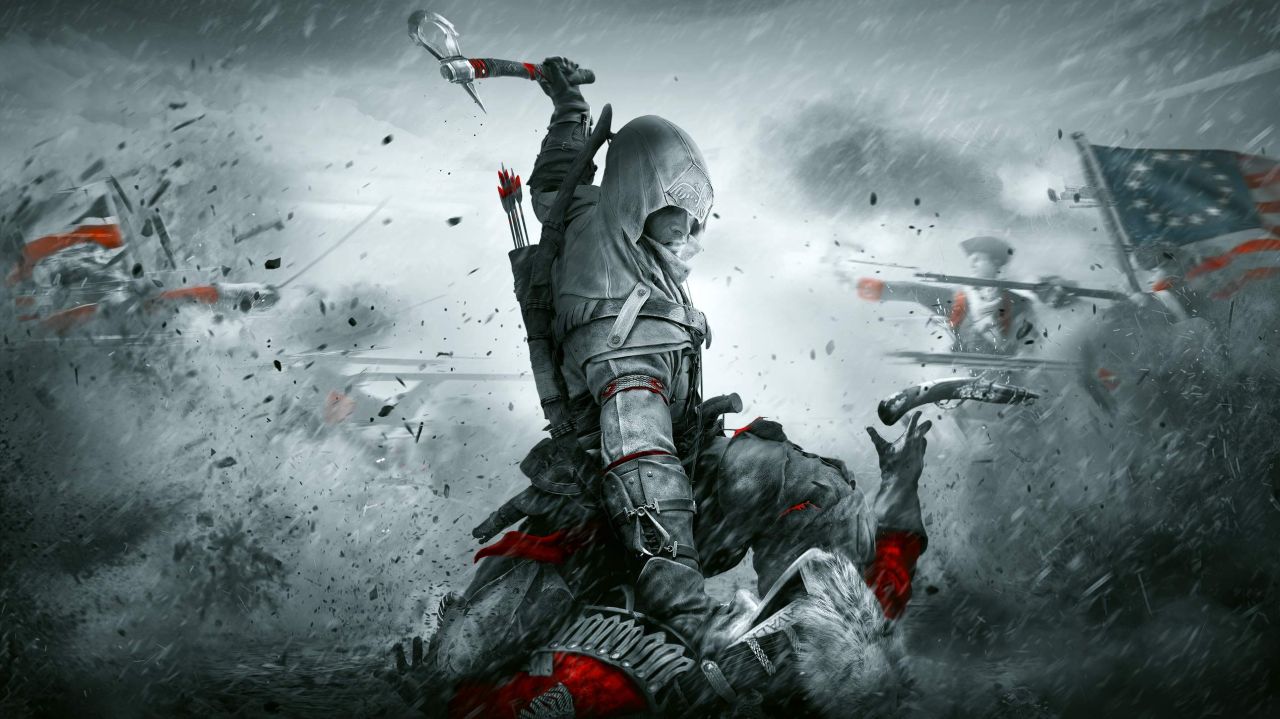
Once again, Yves Guillemot and his team seem afraid of political backlash: new reports claim that Ubisoft scrapped an Assassin’s Creed entry set after the American Civil War, centered on a Black man who rose from slavery to join the Assassin Brotherhood.
According to Stephen Totilo, editor of Game File, Ubisoft canceled a 19th-century Assassin’s Creed project set right after the Civil War. Players would have taken on the role of a Black man who lived as a slave in the southern United States before the war, later moving west to start anew—until the Assassins recruited him and sent him back south to fight the growing Templar threat. Along the way, he would have faced the rise of the Ku Klux Klan.
Totilo’s report, based on information from five current and former Ubisoft employees speaking anonymously, reveals two reasons behind the cancellation. First, Ubisoft didn’t want to endure the same online uproar sparked by Yasuke in Assassin’s Creed Shadows. Second, management feared that releasing a game set in that political climate would be too controversial in the U.S.
“The game was too political for an overly unstable country,” said one source, while another added, “Ubisoft keeps making decisions that maintain the political status quo and avoid taking any stance — even creatively.”
This wouldn’t have been the first time Ubisoft explored slavery in a historical context. The spin-off Assassin’s Creed IV: Black Flag – Freedom Cry told the story of Adéwalé, a man from Trinidad who escaped slavery and fought to liberate others. The canceled title would have been a natural evolution of that concept — a character battling those who once enslaved him and his people.
Although Yasuke stirred controversy, Assassin’s Creed Shadows became a massive critical and commercial success, remaining one of 2025’s best-selling games. Whether Ubisoft could have done justice to such a sensitive narrative is another question. But the fact that the company’s leadership allegedly found the story “too political” — for highlighting the horrific truth of slavery — speaks volumes.







![[TGA 2025] LEGO Batman Is Back, and This Time the Legend Needs Allies: Legacy of the Dark Knight [VIDEO]](https://thegeek.games/wp-content/uploads/2025/12/theGeek-LEGO-Batman-Legacy-of-the-Dark-Knight-302x180.jpg)




Leave a Reply