
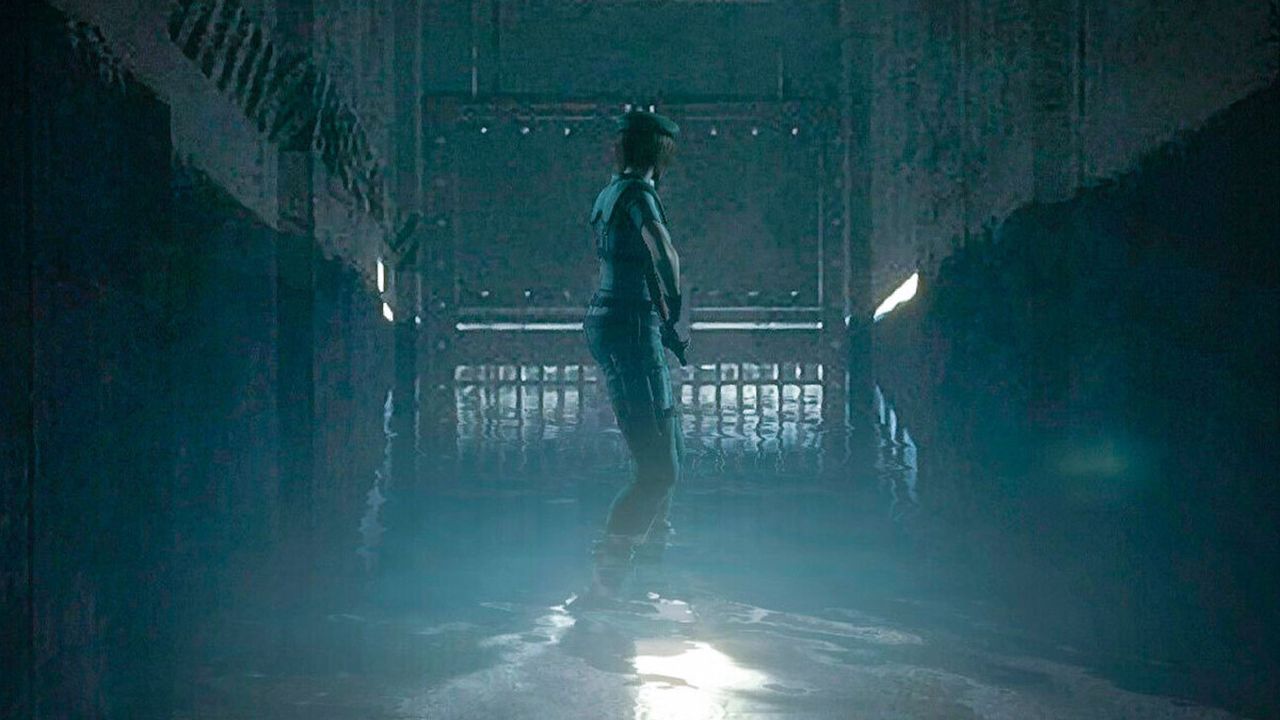
There’s a Resident Evil that blew past the hardware limits of its day: nobody thought it was possible, and it was cancelled anyway. However crazy it looked technically, Capcom and HotGen were dead set on bringing RE to the legendary Game Boy.
Capcom made history. Resident Evil has been a phenomenon since day one; the original is still hailed as one of the finest survival horror games ever. As you’d expect, the PlayStation debut was followed by ports to PC, Sega Saturn, and, years later, even Nintendo DS. But not every platform plan went smoothly — and the franchise’s first steps on Nintendo hardware were especially bumpy.
“Silent Hill on a handheld?” — the bold DS/GB roots
Yes, Resident Evil eventually reached Nintendo DS, but that wasn’t Capcom’s first stab at the Big N’s ecosystem. The push began before 2000 with the aim of squeezing survival horror onto Game Boy Color. Doesn’t ring a bell? No surprise: it was shelved right before launch. Still, it’s worth revisiting — the project was a curiosity, and its ending was even stranger.
After the original game’s 1996 breakout, Capcom greenlit HotGen’s audacious pitch to bring zombies to the GBC. Problems surfaced fast: the holiday 1999 target slipped to early 2000. Even so, morale wasn’t all doom and gloom. As HotGen founder/CEO Fergus McGovern told IGN in 2000: “There are some limitations, especially with sprites, on the monochrome Game Boy. We always try to support both platforms, but when you come up with an awesome design — you should see what we’re working on right now!”
“Shrink a PlayStation classic into a pocket” — where the miracle bled out
As McGovern hinted, the GBC Resident Evil had a brutal hill to climb. Asked by IGN about the biggest challenge, he replied: “Basically, trying to squeeze the entire PlayStation game into the confines of a Game Boy! This project was a challenging undertaking… That said, we still managed to keep all the locations and puzzles completely authentic, with the same perspective as on PlayStation.”
Despite the upbeat talk, Capcom killed the project that same summer. In a statement to IGN, the publisher said: “We were not confident enough that the product would make both consumers and Capcom happy.” The oddball GBC version drifted into obscurity — for about 12 years.
Though its existence and cancellation were official, the port slid into urban-legend territory — until 2012, when a user claimed to own two GBC builds and would release them online with ~$2,000 up front.
The game was around 90% complete when it was cancelled.
The fan community crowdfunded the “ransom.” Happy ending: the holder got $2,000, and everyone else got a genuine ROM, proving HotGen had truly tried to fit Chris Redfield and Jill Valentine’s adventure onto Nintendo’s handheld. That also confirmed a late-stage dev claim: the build was about 90% done when it was axed.
Fans then tore the port apart. Findings showed it couldn’t be finished in that state and was riddled with bugs — par for an unpolished build. You could progress only to the elevator leading to Lab 4 (later areas existed but lacked the final boss), ammo was unlimited, herb mixing was disabled, and some classic enemies were missing. The quirkiest twist: release was planned on two cartridges — one for Chris, one for Jill — because the GBC simply couldn’t hold both campaigns at once.
And that’s the tale of Resident Evil on Game Boy Color: never officially released, now widely accessible via a ROM. Capcom clearly believed in the brand’s future and pushed to secure a place in Nintendo’s catalogue — even if this experiment died en route. The saga’s momentum hardly slowed: the superb N64 adaptation of RE2 shows just how determined Capcom was to turn Resident Evil into one of the world’s marquee series.
Source: 3DJuegos





Leave a Reply