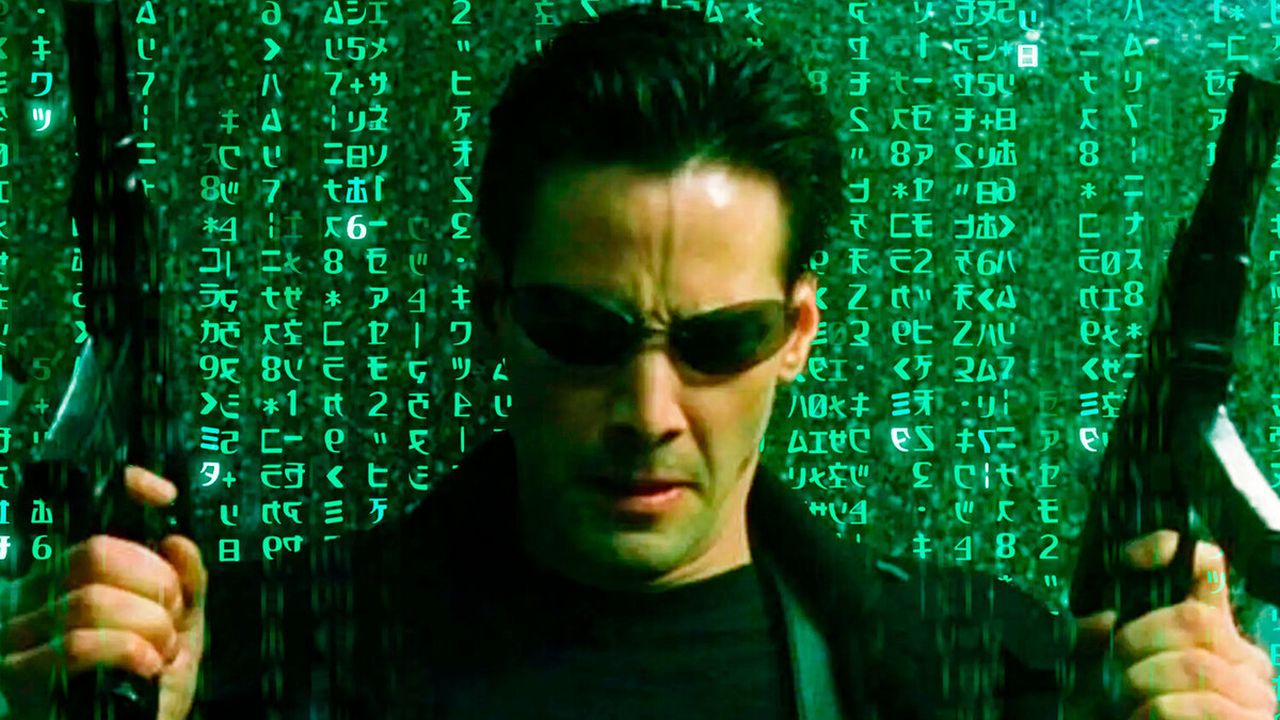
MOVIE NEWS – Of all the explanations out there, the mysterious Matrix code is rooted in something surprisingly ordinary. That iconic green rain does have a hidden backstory – just not the one you’re probably expecting.
In cinema’s constantly shifting landscape, certain films stand out not only for plot or characters but for visual signatures that etch themselves into pop culture. Think the opening crawl of the Star Wars Skywalker Saga or the cascading digital rain that defines The Matrix. In The Matrix’s case, the origin of that code – despite its outsized impact – traces back to a little-known anecdote tied to Japanese cuisine.
Directed by the Wachowskis, the trilogy knots reality and simulation in unsettling ways. It’s almost impossible to discuss The Matrix without picturing the emerald glyphs falling like rain. Known as the Matrix digital rain or Matrix code, it became one of the franchise’s most recognizable icons – and its source lies far from computer science or standard sci-fi lore.
Where the Matrix Code Came From
The truth surfaced in an interview with its creator, production designer Simon Whiteley. Speaking to CNET in 2017, he explained that the inspiration wasn’t a complex algorithm or a secret payload. Surprisingly, the glyphs were built from Japanese sushi recipes he found in his wife’s cookbooks, then manipulated digitally for the on-screen effect.
“Without that code, the Matrix doesn’t exist.” It may sound like a throwaway line, but it’s telling. By lifting characters from those recipes and transforming them, Whiteley forged a visual icon that anchors the films. A central sci-fi motif of The Matrix thus has roots in Japanese cuisine – just as the series’ aesthetics draw on Japanese anime, with Ghost in the Shell a prominent touchstone. The process bridges seemingly distant worlds: sci-fi cinema and gastronomy, West and East, simulation and reality.
The code itself relies on a custom typeface Whiteley designed, mixing mirrored kana with Latin letters and numerals. You’ll spot hiragana, katakana, and kanji – the very scripts found in those sushi recipes. For anyone who reads Japanese, the mystique fades fast: there’s no deep, hidden message. Using recipes as source material underlines how production design often springs from everyday experiences.
The Matrix code left a lasting imprint on late-’90s pop culture, even inspiring waves of unofficial screensavers that swept the web. Few offices escaped at least one monitor draped in green rain. So the next time it trickles down your screen, remember you’re looking at a unique fusion of sci-fi imagery and Japanese culinary roots.
Source: 3DJuegos

![WARDOGS Hits Early Access in September, with a Closed Beta First [VIDEO]](https://thegeek.games/wp-content/uploads/2026/08/theGeek-WARDOGS-Early-Access-302x180.jpg)
![An ex-Bethesda Dev Says Including More than 1,000 Planets in Starfield Was a Bad Decision! [VIDEO]](https://thegeek.games/wp-content/uploads/2025/09/thegeek-starfield-nagy-1-302x180.png)


![A Modder Has Turned GeForce Now into a High-End Cloud PC! [VIDEO]](https://thegeek.games/wp-content/uploads/2026/08/theGeek-GeForce-Now-cloud-PC-302x180.jpg)



![Pregnant Anne Hathaway Shows Off Her Baby Bump at New Film Premiere [VIDEO]](https://thegeek.games/wp-content/uploads/2026/08/theGeek-Anne-Hathaway-302x180.jpg)

![WARDOGS Hits Early Access in September, with a Closed Beta First [VIDEO]](https://thegeek.games/wp-content/uploads/2026/08/theGeek-WARDOGS-Early-Access-300x365.jpg)
![An ex-Bethesda Dev Says Including More than 1,000 Planets in Starfield Was a Bad Decision! [VIDEO]](https://thegeek.games/wp-content/uploads/2025/09/thegeek-starfield-nagy-1-300x365.png)