
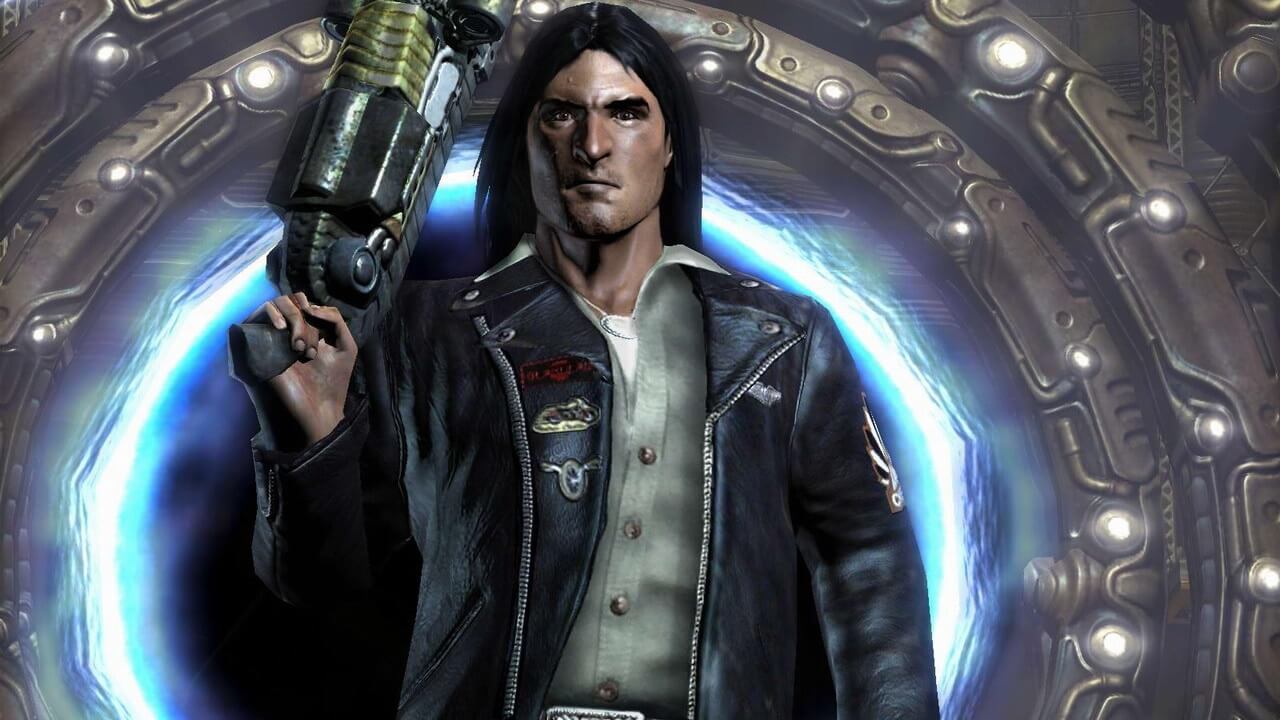
No, we’re not talking about the 2017 game Prey, but an earlier game that unfortunately cannot be legally obtained today unless you have a copy on disc.
Released in 2006, Prey was one of the most ambitious yet flawed sci-fi first-person shooter (FPS) games, taking 11 years to develop. It is the predecessor to Arkane’s 2017 game of the same name, but the two are only similar in name. The 2006 game has now largely been forgotten. The story follows a Native American man who is kidnapped by aliens and begins to fight against them. Built on a grandiose, cinematic narrative and a rich world powered by the Doom 3 engine (id Tech 4), the game was full of ideas and innovative gameplay mechanics. From portals and anti-gravity walkways (before Portal) to miniaturization with a shrink ray and ghost walking out of the body and ghost children jumping between dimensions, Prey threw everything at us.
However, as we progressed, the game became more typical of the FPS genre. The final version of Prey did not live up to the original concept; the portal-based gameplay was much more similar to Valve’s games. In the final version, however, the use of portals was limited to predetermined areas and scripted events. Nevertheless, the first half of Prey was a real journey, contributing to the game receiving strong reviews upon its release. But why did it take so long for Prey to be completed? Why did the concept of the game change so much during its 11-year development cycle? Fortunately, veteran game developer and publisher Scott Miller recently addressed these questions in a video posted on Apogee Software’s Twitter account.
“The team that worked on Rise of the Triad began working on their next game, Prey. That’s when we had a 1998 E3 demo that did really well. We even had a portal gun similar to the one in the game Portal, where the character could shoot and create portals to go through and do really crazy things. The whole gimmick of Prey was going to be portals. The problem was that we could never finish developing the engine. We brought in other engine experts, but it never worked out. So, we decided to focus on Duke Nukem (Duke Nukem Forever) and revisit Prey later. Our publisher, GT Interactive, had actually put $900,000 into the game. We paid them back. We’re putting this game on hold, and we don’t want you to pressure us. Then Mike Wilson from Gathering of Developers asked me if I had considered bringing Prey back. I said, ‘Yeah, I would love to.’ He said there’s a team, Human Head, who could do it. I was all for it,” Miller said.
After signing the deal with Human Head, Miller worked with the studio daily to bring Prey to life. However, the original scope of the portal gameplay could not be realized because the game’s new publisher, Take-Two, demanded an earlier release date while withdrawing funding at the end of development. This forced 3D Realms to step in and keep things moving forward. Miller’s biggest regret is that the original portal gun shown in the 1998 E3 demo never made it into the game.
Currently, Prey (2006) is unavailable in any digital game store, and there is no remaster. Hey, Nightdive—here’s a great opportunity! This is almost certainly due to the fact that ZeniMax Media acquired the rights to the game (and the broader franchise, including the canceled Prey 2) in 2009, and Microsoft may not be interested in reviving the old concept.
Source: PCGamer
🪶 @ScottApogee shares how PREY (2006) nearly broke the rules (and a few engines) on its way to release. pic.twitter.com/Tj0jYaL5JW
— Apogee Entertainment (@Apogee_Ent) November 4, 2025














Leave a Reply