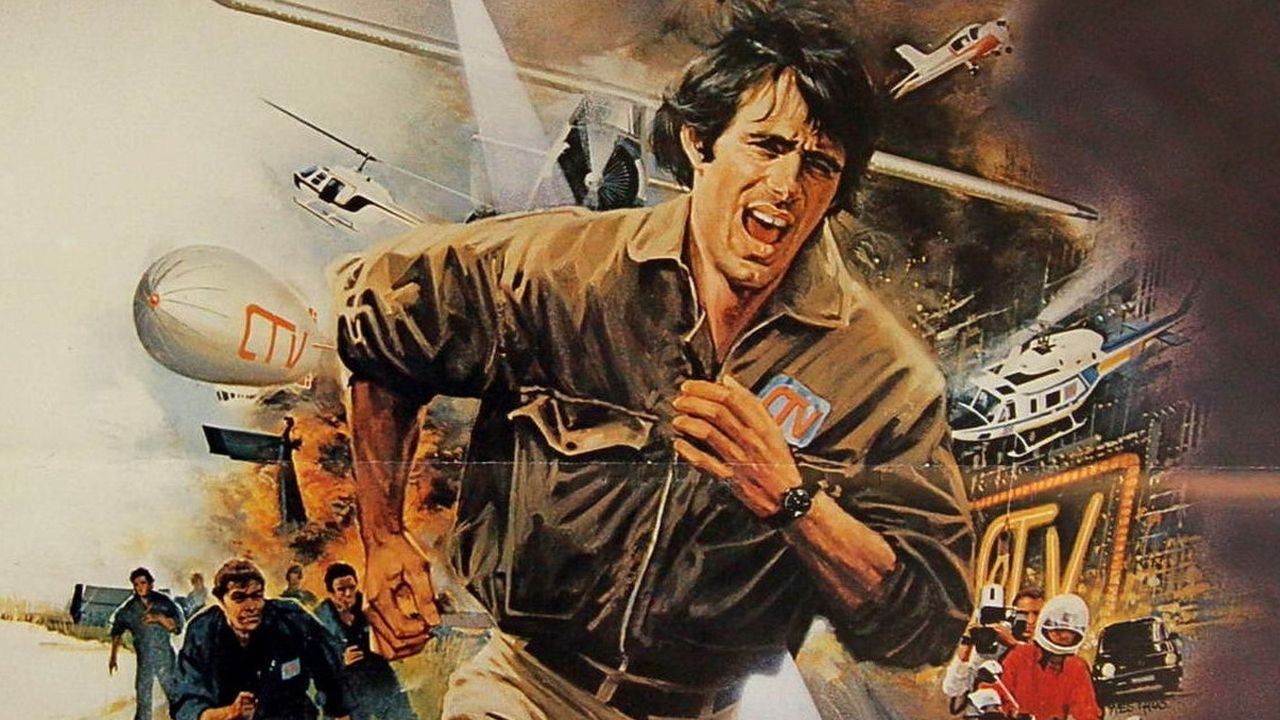
MOVIE NEWS – With a new The Running Man film on the way and Glenn Powell stepping into the arena, it is easy to forget that the idea of a deadly TV game show was already brought to the screen years before Arnold Schwarzenegger. In 1983, French–Yugoslav co-production Le prix du danger (The Prize of Peril) adapted Robert Sheckley’s 1958 short story and delivered a brutal satire of television and audience bloodlust that looks strikingly like what the world would later know as The Running Man.
Sheckley’s original tale imagined a near future where an ordinary man volunteers for a live broadcast in which hired killers hunt him through real streets while the whole country watches. Viewers can call in tips, help or betray him, and the cameras never turn away. That dark concept first became a German TV movie, Das Millionenspiel, then reached full cinema scale with Yves Boisset’s 1983 feature Le prix du danger. The film sharpened the media satire, putting the spotlight on how far broadcasters will go when ratings matter more than human life.
In Boisset’s version, François is an unemployed, desperate man who signs up for the death game because he sees no other way out of poverty. Five armed pursuers are let loose to track him down, while a studio audience screams for blood and viewers at home decide whether to help or betray him. The host, played with icy charm by Michel Piccoli, treats every wound and every panic-stricken shout as just another beat in the evening’s entertainment, a reminder that the real winner is always the network.
A Forgotten French Precursor To The Running Man
Four years after Boisset’s film, Hollywood released Paul Michael Glaser’s The Running Man with Arnold Schwarzenegger, officially based on Stephen King’s 1982 novel published under the Richard Bachman pseudonym. King’s book also follows a desperate man who agrees to run for his life in a televised manhunt, framed as a criminal while the system treats his suffering as a prime-time spectacle. The overlap with Le prix du danger goes well beyond the general idea, encompassing the show’s structure, the way the hunt is broadcast, and the cynical role of television itself.
Boisset eventually took the American producers to court, arguing that the film version of The Running Man copied specific dramatic choices, rather than merely sharing a broad premise. After an eleven-year legal battle, a Paris court ruled in his favor in 1998, recognizing that the similarities with Le prix du danger went too far to be coincidental. The compensation barely covered legal costs, but the case helps explain why the French movie has been so hard to find, with only rare TV broadcasts and a limited VHS release in France.

From Sheckley To King To Edgar Wright’s New Film
This history also raises an uncomfortable question for book fans: how much did Stephen King know about Sheckley’s work when he wrote The Running Man? Sheckley’s 1958 story laid down the template for televised manhunts decades before reality TV, and even academic commentators highlight how closely King’s novel mirrors its central idea. No legal action was taken against King, so the debate stays in the realm of criticism and influence, but it shows how blurred the line can become between homage and appropriation when a powerful concept enters pop culture.
With Edgar Wright now preparing a new adaptation of King’s novel, starring Glen Powell, it is worth putting the spotlight back on the full family tree behind the project. There is not just one Running Man, but a whole lineage: Sheckley’s short story, the German TV movie Das Millionenspiel, Boisset’s Le prix du danger and then the Schwarzenegger vehicle that most viewers remember. If the new film wants to say something fresh about media, violence and spectatorship, acknowledging those earlier works – and maybe nudging audiences to seek out the long-neglected French movie – would be a good place to start.
Source: Wikipedia – The Prize of Peril, Wikipedia – The Running Man (novel), Wikipedia – The Running Man (2025 film)



![MobLand Season 2 Returns with Blood, Chaos and a New Trailer [VIDEO]](https://thegeek.games/wp-content/uploads/2026/08/SKYSHOWTIME_MobLand_S2_1-302x180.jpg)


![Gears of War E-Day Is Getting a Limited-Edition Xbox Controller! [VIDEO]](https://thegeek.games/wp-content/uploads/2026/08/theGeek-Gears-of-War-E-Day-controller-302x180.jpg)