
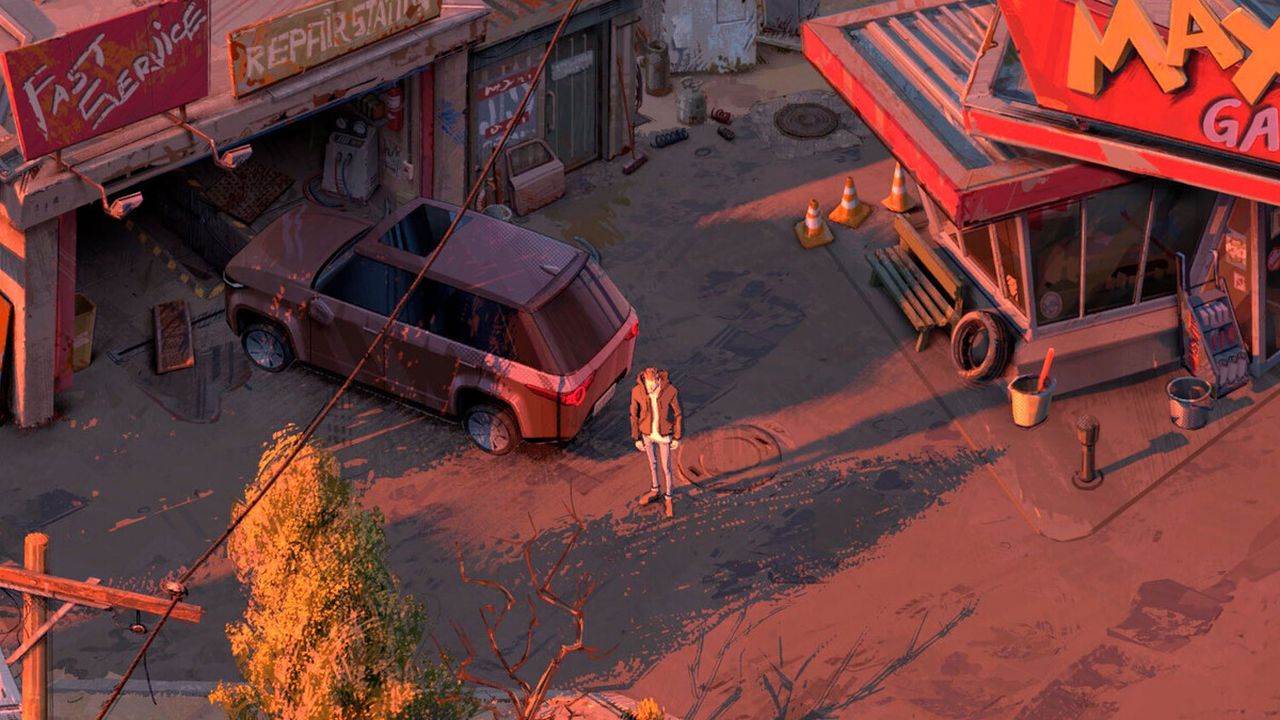
A narrative RPG that clearly idolizes one of the standout role-playing games of the last decade, it stirs in time travel and a 45-minute time-loop structure, and then quietly gets under your skin until you realize you cannot stop playing. Rue Valley is far from flawless and often stumbles over its own pacing, yet it is packed with ideas and moods strong enough to keep you curious about how, exactly, you are meant to break out of this strange experiment.
It is simply a fact that Disco Elysium ranks among the best RPGs of the last ten years, and it is equally true that a lot of newer games are now borrowing from it. That is inevitable; just ask the people behind Dark Souls, Darkest Dungeon, or Slay the Spire. When a game works and pushes fresh ideas into the medium, others will naturally want to follow in its footsteps, not just as a marketing move or to boost sales, but because their creators loved those earlier titles and want to chase a similar feeling. Rue Valley is one of those cases: its art direction, the way you make choices, how you shape your character, and even the endless internal back-and-forth inside the protagonist’s head all echo Disco Elysium. At the same time, Rue Valley has its own flashes of insight that can nudge the way you look at things.
So what does Rue Valley actually bring to the table that is different from Disco Elysium? Most of all, it’s the overall structure. Disco Elysium is a detective-style role-playing game where you comb through a city to unravel a case. You run into a wildly varied cast, endure bizarre situations, and push the story forward day after day. Rue Valley feels similar on the surface, yet plays very differently. You step into the shoes of a man who wakes up in a therapist’s office, talks to his doctor, walks out, realizes he is staying at a roadside motel in Rue Valley, bumps into a girl, a weird neighbor and the receptionist, heads to his room, leaves it, watches the world end, and then opens his eyes once more in that same therapy chair. Exactly like that. The key twist is that the entire game is built around a 45-minute time loop that keeps resetting: the main character retains his memories, everyone else does not, and it is up to you to figure out what is really going on in this bizarre place where everything repeats.
As a starting point, this premise is genuinely strong, and it is easily Rue Valley‘s biggest asset. For all the complaints I am about to raise, the way the game subtly shifts things from loop to loop, the way the protagonist slowly frays at the edges in certain situations, the way he juggles the information he gathers, and the way the whole thing leans into its own weirdness are more than enough to keep you on the hook for close to twenty hours. On a personal note, if you throw velociraptors at me, villains who literally split into pieces because of painters, a supposed Kingdom of Hearts waiting to be opened, time travel, and time-loop shenanigans, I am already in. Rue Valley has all of that, and it also nails that hazy, Groundhog Day-style sense of mystery about why you are trapped in this endless cycle in the first place.
The Disco Elysium-Like Games Are Starting To Show Up
On top of that, Rue Valley borrows a smart idea that lines up nicely with what Disco Elysium did so well. ZA/UM’s game built its story around digging into the mental state of its characters; here, the time loop becomes a metaphor for depression and a lack of drive, for that suffocating feeling of waking up, again and again, to a life that never seems to move on. Breaking the loop is therefore just as much an internal struggle against burnout as it is an external puzzle. With each new cycle, you collect more and more information about the people you meet. One day, you decide to leave the motel and arrive in a strange new area populated by even stranger residents, a mental map unfolds to organize what you know, and out of that web of clues emerge missions you can unlock by spending inspiration points.
The truth is that the basic time-loop gameplay – which, as you can tell, is very Disco Elysium-adjacent – is put together rather well. So why did Rue Valley fall short for me? Because it falls into the one trap a time-loop game should avoid at all costs: it does not know what to do with boredom. I am thinking of all the moments when you have already seen a scene in a previous loop, when there is simply nothing left to do in the current cycl,e and you just want to skip ahead to a morning event, or when the game asks you to trudge all the way back to some distant corner of the map. To keep time flowing, you actually have to walk those distances again, wait around and repeat the same actions. There are shortcuts – you can read to fast-forward the clock – but Rue Valley never fully gets this flow under control, and long stretches of play turn into something sluggish and draining. We ran into similar issues back in the days of The Legend of Zelda: Majora’s Mask, but in an action-heavy adventure that back-and-forth is far less grating than in something like Rue Valley, which leans much more toward a graphic-adventure experience.
It Has Been Hard To Fully Enjoy Rue Valley
All of this is then amplified by the narrative style the game lifts directly from Disco Elysium. Every conversation is saturated with long, winding internal monologues that stretch out the scenes, and those inner voices are not always as compelling or sharply written as in ZA/UM’s classic. This is obviously subjective, but to me it feels like the sort of writing that comes across as profound at first glance because it is heavily ornamented and packed with intense reflections, yet underneath that, it lacks rhythm and bite. Sometimes you simply do not need a page of introspection about whether you should steal a miserable pen.
I know a lot of you hate it when reviewers constantly stack one game up against another, but in a case like this, it is almost impossible not to. For that reason, I really struggled to fully enjoy Rue Valley. It absolutely has some striking, Twin Peaks-style moments, surprising encounters, and a genuine knack for making you want to know where you are, what is happening to this town, and what exactly is going on inside the main character’s head. Yet the odd pacing, the way it mishandles player expectations, the fact that it is only available in English right now, and the way it constantly invites comparison to Disco Elysium without ever surpassing it, all come together to create a slightly sour aftertaste. It is the kind of game that is very easy to abandon halfway through. And that is the core risk for titles that lean so heavily on a beloved predecessor: if they do not clearly outdo it in some specific way, the endless comparison will eventually swallow them whole. Even so, if you loved Disco Elysium, enjoy time travel, are comfortable with English, and have more patience than I do, you should still give it a shot, because under all its little frustrations, there are moments that really are worth sticking around for.
Rue Valley Is A Child Of Disco Elysium And The Legend Of Zelda: Majora’s Mask
Rue Valley is officially sold as a narrative role-playing game about a man trapped in a time loop, surrounded by a cast of secondary characters with emotionally charged backstories and unexpected secrets, while the protagonist has to overcome mental obstacles to dive into the anomaly and uncover the truth about where he comes from. “Will you be able to muster the courage to unravel the secrets of this temporal anomaly? Will you find the strength to overcome adversity and create a better tomorrow?” asks the game outright.
In practice, Rue Valley plays like the offspring of Disco Elysium and The Legend of Zelda: Majora’s Mask. Every loop hands you new pieces of information that you need to manage smartly to tackle the next cycle. Each reset brings fresh answers and fresh riddles, but the most entertaining stretch is when the protagonist’s desperation tips over into outright absurdity and the story suddenly feels more like black comedy than tragedy. With all its ups and downs, Rue Valley is still a game worth discovering if you have a soft spot for this kind of strangely familiar yet distinctive time-loop tale.
Source: 3djuegos












Leave a Reply