
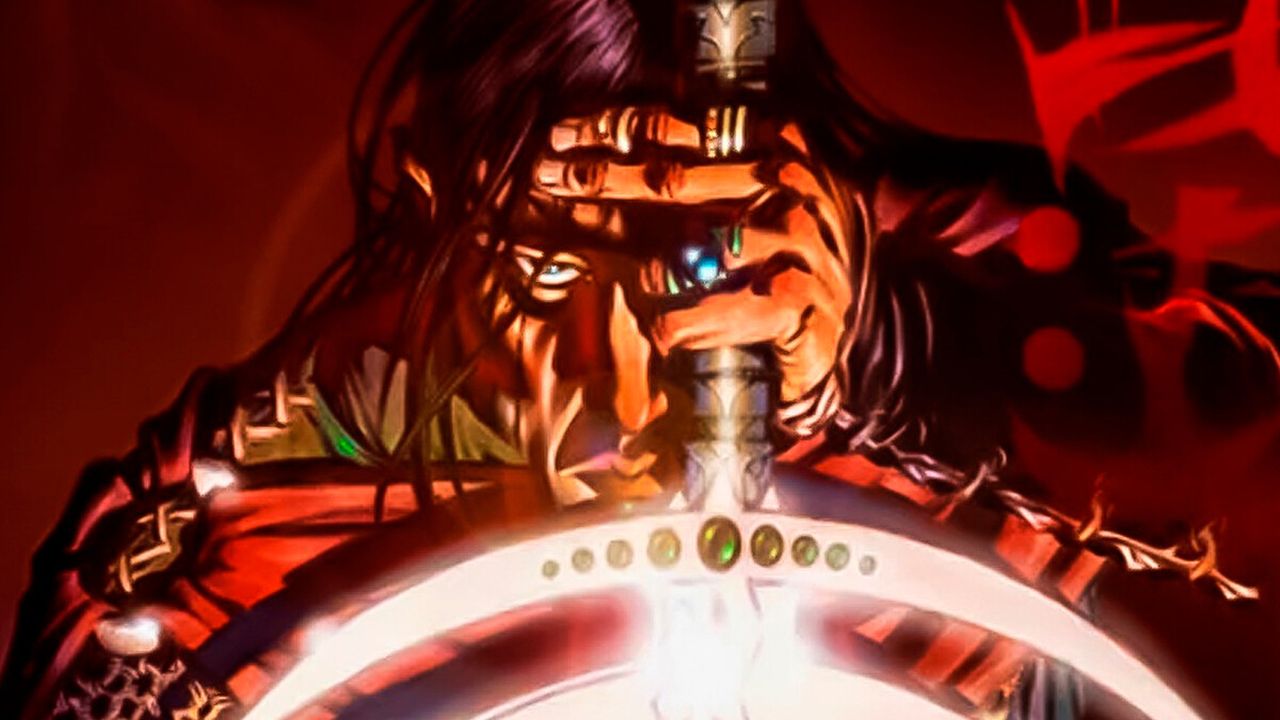
There was once a dark fantasy RPG that was supposed to be Nintendo’s answer to God of War, but the publisher ultimately pulled the plug and told Retro Studios to put all its energy into what would later become the legendary Metroid Prime.
In its early days, Retro Studios behaved like a team with something to prove, greenlighting ideas at a frantic pace. Not long after the studio was founded in late 1998, it partnered with Nintendo on several projects for the GameCube, putting four different games into active development. One of them, of course, evolved into the acclaimed Metroid Prime, but the other three have mostly faded into obscurity. Among them were a car combat title, an American football game, and a third project that, on paper, looked like the safest bet, a would-be rival to the future God of War series.
The twist is that this game did not start life as a straightforward hack-and-slash, but as a role-playing game. Under the working title Raven Blade, the pitch sounded simple enough: carve your way through hordes of enemies with a mythical sword to wipe out the evil corrupting the world. Very little was ever shared about the hero or the larger storyline, and the whole thing was quietly killed off after Shigeru Miyamoto visited Retro’s Texas offices. He did not like what he saw, but was the project really that hopeless?
The hack and slash was killed before it could live
Retro Studios began collaborating with Nintendo at a time when the GameCube badly needed a more mature slate of games to broaden its appeal beyond the company’s usual family-friendly image. That era gave us titles like Resident Evil 4, which launched as a timed exclusive, and the much-praised Eternal Darkness, one of the console’s most surprising releases. Within that context, the idea for a brutal action game took shape, one that was being planned even before Kratos started swinging his chains of chaos on PlayStation.
Raven Blade was the brainchild of Steve Barcia, then head of Retro Studios, and it pulled in several of the American studio’s key developers. The concept drew on Elric of Melniboné, a classic sword and sorcery antihero from a series of novels. One of the character’s signature traits made its way directly into the game design: the protagonist could channel the power of his weapon in multiple ways, including draining it to restore his own strength so he could keep cutting down foes.
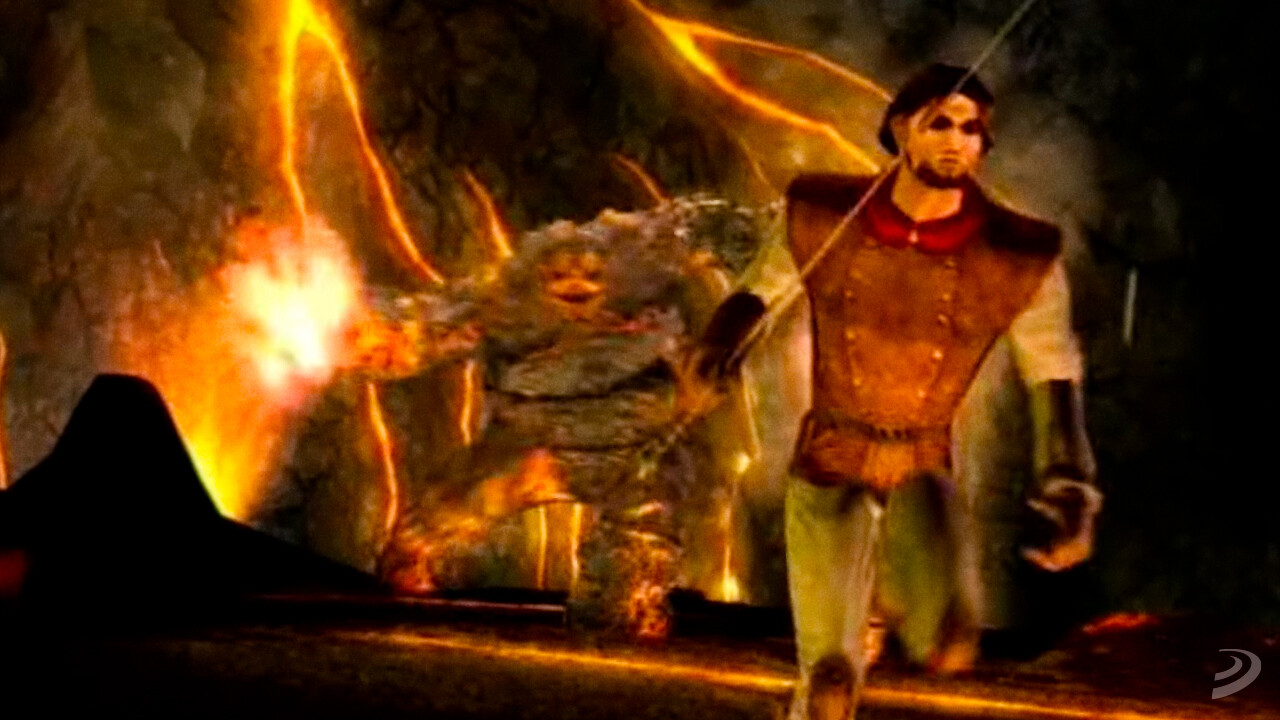
On paper, the foundations were compelling, and the action was set in an alternate realm crawling with all sorts of grotesque creatures, from werewolves to magma giants and other nightmares that defy easy description. The scraps of gameplay footage that survive show environments that look like artifacts from another age, with a mix of classical and exotic architecture. The soundtrack, too, had clear similarities to what we would later hear in the Metroid Prime trilogy.
All of that sounded great in concept, but the reality was less impressive. The early combat looked flat and unresponsive, and the visuals did not bring anything truly fresh to the table. To be fair, everything shown was pre-alpha, closer to a playable concept than a finished product, so any verdict at that stage was premature. In truth, the main reason Raven Blade never made it to release was not that it was beyond saving, but that Metroid Prime became the one project that mattered most. Nintendo needed Retro Studios to rally around a single, critical game, and there simply were not enough people or hours to chase every idea at once.
Roughly two years after work began, Nintendo and Retro Studios officially announced that Raven Blade had been canceled. That put an end to Nintendo’s early attempt to build its own answer to God of War, and we will never know how far the concept could have evolved given time and focus. Could a similar project get another shot someday? It is impossible to say. For now, the spotlight is firmly on Metroid Prime 4, which, after a development cycle that feels never-ending, is finally nearing launch on Nintendo Switch and the upcoming Switch 2. Making video games is anything but simple.
Source: 3djuegos

![An ex-Bethesda Dev Says Including More than 1,000 Planets in Starfield Was a Bad Decision! [VIDEO]](https://thegeek.games/wp-content/uploads/2025/09/thegeek-starfield-nagy-1-302x180.png)


![A Modder Has Turned GeForce Now into a High-End Cloud PC! [VIDEO]](https://thegeek.games/wp-content/uploads/2026/08/theGeek-GeForce-Now-cloud-PC-302x180.jpg)



![Pregnant Anne Hathaway Shows Off Her Baby Bump at New Film Premiere [VIDEO]](https://thegeek.games/wp-content/uploads/2026/08/theGeek-Anne-Hathaway-302x180.jpg)


![An ex-Bethesda Dev Says Including More than 1,000 Planets in Starfield Was a Bad Decision! [VIDEO]](https://thegeek.games/wp-content/uploads/2025/09/thegeek-starfield-nagy-1-300x365.png)
![A Modder Has Turned GeForce Now into a High-End Cloud PC! [VIDEO]](https://thegeek.games/wp-content/uploads/2026/08/theGeek-GeForce-Now-cloud-PC-300x365.jpg)
Leave a Reply