
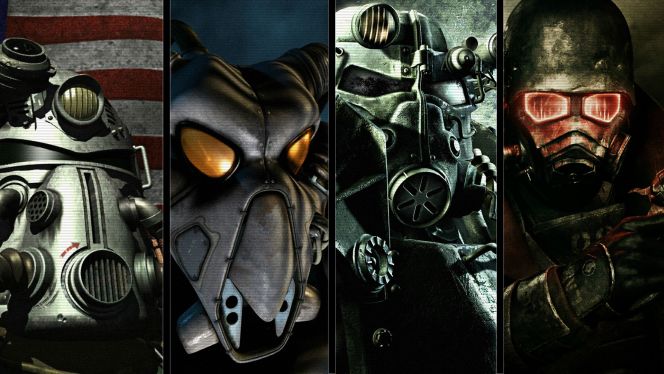
According to Tim Cain, this is fine because it stems from an interpretation that leaves room for error.
In the first Fallout game, there is a character named Harold. He is an unrecognizable, pitiful sight with a sapling growing out of his skull, but it’s unclear how he got into this state. For years, fans have speculated about whether he is a virus-infected mutant, a ghoul poisoned by radiation, both, or neither. Fallout co-creator Tim Cain weighed in on the debate, making an important point: any interpretation is correct as long as it is labeled as such. Cain made this point in a new video, in which he discusses what counts as canon in a narrative.
He argues that canon is whatever the IP owner says it is. Individual interpretation is personal and free, so it cannot be wrong. Authorial intent, however, is a different matter. It usually varies depending on the team members and can differ significantly from the canon. All points of view are in dialogue with each other, but the boundaries are clear and significant. These debates can be particularly murky when it comes to long-running game series, especially complex RPGs like Fallout, because dozens or even hundreds of people may have worked on a given game. While a novella may be the work of a single author and one or two editors, a big-budget video game ultimately reflects countless viewpoints. As Cain points out, many narrative games contradict themselves for various reasons.
“Canon is what it is. If the people who own Fallout say Harold’s a ghoul, then he’s a ghoul. I still think he’s something else entirely, but you may think he’s a mutant. We can all be right because that’s the difference between canon, intent, and interpretation. If you like to Google “Death of the Author,” you might also want to Google “tyranny of the majority,” because I don’t think you want the majority to define canon. When I see people arguing about what’s canon, I see people discussing their interpretation of the game instead. If it’s my game, I’m quite content with my intent,” said Cain.
Online communities that attempt to enforce a subjective interpretation as indisputably correct are probably in the minority anyway. The essay cited by Cain, “The Death of the Author,” is more about removing the author’s intent from criticism and interpretation than it is about the canon of storytelling. In other words, his conclusions are not at odds with those shared in the video. However, like many critical ideas, they are often misinterpreted in forum discussions.
Although Cain’s intentions sometimes differ from common interpretations, the beauty of criticism is that everyone is free to form their own opinion.
Source: PCGamer


![[TGA 2025] Tomb Raider: Legacy of Atlantis: Another Remake of the First Game! [VIDEO]](https://thegeek.games/wp-content/uploads/2025/12/theGeek-Tomb-Raider-Catalyst-Legacy-of-Atlantis-Remake-Crystal-Dynamics-302x180.jpg)


![[TGA 2025] Tomb Raider: Legacy of Atlantis: Another Remake of the First Game! [VIDEO]](https://thegeek.games/wp-content/uploads/2025/12/theGeek-Tomb-Raider-Catalyst-Legacy-of-Atlantis-Remake-Crystal-Dynamics-300x365.jpg)
Leave a Reply