
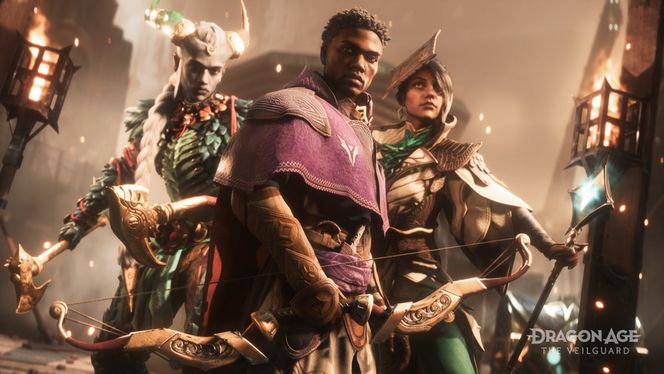
Dragon Age was once one of EA’s flagship role-playing franchises, but the latest entry, Dragon Age: Veilguard, has pushed the series into a full-blown identity crisis. Poor reception, disappointing sales, and a creative direction that many fans find unappealing have left the brand in serious trouble. That decline became painfully obvious this year, when neither EA nor BioWare even acknowledged Dragon Age Day, as if the franchise had suddenly become an embarrassment they would rather not talk about.
For years, Dragon Age was synonymous with ambitious storytelling, complex characters, and rich, morally gray fantasy worlds that helped define EA’s prestige lineup. In recent times, though, the series has drifted away from those strengths, and the newest game, Dragon Age: Veilguard, has become the symbol of that fall from grace. The RPG’s underwhelming critical response, lukewarm commercial performance, and vocal community backlash have all combined to damage a name that once carried a lot of weight.
Dragon Age Day, traditionally celebrated on December 4, used to be a moment for EA and BioWare to highlight the franchise’s legacy, share updates, and thank the community that has supported the series since its 2009 debut. This year, there was no stream, no post, not even a brief anniversary message to mark Dragon Age’s 16th birthday. For many long-time fans, that silence spoke louder than any official statement and confirmed that the situation behind the scenes is far from healthy.
Adding to the frustration, a sizable portion of the community feels that the series has drifted into shallow, box-ticking representation and safe, committee-driven design, while losing the sharp writing and creative risk-taking that once made it unique. In their eyes, Dragon Age has gone from bold, character-driven fantasy to a generic product that tries to please everyone and ends up exciting almost no one.
Veilguard’s failure was a blow EA did not anticipate
The decision to completely ignore Dragon Age Day is even more striking considering that EA once hoped to turn this series into a billion-dollar franchise. Dragon Age: Veilguard was supposed to be the big comeback, a modern reboot that would refresh the formula and bring new players on board while keeping veterans happy. Instead, its poor reception and fan disappointment sent the opposite message: the current direction of the IP is not working.
Behind the scenes, reports suggest that things got so bad after Veilguard launched that EA seriously explored the idea of selling BioWare altogether. The studio was also hit by heavy layoffs, costing it experienced developers and key creative voices. Those cuts did not just affect ongoing projects; they also raised serious questions about what kind of future BioWare can realistically expect under EA’s umbrella.
The irony is hard to miss. A few years ago, EA was talking about Dragon Age as one of its long-term, money-making pillars. Today, the publisher does not even seem interested in greenlighting remasters or remakes of the classic entries, as if it no longer believed there was much value left in revisiting the series’ golden years. In that sense, Veilguard has become a case study in how to mishandle a fan-favorite franchise through bad choices, confused priorities, and a loss of confidence in what made it special in the first place.
There is, at least on paper, one remaining ray of hope. BioWare is still part of EA and is currently working on the next Mass Effect, a project fans have been asking for since the end of the original trilogy. Whether that game will be strong enough to restore the studio’s damaged reputation and eventually give Dragon Age a second life remains to be seen. For now, the total silence around Dragon Age Day says more about the state of the franchise than any glossy trailer or PR slogan ever could.
Source: tech4gamers













Leave a Reply